felwort
Swertia perennis · Accepted scientific name
Scientific literature: Very Sparse (3 studies) · ★☆☆☆☆
Felwort, scientifically known as Swertia perennis, is a perennial herb native to the high-altitude regions of the Himalayas. Renowned in traditional medicine, particularly Ayurveda, it contains bitter glycosides used to stimulate digestion, reduce fever, and treat inflammatory conditions. This potent plant serves as a vital botanical remedy.
- Family
- Gentianaceae
- Native range
- Europe
- Parts used
- Not available
- Common names
- Alpine Bog Swertia · Mountain Bog Swertia · 6 more
- Scientific synonyms
- Blepharaden Perennis
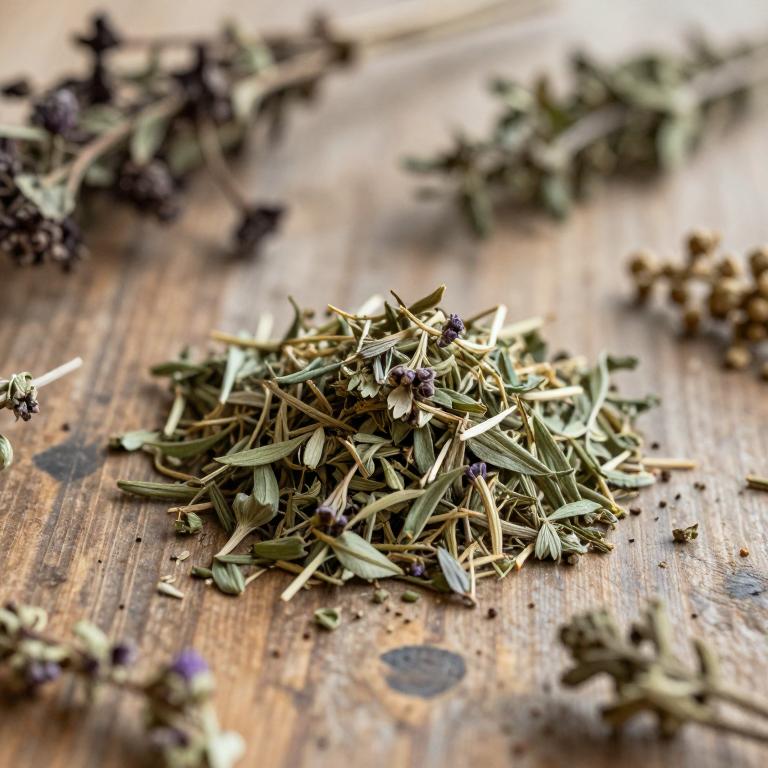
Names and Synonyms
Common Names
- alpine bog swertia
- mountain bog swertia
- star gentian
- star green gentian
- star swertia
- felwort
- swertia
- marsh felwort
Scientific Names
Accepted name
Swertia perennisSynonyms
- Blepharaden perennis
Regional and Traditional Names
Spanish:
- Gentiana palustris
- Blepharaden perennis
- Gentiana paniculata
German:
- Sumpfenzian
- Blauer Sumpfstern
- Blauer Tarant
- Blauer Sumpfstern
- Moorenzian
- Swertie
- Blauer Tarant
- Sumpfenzian
French:
- Swertie vivace
- Wwertie vivace
- swertie vivace
- Wwertie vivace
Sources: Wikidata, Catalogue of Life
Taxonomical Classification
This plant belongs to the kingdom Plantae and the phylum Streptophyta, falling under the class Equisetopsida and subclass Magnoliidae. Within the order Gentianales, it is classified under the family Gentianaceae. Finally, it is categorized under the genus Swertia.
| Rank | Classification |
|---|---|
| Kingdom | Plantae |
| Phylum | Streptophyta |
| Class | Equisetopsida |
| Subclass | Magnoliidae |
| Order | Gentianales |
| Family | Gentianaceae |
| Genus | Swertia |
Sources: The World Checklist of Vascular Plants (WCVP)
Distribution
This plant is widely distributed across several regions within Middle Europe. It can be found growing in the natural landscapes of Austria. Its presence is also documented throughout the territories of Czechia and Slovakia. Furthermore, the species is native to parts of Germany and Poland. Finally, the geographical range of this medicinal plant extends into Switzerland.
| Region | Area |
|---|---|
| Middle Europe | Austria |
| Middle Europe | Czechia-Slovakia |
| Middle Europe | Germany |
| Middle Europe | Poland |
| Middle Europe | Switzerland |
| Southwestern Europe | France |
| Southwestern Europe | Spain |
| Southeastern Europe | Bulgaria |
| Southeastern Europe | Italy |
| Southeastern Europe | Romania |
Sources: The World Checklist of Vascular Plants (WCVP)
Botanical Identification
Ecology
The ecology of Swertia perennis is characterized by its preference for highly specific, moisture-rich environments. This species is primarily found inhabiting meadows that are consistently wet, often extending into swampy terrains and marshy landscapes. These habitats provide the saturated soil conditions and high water availability necessary for its growth, situating the plant within ecosystems defined by periodic flooding or high water tables. Such niches support its specialized life cycle, linking its distribution closely to the presence of perennial wetlands and damp meadowlands.
- Habitat :
- meadows: wet, swamps
Genetics
The genetics of Swertia perennis are characterized by a stable genomic structure consistent with its evolutionary lineage within the Gentianaceae family. Cytogenetic analysis reveals that the species possesses a diploid chromosomal configuration, indicated by a ploidy level of 2. This diploidy suggests a standard inheritance pattern and a balanced genome, which provides the necessary genetic stability for the expression of its complex secondary metabolites. The maintenance of this specific ploidy level plays a critical role in the plant's reproductive success and its ability to adapt to diverse ecological niches through regulated gene expression and chromosomal pairing during meiosis.
- Ploidy :
- 2
Life history
The life history of Swertia perennis is characterized by its status as a perennial plant, allowing it to persist through multiple growing seasons. It functions as a hemicryptophyte, a life form where the perennating buds are located at the soil surface, protected by leaf litter or soil. Throughout its existence, the species maintains an evergreen nature, retaining its foliage to support continuous physiological processes.
- Deciduousness :
- evergreen
- Life form :
- hemicryptophyte
- Lifecycle :
- perennial
Morphology
The morphology of Swertia perennis is characterized by its growth form as a non-woody herb, specifically classified as a forb. This plant is a self-supporting species that does not function as a climber, liana, or vine, and it maintains an independent lifestyle rather than acting as a parasite or an epiphyte. As a terrestrial organism, it grows in soil rather than in aquatic or semiaquatic environments. In terms of stature, the plant is relatively small, with a height that typically ranges from a minimum of 0.08 m to a maximum of 0.6 m, maintaining an average plant height of approximately 0.26 m.
- Aquatic :
- terrestrial
- Climber :
- self-supporting
- Epiphyte :
- terrestrial
- Growth form :
- herb
- Growth form :
- forb
- Parasite :
- independent
- Plant height max:
- 0.6 m
- Plant height mean:
- 0.26 m
- Plant height min:
- 0.08 m
- Woodiness :
- non-woody
Physiology
The physiology of Swertia perennis is characterized by a metabolic framework utilizing the C3 photosynthetic pathway, which involves the direct fixation of atmospheric carbon dioxide through the enzyme Rubisco within the mesophyll cells. This C3 mechanism dictates its physiological reliance on specific environmental conditions, particularly moisture availability and moderate temperatures, to optimize gas exchange and minimize photorespiration. The plant's energy acquisition is driven by this carbon fixation process, which supports the complex biosynthetic pathways necessary for producing its characteristic secondary metabolites, such as secoiridoid glycosides. These metabolic processes are integrated with its overall physiological functions, including water regulation and nutrient uptake, to maintain cellular homeostasis and facilitate growth throughout its life cycle.
- Photosynthetic pathway :
- C3
Reproduction
The reproduction of Swertia perennis is characterized by a specific phenological cycle and specialized pollination and dispersal mechanisms. The flowering period typically occurs during the warmer months, starting in July and concluding in September. The plant relies on biotic pollination syndromes, specifically utilizing insects as the primary pollinators to facilitate fertilization, as self-fertilization is noted to be absent. Following successful pollination, the plant produces seeds with a very small mass, ranging from a minimum of 0.00024 g to a maximum of 0.00052 g, with a mean seed mass of approximately 0.0003705 g. The dispersal of these seeds is achieved through an autochorous syndrome, where the plant employs self-dispersal mechanisms to spread its offspring.
- Dispersal syndrome :
- autochorous
- Flowering time :
- Jul
- Flowering time :
- Sep
- Pollination syndrome :
- insect
- Pollination syndrome :
- biotic
- Seed mass max:
- 0.00052 g
- Seed mass mean:
- 0.0003705 g
- Seed mass min:
- 0.00024 g
- Self fertilization :
- absent
Sources: Global Inventory of Floras and Traits (GIFT)
Chemicals
Swertia perennis has 2 reported phytochemicals identified across 0 scientific publications and several other databases. The most consistently reported chemicals include Flavonoids, Iridoids.
| Chemical | Supporting sources | Consensus |
|---|---|---|
| Flavonoids | 1 supporting sources | ★☆☆☆☆ |
| Iridoids | 1 supporting sources | ★☆☆☆☆ |
Flavonoids
- Natural product research
Iridoids
- Natural product research
Activities
Swertia perennis has 1 reported activities identified across 0 scientific publications and several other databases. The most consistently reported activities include Antioxidant.
| Activity | Supporting sources | Consensus |
|---|---|---|
| Antioxidant | 1 supporting sources | ★☆☆☆☆ |
Antioxidant
- Natural product research