Swertia corymbosa
Swertia corymbosa · Accepted scientific name
Scientific literature: Very Sparse (1 studies) · ★☆☆☆☆
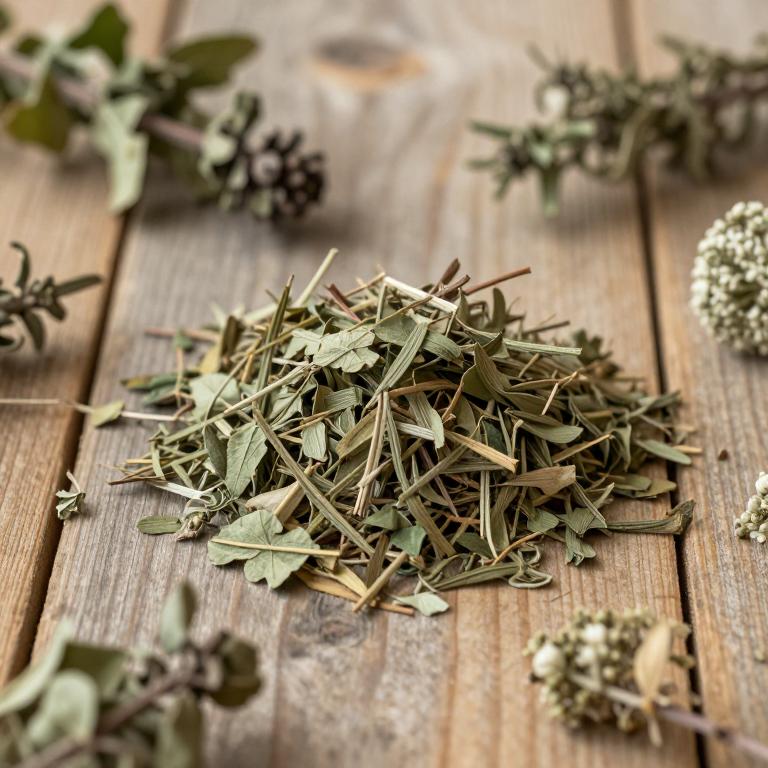
Swertia corymbosa is a noteworthy medicinal plant recognized for its diverse pharmacological potential. Recent scientific investigations have focused on evaluating its specific antioxidant activities to understand its therapeutic value. To facilitate this research, specialized preparations including petroleum ether and ethyl acetate extracts have been developed. These chemical fractions allow for a more precise analysis of the plant's bioactive constituents. Consequently, studying these extracts provides critical insights into the natural defense mechanisms offered by this species.
- Synonyms
- Swertia Corymbosa Var. Grisebachiana · Ophelia Grisebachiana · 3 more
- Common names
- Not available
- Family
- Gentianaceae
- Distribution
- Not available
- Plant Parts
- Not available
Classification
Synonyms
Swertia corymbosa is a botanical subject characterized by a complex web of taxonomic synonyms. Within various scientific classifications, it has been identified under the name Ophelia corymbosa. This species also encompasses the variety known as Ophelia corymbosa var. elatior. Further historical nomenclature includes the designation Ophelia grisebachiana, reflecting different botanical interpretations. Finally, the plant is linked to the specific varieties Swertia corymbosa var. elatior and Swertia corymbosa var. grisebachiana.
Sources: The World Checklist of Vascular Plants (WCVP)
Taxonomy
Swertia corymbosa is a fascinating botanical specimen that belongs to the kingdom Plantae. Within this vast kingdom, the plant is classified under the class Equisetopsida. It further falls into the order Gentianales, showcasing its specific evolutionary lineage. As a member of the Gentianaceae family, it shares distinct characteristics with many other herbaceous plants. Ultimately, this species is defined by its placement within the genus Swertia.
| Rank | Classification |
|---|---|
| Kingdom | Plantae |
| Phylum | Streptophyta |
| Class | Equisetopsida |
| Subclass | Magnoliidae |
| Order | Gentianales |
| Family | Gentianaceae |
| Genus | Swertia |
Sources: The World Checklist of Vascular Plants (WCVP)
Distribution
Geographic Regions
Swertia corymbosa is a distinctive plant species primarily found within the tropical regions of Asia. Its natural range extends across the vast landscapes of the Indian Subcontinent, making it a notable part of the local flora. Within these warm climates, the plant thrives in specific ecological niches that support its growth and survival. India serves as a major stronghold for the species, where it can be observed in various native habitats. Understanding this specific distribution is essential for researchers studying the biodiversity of the Asian tropics.
Sources: The World Checklist of Vascular Plants (WCVP)
Identification
Biological Activities
Swertia corymbosa is a medicinal plant traditionally utilized in Indian systems for its therapeutic potential against diabetes. Recent research has focused on the xanthone constituents isolated from its extracts, specifically 1, 2, 8-trihydroxy-6-methoxy xanthone and 1, 2-dihydroxy-6-methoxyxanthone-8-O-β-D-xylopyranosyl. These specific compounds demonstrate significant antioxidant activity, which plays a crucial role in protecting biological tissues. In vivo studies on diabetic rats revealed that these substances effectively protect the pancreas, liver, and kidney against oxidative peroxidation damage. Ultimately, the antioxidant and antihyperlipidemic properties of these compounds suggest they are promising candidates for the development of potent antidiabetic drugs.
Compounds
Conditions
Swertia corymbosa is a medicinal plant traditionally used in the Indian system for the treatment of diabetes. Scientific studies have identified two main xanthone constituents, 1, 2, 8-trihydroxy-6-methoxy xanthone and 1, 2-dihydroxy-6-methoxyxanthone-8-O-β-D-xylopyranosyl, within its extracts. When administered to diabetic rats, these compounds produced a significant reduction in blood glucose levels and increased plasma insulin levels. Beyond lowering glucose, these substances demonstrated antihyperlipidemic activities and provided protective effects for the pancreas, liver, and kidney tissues. Molecular docking studies further suggest that these isolated compounds possess strong binding affinities with key protein targets related to diabetes mellitus.
Preparations
Swertia corymbosa is prepared as petroleum ether and ethyl acetate extracts to isolate its primary bioactive constituents. These specific extracts contain the main compounds 1, 2, 8-trihydroxy-6-methoxy xanthone and 1, 2-dihydroxy-6-methoxyxanthone-8-O-β-D-xylopyranosyl. By utilizing these extraction methods, researchers can focus on the medicinal properties of the plant used in traditional Indian systems. The resulting chemical profiles from these petroleum ether and ethyl acetate preparations are essential for studying anti-diabetic effects. Consequently, the preparation of these extracts serves as the foundation for identifying the xanthones responsible for regulating blood glucose levels.