Swertia cordata
Swertia cordata · Accepted scientific name
Scientific literature: Very Sparse (5 studies) · ★☆☆☆☆
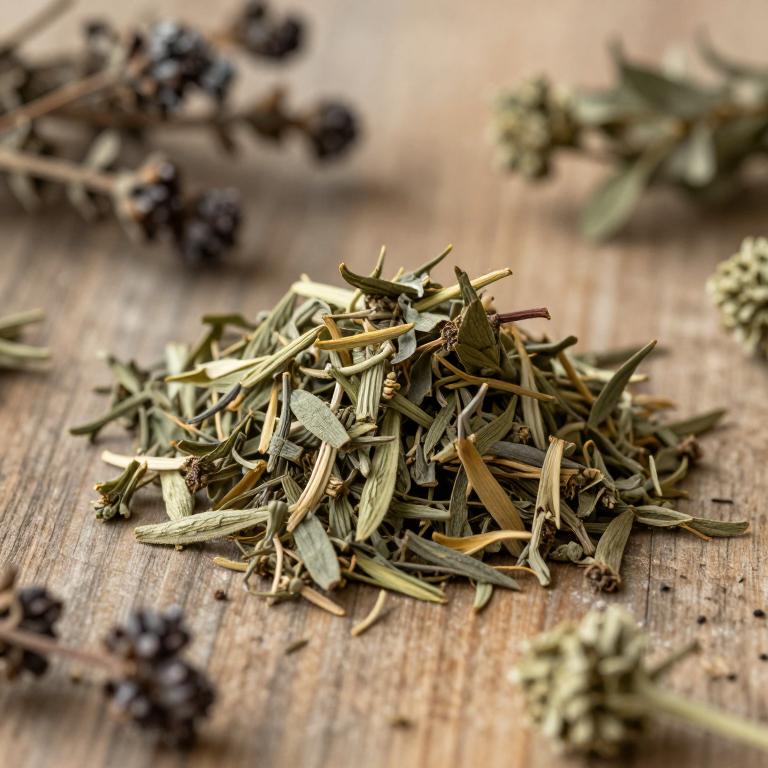
Swertia cordata, scientifically known as Swertia cordata, is a perennial herb cherished in traditional medicine. Native to the Himalayan regions, this plant is renowned for its bitter principles. It is widely utilized for its potent anti-inflammatory, digestive, and antioxidant properties, playing a vital role in holistic healing practices.
- Family
- Gentianaceae
- Native range
- Asia-Temperate
- Parts used
- Leaf · Root
- Common names
- Not available
- Scientific synonyms
- Ophelia Cordata Var. Laxa · Ophelia Nuda · 2 more
Names and Synonyms
Scientific Names
Accepted name
Swertia cordataSynonyms
- Ophelia cordata var. laxa
- Ophelia nuda
- Swertia patnitopiansis
- Ophelia cordata
Sources: Wikidata
Taxonomical Classification
This plant, Swertia cordata, belongs to the kingdom Plantae and the phylum Streptophyta. Within the class Equisetopsida and subclass Magnoliidae, it is classified under the order Gentianales. Finally, it is a member of the family Gentianaceae within the genus Swertia.
| Rank | Classification |
|---|---|
| Kingdom | Plantae |
| Phylum | Streptophyta |
| Class | Equisetopsida |
| Subclass | Magnoliidae |
| Order | Gentianales |
| Family | Gentianaceae |
| Genus | Swertia |
Sources: The World Checklist of Vascular Plants (WCVP)
Distribution
This plant exhibits a diverse geographical range across several key regions in Asia. In Western Asia, its presence is noted within the borders of Afghanistan. Within China, it is specifically found throughout the south-central territories. The Indian subcontinent hosts various populations, including those located in Assam and the East Himalaya. Finally, the species is also distributed across the mountainous landscapes of Nepal.
| Region | Area |
|---|---|
| Western Asia | Afghanistan |
| China | China South-Central |
| Indian Subcontinent | Assam |
| Indian Subcontinent | East Himalaya |
| Indian Subcontinent | Nepal |
| Indian Subcontinent | Pakistan |
| Indian Subcontinent | West Himalaya |
| Indo-China | Myanmar |
Sources: The World Checklist of Vascular Plants (WCVP)
Botanical Identification
Ecology
The ecology of Swertia cordata is fundamentally defined by its distribution across high-altitude montane environments, where it occupies a broad vertical gradient. This species thrives within a significant altitudinal span, ranging from a minimum elevation of 1200 m AMSL to a maximum peak of 4000 m AMSL. Throughout its natural habitat, it maintains a mean elevational presence of approximately 2850 m AMSL, positioning it primarily within subalpine and alpine ecological zones. This wide elevational range suggests an ability to adapt to varying atmospheric pressures, temperature fluctuations, and varying levels of solar radiation characteristic of mountainous terrains.
- Elevational range max:
- 4000 m AMSL
- Elevational range mean:
- 2850 m AMSL
- Elevational range min:
- 1200 m AMSL
Life history
The life history of Swertia cordata is characterized by a perennial lifecycle, allowing the plant to persist through multiple growing seasons. As a perennial herb, it establishes a robust presence in its natural habitat, typically navigating seasonal shifts to ensure long-term survival. The plant's developmental stages involve an initial vegetative phase where it develops its distinctive heart-shaped leaves, followed by a reproductive phase marked by the emergence of inflorescences. Throughout its life, the species relies on its perennial nature to recover from environmental stressors, maintaining its population through repeated cycles of growth and flowering.
- Lifecycle :
- annual
Morphology
The morphology of Swertia cordata is characterized by its growth form as a non-woody herb. The plant typically functions as a self-supporting organism rather than a climbing liana or vine, maintaining a terrestrial habit. In terms of stature, it is a relatively small plant, with a height that ranges from a minimum of 0.3 m to a maximum of 0.6 m, resulting in an average plant height of approximately 0.45 m.
- Climber :
- self-supporting
- Epiphyte :
- terrestrial
- Growth form :
- herb
- Plant height max:
- 0.6 m
- Plant height mean:
- 0.45 m
- Plant height min:
- 0.3 m
- Woodiness :
- non-woody
Physiology
The physiological profile of the foliage in Swertia cordata is characterized by specific dimensional variations in leaf morphology. The leaf length exhibits a notable range, with minimum measurements recorded at 0.8 cm and a mean length of 1.55 cm, reaching a maximum extent of 2.3 cm. Complementing these longitudinal dimensions, the leaf width fluctuates between a minimum of 0.5 cm and a maximum of 1.2 cm. These quantitative metrics define the structural constraints of the plant's photosynthetic surfaces, reflecting the morphological parameters essential to its vegetative development.
- Leaf length max:
- 2.3 cm
- Leaf length mean:
- 1.55 cm
- Leaf length min:
- 0.8 cm
- Leaf width max:
- 1.2 cm
- Leaf width min:
- 0.5 cm
Reproduction
The reproduction of Swertia cordata is characterized by a specific flowering phenology and distinct floral morphology. The plant enters its flowering period typically starting in July and continues through until October, though the timing can be variable. During this reproductive phase, the plant produces inflorescences that range in length from a minimum of 0.13 m to a maximum of 0.4 m. The individual flowers within these inflorescences exhibit specific dimensions, with lengths measuring between 1 cm and 1.5 cm.
- Flower length max:
- 1.5 cm
- Flower length min:
- 1 cm
- Flowering time :
- Jul
- Flowering time :
- Oct
- Inflorescence length max:
- 0.4 m
- Inflorescence length min:
- 0.13 m
Sources: Global Inventory of Floras and Traits (GIFT)
Plant Parts
Swertia cordata has 2 reported plant parts identified across 2 scientific publications and several other databases that are studied for medicinal purposes. The most consistently reported plant part include leaf, root.
| Plant part | Supporting sources | Consensus |
|---|---|---|
| Leaf | 1 supporting sources | ★☆☆☆☆ |
| Root | 1 supporting sources | ★☆☆☆☆ |
Leaf
- Pharmacognosy research
Root
- Pharmacognosy research
Activities
Swertia cordata has 2 reported activities identified across 2 scientific publications and several other databases. The most consistently reported activities include Antibacterial, Antioxidant.
| Activity | Supporting sources | Consensus |
|---|---|---|
| Antibacterial | 1 supporting sources | ★☆☆☆☆ |
| Antioxidant | 1 supporting sources | ★☆☆☆☆ |
Antibacterial
- Pharmacognosy research
Antioxidant
- Pharmacognosy research
Conditions
Swertia cordata has 1 reported investigations on conditions identified across 2 scientific publications and several other databases. The most consistently reported conditions include antioxidant.
| Condition | Supporting sources | Consensus |
|---|---|---|
| Antioxidant | 1 supporting sources | ★☆☆☆☆ |
Antioxidant
- Pharmacognosy research
Preparations
Swertia cordata has 3 reported preparations identified across 2 scientific publications and several other databases. The most consistently reported preparations include Methanolic leaf extracts, methanolic and aqueous extracts, methanolic root extracts.
| Preparation | Supporting sources | Consensus |
|---|---|---|
| Methanolic leaf extracts | 1 supporting sources | ★☆☆☆☆ |
| Methanolic and aqueous extracts | 1 supporting sources | ★☆☆☆☆ |
| Methanolic root extracts | 1 supporting sources | ★☆☆☆☆ |
Methanolic leaf extracts
- Pharmacognosy research
Methanolic and aqueous extracts
- Pharmacognosy research
Methanolic root extracts
- Pharmacognosy research