Seablite
Suaeda vermiculata · Accepted scientific name
Scientific literature: Very Sparse (17 studies) · ★☆☆☆☆
Seablite, scientifically known as Suaeda vermiculata, is a resilient halophytic shrub native to arid coastal regions. Renowned for its ability to thrive in saline soils, this medicinal plant offers significant therapeutic potential. It is traditionally utilized in various cultures for its antioxidant properties and diverse pharmacological applications.
- Family
- Amaranthaceae
- Native range
- Europe
- Parts used
- Not available
- Common names
- Arabian Jointed Glasswort · Seablite
- Scientific synonyms
- Suaeda Volkensii · Salsola Forskahlii · 10 more
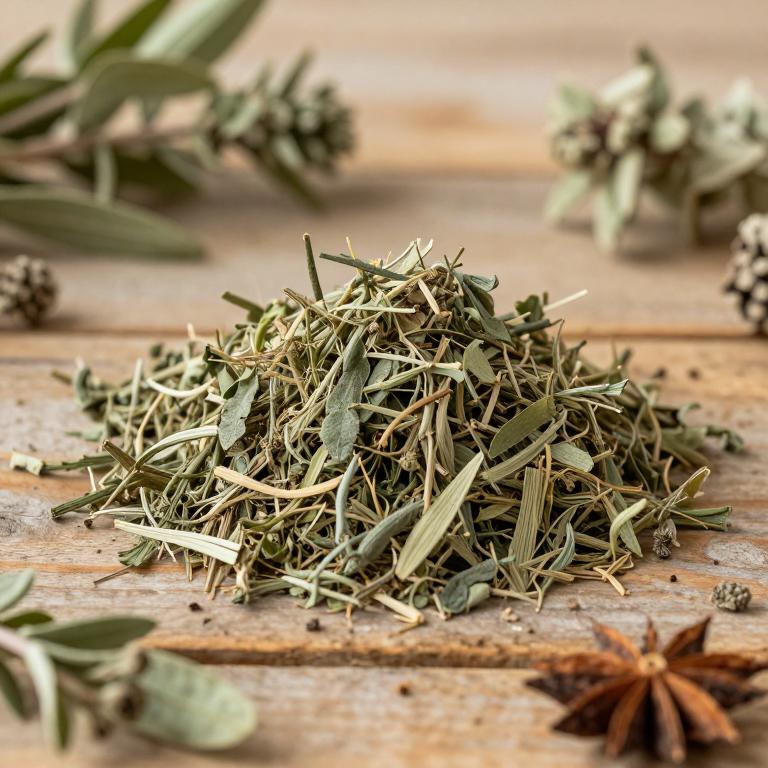
Names and Synonyms
Common Names
- Arabian Jointed Glasswort
- Seablite
Scientific Names
Accepted name
Suaeda vermiculataSynonyms
- Suaeda volkensii
- Salsola forskahlii
- Suaeda helenae
- Suaeda mesopotamica
- Suaeda paulayana
- Salsola helenae
- Suaeda mollis
- Chenopodium alexandrinum
- Lerchia obtusifolia
- Lerchia vermiculata
- Salsola annularis
- Salsola globulifolia
Regional and Traditional Names
German:
- Weiche Sode
Sources: Wikidata, Catalogue of Life
Taxonomical Classification
This plant belongs to the kingdom Plantae and the phylum Streptophyta within the class Equisetopsida. It is further classified under the subclass Magnoliidae and the order Caryophyllales, falling into the family Amaranthaceae. Finally, it is identified by the genus Suaeda, specifically as the species Suaeda vermiculata.
| Rank | Classification |
|---|---|
| Kingdom | Plantae |
| Phylum | Streptophyta |
| Class | Equisetopsida |
| Subclass | Magnoliidae |
| Order | Caryophyllales |
| Family | Amaranthaceae |
| Genus | Suaeda |
Sources: The World Checklist of Vascular Plants (WCVP)
Distribution
This plant exhibits a wide geographical distribution across several key regions in the Mediterranean basin. In Southwestern Europe, its presence is specifically noted in Spain. Moving toward Southeastern Europe, the species can be found inhabiting Sicilia. Its range extends significantly into Northern Africa, where it is documented in Algeria. Furthermore, the plant is also widely distributed throughout the North African territories of Libya and Egypt.
| Region | Area |
|---|---|
| Southwestern Europe | Spain |
| Southeastern Europe | Sicilia |
| Northern Africa | Algeria |
| Northern Africa | Egypt |
| Northern Africa | Libya |
| Northern Africa | Morocco |
| Northern Africa | Tunisia |
| Northern Africa | Western Sahara |
| Macaronesia | Canary Is. |
| West Tropical Africa | Mauritania |
Sources: The World Checklist of Vascular Plants (WCVP)
Botanical Identification
Ecology
The ecology of Suaeda vermiculata is characterized by its adaptation to low-lying environments, specifically occupying a narrow altitudinal niche. This species is typically found within an elevational range that begins at 0 m AMSL and extends to a maximum of 100 m AMSL. Such a distribution pattern suggests that the plant is highly specialized for coastal or lowland habitats, often thriving in saline or arid conditions common to these near-sea-level zones. Its presence in these low-altitude ecosystems indicates a tolerance for specific soil compositions and moisture levels associated with the transition between terrestrial and maritime environments.
- Elevational range max:
- 100 m AMSL
- Elevational range min:
- 0 m AMSL
Life history
The life history of Suaeda vermiculata is characterized by its status as a perennial plant, allowing it to persist through multiple growing seasons. In terms of its structural growth habit and survival strategy, the species is classified as a chamaephyte, a life form where the permanent buds are located close to the soil surface, protected by the substrate or leaf litter. This champhyte designation is consistent across its morphological categorization, defining its ability to endure varying environmental conditions through its low-growing, resilient architecture.
- Life form :
- chamaephyte
- Lifecycle :
- perennial
Morphology
The morphology of Suaeda vermiculata is characterized by a woody, self-supporting growth habit, functioning as a subshrub that does not require external support. As a terrestrial species, it maintains an independent life cycle without parasitic or epiphytic tendencies. The plant's stature is relatively low, with a height ranging from a minimum of 0.4 m to a maximum of 0.6 m, though it reaches a mean height of approximately 1.3 m in certain contexts. Its structural composition is defined by its woody nature, which supports its development as a stable, non-climbing subshrub.
- Aquatic :
- terrestrial
- Climber :
- self-supporting
- Epiphyte :
- terrestrial
- Growth form :
- shrub
- Growth form :
- subshrub
- Parasite :
- independent
- Plant height max:
- 0.6 m
- Plant height mean:
- 1.3 m
- Plant height min:
- 0.4 m
- Woodiness :
- woody
Physiology
The physiology of Suaeda vermiculata is characterized by specialized adaptations to arid environments, most notably through its C4 photosynthetic pathway, which allows for efficient carbon fixation under high temperatures and limited water availability. The plant exhibits significant succulence, a key physiological trait used to facilitate water storage within its tissues. Its foliage is defined by an alternate leaf arrangement, featuring small, highly specialized leaves that range in length from a minimum of 0.2 cm to a maximum of 0.5 cm. To minimize transpirational water loss, these leaves maintain a very low profile in terms of thickness, with measurements varying between a minimum of 0.1 mm and a maximum of 0.2 mm.
- Leaf arrangement :
- alternate
- Leaf length max:
- 0.5 cm
- Leaf length min:
- 0.2 cm
- Leaf thickness max:
- 0.2 mm
- Leaf thickness min:
- 0.1 mm
- Photosynthetic pathway :
- C4
- Succulence :
- yes
Reproduction
The reproduction of Suaeda vermiculata is characterized by a flowering period that begins as early as March and can extend through October, though the timing remains variable throughout the year. The plant produces small, yellow flowers that feature a maximum width of approximately 0.4 cm. These flowers are organized in a cyme inflorescence, which facilitates the pollination process during its active blooming season.
- Flower colour :
- yellow
- Flower width max:
- 0.4 cm
- Flowering time :
- Mar
- Flowering time :
- Oct
- Inflorescence :
- cyme
Sources: Global Inventory of Floras and Traits (GIFT)
Chemicals
Suaeda vermiculata has 3 reported phytochemicals identified across 0 scientific publications and several other databases. The most consistently reported chemicals include Pheophytin a, quercetin, Quercetin 3-O-rutinoside.
| Chemical | Supporting sources | Consensus |
|---|---|---|
| Pheophytin a | 2 supporting sources | ★☆☆☆☆ |
| quercetin | 2 supporting sources | ★☆☆☆☆ |
| Quercetin 3-O-rutinoside | 1 supporting sources | ★☆☆☆☆ |
Pheophytin a
- Oxidative medicine and cellular longevity
- Molecules (Basel, Switzerland)
quercetin
- Plants (Basel, Switzerland)
- Oxidative medicine and cellular longevity
Quercetin 3-O-rutinoside
- Plants (Basel, Switzerland)
Activities
Suaeda vermiculata has 5 reported activities identified across 0 scientific publications and several other databases. The most consistently reported activities include Antioxidant, Antidepressant, Anxiolytic, Cytotoxic, Hepatoprotective.
| Activity | Supporting sources | Consensus |
|---|---|---|
| Antioxidant | 2 supporting sources | ★☆☆☆☆ |
| Antidepressant | 1 supporting sources | ★☆☆☆☆ |
| Anxiolytic | 1 supporting sources | ★☆☆☆☆ |
| Cytotoxic | 1 supporting sources | ★☆☆☆☆ |
| Hepatoprotective | 1 supporting sources | ★☆☆☆☆ |
Antioxidant
- Oxidative medicine and cellular longevity
- Molecules (Basel, Switzerland)
Antidepressant
- Central nervous system agents in medicinal chemistry
Anxiolytic
- Central nervous system agents in medicinal chemistry
Cytotoxic
- Molecules (Basel, Switzerland)
Hepatoprotective
- Oxidative medicine and cellular longevity
Conditions
Suaeda vermiculata has 5 reported investigations on conditions identified across 0 scientific publications and several other databases. The most consistently reported conditions include jaundice, MCF-7 cells, hepatocellular carcinoma, inflammation, liver diseases.
| Condition | Supporting sources | Consensus |
|---|---|---|
| Jaundice | 2 supporting sources | ★☆☆☆☆ |
| Mcf-7 cells | 1 supporting sources | ★☆☆☆☆ |
| Hepatocellular carcinoma | 1 supporting sources | ★☆☆☆☆ |
| Inflammation | 1 supporting sources | ★☆☆☆☆ |
| Liver diseases | 1 supporting sources | ★☆☆☆☆ |
Jaundice
- Plants (Basel, Switzerland)
- Central nervous system agents in medicinal chemistry
Mcf-7 cells
- Molecules (Basel, Switzerland)
Hepatocellular carcinoma
- Pharmaceuticals (Basel, Switzerland)
Inflammation
- Central nervous system agents in medicinal chemistry
Liver diseases
- Central nervous system agents in medicinal chemistry
Preparations
Suaeda vermiculata has 5 reported preparations identified across 0 scientific publications and several other databases. The most consistently reported preparations include Aqueous and ethanol extracts, Aqueous-Ethanolic Extract, aqueous-ethanolic extract, chloroform extract, mother liquor aqueous-ethanolic extract.
| Preparation | Supporting sources | Consensus |
|---|---|---|
| Aqueous and ethanol extracts | 1 supporting sources | ★☆☆☆☆ |
| Aqueous-ethanolic extract | 1 supporting sources | ★☆☆☆☆ |
| Aqueous-ethanolic extract | 1 supporting sources | ★☆☆☆☆ |
| Chloroform extract | 1 supporting sources | ★☆☆☆☆ |
| Mother liquor aqueous-ethanolic extract | 1 supporting sources | ★☆☆☆☆ |
Aqueous and ethanol extracts
- Central nervous system agents in medicinal chemistry
Aqueous-ethanolic extract
- Oxidative medicine and cellular longevity
Aqueous-ethanolic extract
- Plants (Basel, Switzerland)
Chloroform extract
- Molecules (Basel, Switzerland)
Mother liquor aqueous-ethanolic extract
- Plants (Basel, Switzerland)