Shrubby Sea-blite
Suaeda vera · Accepted scientific name
Scientific literature: Very Sparse (7 studies) · ★☆☆☆☆
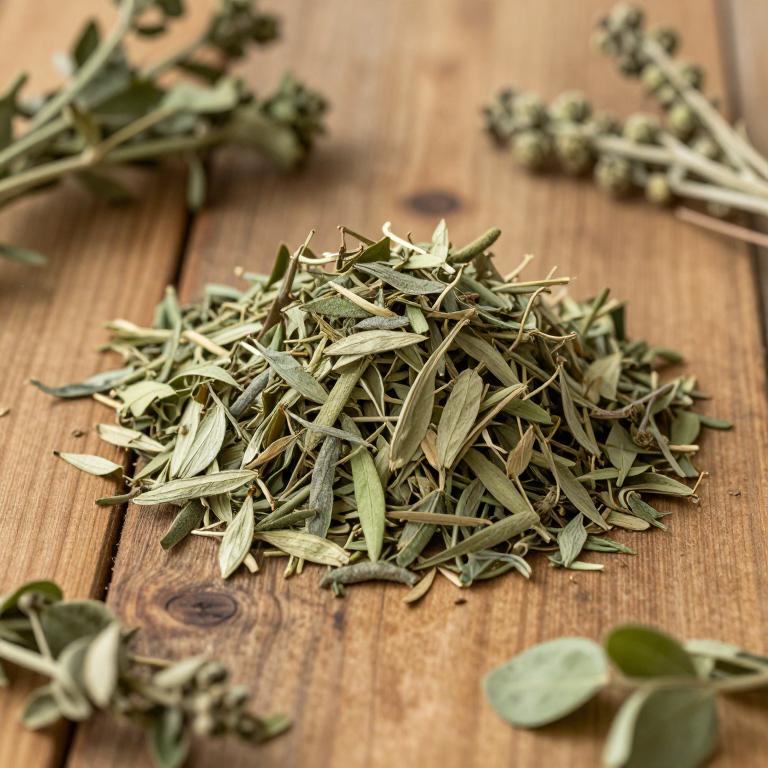
Shrubby Sea-blite, scientifically known as Suaeda vera, is a succulent halophyte flourishing in saline coastal environments. Renowned for its salt-tolerant properties, this plant holds significant ethnobotanical value. It is traditionally utilized in various medicinal practices to treat skin ailments and inflammation, offering unique bioactive compounds for therapeutic use.
Names and Synonyms
Common Names
- Shrubby Sea-blite
- Shrubby Seablite
- Alkali Seepweed
- Shrubby Seablight
Scientific Names
Accepted name
Suaeda veraSynonyms
- Salsola vera
- Suaeda vesceritensis
- Salsola anonyma
- Suaeda vera subsp. longifolia
- Suaeda fruticosa subsp. vera
- Suaeda laxifolia
- Suaeda longifolia
- Suaeda anonyma
- Schoberia vera
- Salsola fruticosa
- Chenopodina vera
- Chenopodium fruticosum
- Lerchia maritima var. fruticosa
- Cochliospermum fruticosum
- Suaeda fruticosa var. longifolia
- Suaeda fruticosa var. purpurascens
- Salsola farinosa
Regional and Traditional Names
Spanish:
- Salado
- Sosa blanca
German:
- Strauchige Sode
- Salsola vera
- Chenopodina vera
- Schoberia vera
- Suaeda fruticosa subsp. vera
- Suaeda longifolia
- Suaeda fruticosa var. longifolia
- Suaeda vera subsp. longifolia
- Suaeda vera var. braun-blanquetii
- Suaeda vera subsp. braun-blanquetii
- Suaeda braun-blanquetii
- Suaeda laxifolia
French:
- Soude ligneuse
- Soude vraie
Sources: Wikidata, Catalogue of Life
Taxonomical Classification
This plant, known scientifically as Suaeda vera, belongs to the kingdom Plantae and the phylum Streptophyta. It is classified under the class Equisetopsida and the subclass Magnoliidae, falling within the order Caryophyllales. Finally, it is a member of the family Amaranthaceae and the genus Suaeda.
| Rank | Classification |
|---|---|
| Kingdom | Plantae |
| Phylum | Streptophyta |
| Class | Equisetopsida |
| Subclass | Magnoliidae |
| Order | Caryophyllales |
| Family | Amaranthaceae |
| Genus | Suaeda |
Sources: The World Checklist of Vascular Plants (WCVP)
Distribution
This plant exhibits a broad geographical distribution across several distinct regions of the European continent. In Northern Europe, its presence can be documented within Great Britain. Moving toward Middle Europe, the species is also found growing in Germany. Its range extends significantly into Southwestern Europe, where it inhabits the Baleares and Corse. Additionally, the plant is widely distributed throughout the coastal areas of France.
| Region | Area |
|---|---|
| Northern Europe | Great Britain |
| Middle Europe | Germany |
| Southwestern Europe | Baleares |
| Southwestern Europe | Corse |
| Southwestern Europe | France |
| Southwestern Europe | Portugal |
| Southwestern Europe | Sardegna |
| Southwestern Europe | Spain |
| Southeastern Europe | Albania |
| Southeastern Europe | Greece |
Sources: The World Checklist of Vascular Plants (WCVP)
Botanical Identification
Ecology
The ecology of Suaeda vera is characterized by its adaptation to low-lying, coastal, or saline environments, typically occupying habitats where soil salinity is a defining factor. It thrives within a specific altitudinal gradient, maintaining an elevational range that begins at 0 m AMSL and reaches a maximum of 100 m AMSL. This distribution indicates a preference for sea-level habitats, such as salt marshes, mudflats, or coastal depressions, where it can withstand high concentrations of salt and periodic waterlogging. The plant's ability to persist in these low-elevation zones makes it a specialized component of halophytic ecosystems, where it plays a role in stabilizing saline substrates and contributing to the unique nutrient cycling of coastal landscapes.
- Elevational range max:
- 100 m AMSL
- Elevational range min:
- 0 m AMSL
Life history
The life history of Suaeda vera is characterized by its classification as a perennial species, allowing it to persist through multiple growing seasons. Regarding its structural growth habits and survival strategies, the plant exhibits a life form categorized as a nanophanerophyte, though it can also be identified within the broader framework of phanerophytes depending on the specific environmental context and growth stage. This combination of traits enables the plant to adapt to its specific ecological niche, maintaining its presence in the habitat through its perennial nature and distinctive architectural form.
- Life form :
- nanophanerophyte
- Life form :
- phanerophyte
- Lifecycle :
- perennial
Morphology
The morphology of Suaeda vera is characterized by a growth form that can be classified as both a shrub and a subshrub, exhibiting a woody nature. It is a self-supporting, independent plant that does not function as a climber or a parasite, and it maintains a terrestrial existence rather than being aquatic or epiphytic. The plant features an erect shoot orientation, with shoot lengths ranging from a minimum of 10 cm to a maximum of 80 cm. On average, the plant reaches a height of approximately 0.6 m.
- Aquatic :
- terrestrial
- Climber :
- self-supporting
- Epiphyte :
- terrestrial
- Growth form :
- shrub
- Growth form :
- subshrub
- Parasite :
- independent
- Plant height mean:
- 0.6 m
- Shoot length max:
- 80 cm
- Shoot length min:
- 10 cm
- Shoot orientation :
- erect
- Woodiness :
- woody
Physiology
The physiology of Suaeda vera is characterized by its specialized leaf morphology and specific metabolic processes adapted to its environment. The plant utilizes a C3 photosynthetic pathway to convert light energy into chemical energy. Its foliage is defined by a distinct linear leaf form, which is highly specialized for efficiency. The leaf dimensions vary significantly, with a minimum leaf length of 0.3 cm and a maximum length reaching up to 1.5 cm. Correspondingly, the leaf width is quite narrow, ranging from a minimum of 0.05 cm to a maximum of 0.15 cm, reflecting its structural adaptations.
- Leaf form :
- linear
- Leaf length max:
- 1.5 cm
- Leaf length min:
- 0.3 cm
- Leaf width max:
- 0.15 cm
- Leaf width min:
- 0.05 cm
- Photosynthetic pathway :
- C3
Reproduction
The reproduction of Suaeda vera is characterized by a prolonged flowering period that typically begins in March and extends through October, though the timing remains variable throughout the year. The plant produces small, white flowers that measure between 0.08 cm and 0.12 cm in length, with a width ranging from a minimum of 0.08 cm to a maximum of 0.1 cm. Following successful pollination, the plant produces minute seeds with a maximum length of 1.1 mm and a maximum width of 1 mm. The seed mass is exceptionally fine, with a mean weight of 0.000325 g, falling within a narrow range between a minimum of 0.00032 g and a maximum of 0.00033 g.
- Flower colour :
- white
- Flower length max:
- 0.12 cm
- Flower length min:
- 0.08 cm
- Flower width max:
- 0.1 cm
- Flower width min:
- 0.08 cm
- Flowering time :
- Mar
- Flowering time :
- Oct
- Seed length max:
- 1.1 mm
- Seed mass max:
- 0.00033 g
- Seed mass mean:
- 0.000325 g
- Seed mass min:
- 0.00032 g
- Seed width max:
- 1 mm
Sources: Global Inventory of Floras and Traits (GIFT)
Chemicals
Suaeda vera has 5 reported phytochemicals identified across 0 scientific publications and several other databases. The most consistently reported chemicals include 1-Heptacosanol, Phytol, THYMOL, farnesol, n-Hexadecanoic acid.
| Chemical | Supporting sources | Consensus |
|---|---|---|
| 1-Heptacosanol | 1 supporting sources | ★☆☆☆☆ |
| Phytol | 1 supporting sources | ★☆☆☆☆ |
| THYMOL | 1 supporting sources | ★☆☆☆☆ |
| farnesol | 1 supporting sources | ★☆☆☆☆ |
| n-Hexadecanoic acid | 1 supporting sources | ★☆☆☆☆ |
1-Heptacosanol
- Inflammopharmacology
Phytol
- Inflammopharmacology
THYMOL
- Inflammopharmacology
farnesol
- Inflammopharmacology
n-Hexadecanoic acid
- Inflammopharmacology
Activities
Suaeda vera has 1 reported activities identified across 0 scientific publications and several other databases. The most consistently reported activities include Analgesic.
| Activity | Supporting sources | Consensus |
|---|---|---|
| Analgesic | 1 supporting sources | ★☆☆☆☆ |
Analgesic
- Inflammopharmacology
Preparations
Suaeda vera has 7 reported preparations identified across 0 scientific publications and several other databases. The most consistently reported preparations include Juice, Suaeda fruticosa aqueous extract, Suaeda fruticosa extract, aqueous extract, decoction of leaves.
| Preparation | Supporting sources | Consensus |
|---|---|---|
| Juice | 1 supporting sources | ★☆☆☆☆ |
| Suaeda fruticosa aqueous extract | 1 supporting sources | ★☆☆☆☆ |
| Suaeda fruticosa extract | 1 supporting sources | ★☆☆☆☆ |
| Aqueous extract | 1 supporting sources | ★☆☆☆☆ |
| Decoction of leaves | 1 supporting sources | ★☆☆☆☆ |
| Infusion | 1 supporting sources | ★☆☆☆☆ |
| Methanol extracts | 1 supporting sources | ★☆☆☆☆ |
Juice
- Inflammopharmacology
Suaeda fruticosa aqueous extract
- Therapie
Suaeda fruticosa extract
- Therapie
Aqueous extract
- Therapie
Decoction of leaves
- Inflammopharmacology
Infusion
- Therapie
Methanol extracts
- Natural product research