striped-stalked saltwort
Suaeda salsa · Accepted scientific name
Scientific literature: Very Sparse (3 studies) · ★☆☆☆☆
striped-stalked saltwort, scientifically known as Suaeda salsa, is a succulent halophyte commonly found in coastal salt marshes. Renowned for its ability to thrive in saline environments, this plant plays a vital role in coastal ecosystems. It is valued in traditional medicine for its antioxidant properties and diverse therapeutic potential.
- Family
- Amaranthaceae
- Native range
- Europe
- Parts used
- Leaf
- Common names
- Striped-Stalked Saltwort
- Scientific synonyms
- Suaeda Salsa Var. Tenuiramea · Suaeda Maritima Subsp. Salsa · 15 more
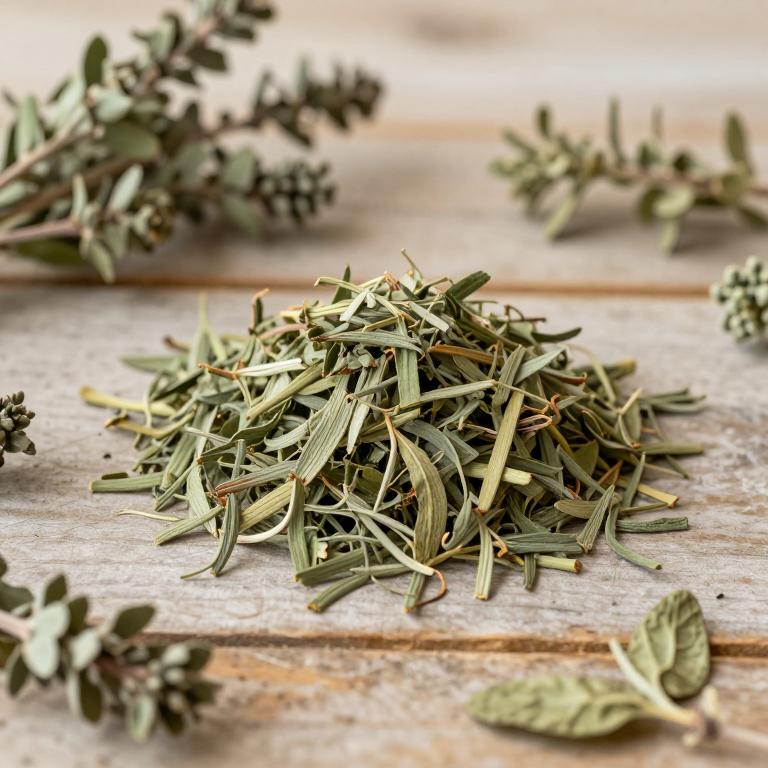
Names and Synonyms
Common Names
- striped-stalked saltwort
Scientific Names
Accepted name
Suaeda salsaSynonyms
- Suaeda salsa var. tenuiramea
- Suaeda maritima subsp. salsa
- Suaeda ussuriensis
- Suaeda heteroptera var. tenuiramea
- Suaeda heteroptera f. microcarpa
- Cochliospermum salsum
- Suaeda heteroptera
- Suaeda liaotungensis
- Schoberia salinaria
- Schoberia salsa
- Salsola salsa
- Chenopodina indica
- Chenopodina salsa
- Lerchia maritima var. salsa
- Lerchia salsa
- Suaeda salinaria
- Suaeda heteroptera var. microcarpa
Regional and Traditional Names
German:
- Chenopodium salsum
- Chenopodina salsa
- Lerchia salsa
- Lerchea salsa
- Salsola salsa
- Schoberia salsa
- Suaeda maritima var. salsa
- Suaeda maritima subsp. salsa
- Cochliospermum salsum
- Suaeda heteroptera
- Suaeda heteroptera var. tenuiramea
- Suaeda ussuriensis
Sources: Wikidata, Catalogue of Life
Taxonomical Classification
This plant belongs to the kingdom Plantae and is classified under the phylum Streptophyta and the class Equisetopsida. Within the subclass Magnoliidae, it falls under the order Caryophyllales and is a member of the family Amaranthaceae. Specifically, it is identified by the genus Suaeda, with its species name being salsa.
| Rank | Classification |
|---|---|
| Kingdom | Plantae |
| Phylum | Streptophyta |
| Class | Equisetopsida |
| Subclass | Magnoliidae |
| Order | Caryophyllales |
| Family | Amaranthaceae |
| Genus | Suaeda |
Sources: The World Checklist of Vascular Plants (WCVP)
Distribution
This plant exhibits a broad distribution across several distinct regions of the European continent. In Middle Europe, its presence can be documented in both Germany and Hungary. Moving toward the east, the species is found throughout the Baltic States. Its range also extends to the Crimean Peninsula, representing a significant part of its Eastern European territory. Finally, the distribution reaches into the vast stretches of Central European Russia.
| Region | Area |
|---|---|
| Middle Europe | Germany |
| Middle Europe | Hungary |
| Eastern Europe | Baltic States |
| Eastern Europe | Krym |
| Eastern Europe | Central European Russia |
| Eastern Europe | East European Russia |
| Eastern Europe | South European Russia |
| Eastern Europe | Ukraine |
| Siberia | Buryatiya |
| Russian Far East | Primorye |
Sources: The World Checklist of Vascular Plants (WCVP)
Botanical Identification
Ecology
The ecology of Suaeda salsa is defined by its specialized adaptation to extreme environmental conditions, primarily characterized by its preference for saline places. As a halophyte, it thrives in hypersaline environments such as salt marshes, coastal mudflats, and saline depressions where most other vegetation would perish due to osmotic stress. This plant is expertly adapted to manage high salt concentrations through physiological mechanisms that allow it to inhabit intertidal zones and alkaline soils. Its presence is a key indicator of salt-marsh ecosystems, where it plays a critical role in soil stabilization and nutrient cycling within these highly specialized, salt-dominated landscapes.
- Habitat :
- saline places
Life history
The life history of Suaeda salsa is characterized by an annual lifecycle, meaning it completes its entire biological development—from germination to seed production and senescence—within a single growing season. As an annual species, its survival strategy relies heavily on the rapid production and dispersal of seeds to ensure the continuity of the population in its saline habitats. The plant begins its life cycle as a seed, germinating when environmental conditions, such as salinity levels and moisture, become favorable. Following germination, it undergoes a period of vegetative growth, developing succulent stems and leaves that allow it to thrive in coastal or salt-crust environments. Once it reaches physiological maturity, the plant transitions into its reproductive phase, producing flowers and eventually setting seeds. After the successful maturation of these seeds, the individual plant completes its life cycle and dies, leaving the next generation to await the next seasonal cycle.
- Lifecycle :
- annual
Morphology
The morphology of Suaeda salsa is characterized by its growth form as a non-woody herb, existing as both a herb and a forb. It is a self-supporting plant that does not function as a climber, liana, or vine. In terms of its habitat and life strategy, it is an independent organism that is neither a parasite nor an epiphyte, typically maintaining a terrestrial to semiaquatic existence. The plant's stature is relatively low, with a plant height ranging from a minimum of 0.1 m to a maximum of 1 m.
- Aquatic :
- terrestrial
- Climber :
- self-supporting
- Epiphyte :
- terrestrial
- Growth form :
- herb
- Parasite :
- independent
- Plant height max:
- 1 m
- Plant height min:
- 0.1 m
- Woodiness :
- non-woody
Physiology
The physiology of Suaeda salsa is primarily defined by its specialized metabolic adaptations to hypersaline and arid environments. It utilizes a C3 photosynthetic pathway, which is a distinctive physiological trait given its ability to thrive in high-salinity coastal salt marshes where many other C3 plants would succumb to osmotic stress. To manage the physiological challenges posed by high salt concentrations, the plant employs an efficient halophytic strategy involving the sequestration of sodium and chloride ions into large central vacuoles within its succulent tissues. This process allows the plant to maintain low cytosolic ion concentrations while using the accumulated salts to lower its osmotic potential, thereby facilitating water uptake from the saline substrate. Furthermore, the plant exhibits significant physiological plasticity in its osmotic adjustment, synthesizing organic osmolytes such as glycine betaine to protect cellular structures and enzymatic functions from dehydration and ionic toxicity.
- Photosynthetic pathway :
- C3
Reproduction
The reproduction of Suaeda salsa is characterized by a specific seasonal flowering cycle that dictates its reproductive success. The flowering process typically commences in August and continues through the month of September, marking a concentrated period of floral development. This temporal window is essential for the plant's reproductive strategy, ensuring that pollination and subsequent seed production occur within these specific late-summer to early-autumn months.
- Flowering time :
- Aug
- Flowering time :
- Sep
Sources: Global Inventory of Floras and Traits (GIFT)
Plant Parts
Suaeda salsa has 1 reported plant parts identified across 1 scientific publications and several other databases that are studied for medicinal purposes. The most consistently reported plant part include leaf.
| Plant part | Supporting sources | Consensus |
|---|---|---|
| Leaf | 1 supporting sources | ★☆☆☆☆ |
Leaf
- Frontiers in plant science
Chemicals
Suaeda salsa has 2 reported phytochemicals identified across 1 scientific publications and several other databases. The most consistently reported chemicals include Flavonoids, LIGNIN.
| Chemical | Supporting sources | Consensus |
|---|---|---|
| Flavonoids | 1 supporting sources | ★☆☆☆☆ |
| LIGNIN | 1 supporting sources | ★☆☆☆☆ |
Flavonoids
- Frontiers in plant science
LIGNIN
- Frontiers in plant science