South-Indian seepweed
Suaeda monoica · Accepted scientific name
Scientific literature: Very Sparse (30 studies) · ★☆☆☆☆
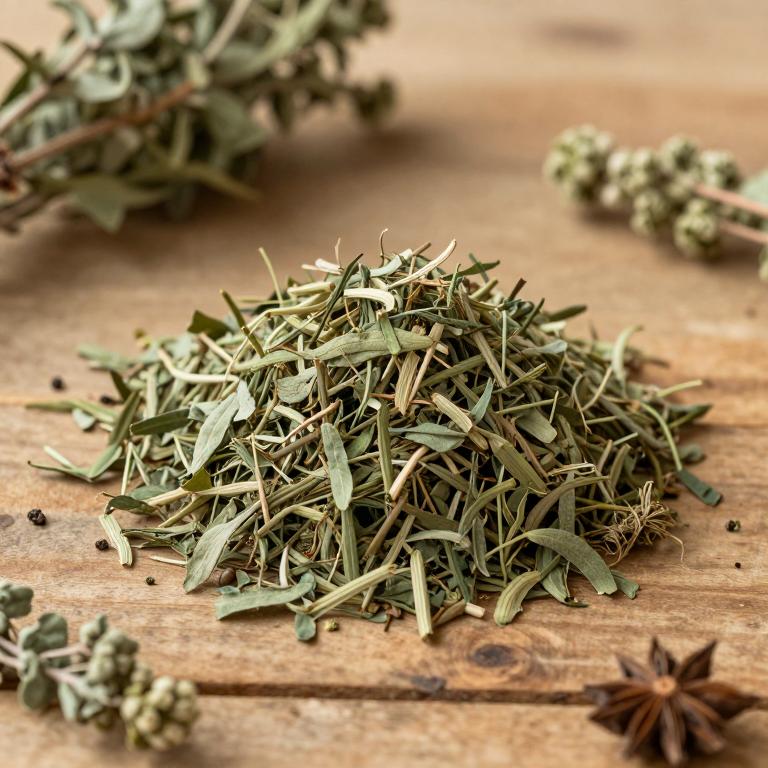
South-Indian seepweed, scientifically known as Suaeda monoica, is a succulent halophyte thriving in saline coastal environments. Renowned for its medicinal properties, this plant is rich in antioxidants and bioactive compounds. It is traditionally utilized in various folk remedies to treat skin ailments, inflammation, and diverse metabolic health conditions.
- Family
- Amaranthaceae
- Native range
- Africa
- Parts used
- Leaf
- Common names
- South-Indian Seepweed
- Scientific synonyms
- Salsola Monoica · Suaeda Vera Subsp. Brevifolia · 6 more
Names and Synonyms
Common Names
- South-Indian seepweed
Scientific Names
Accepted name
Suaeda monoicaSynonyms
- Salsola monoica
- Suaeda vera subsp. brevifolia
- Suaeda vera var. brevifolia
- Suaeda baluchestanica
- Lerchia monoica
- Schoberia monoica
- Suaeda fruticosa var. brevifolia
- Salsola lana
Sources: Wikidata, Catalogue of Life
Taxonomical Classification
This plant belongs to the kingdom Plantae and the phylum Streptophyta within the class Equisetopsida. It is further classified under the subclass Magnoliidae and the order Caryophyllales. Finally, it is a member of the family Amaranthaceae and is situated within the genus Suaeda.
| Rank | Classification |
|---|---|
| Kingdom | Plantae |
| Phylum | Streptophyta |
| Class | Equisetopsida |
| Subclass | Magnoliidae |
| Order | Caryophyllales |
| Family | Amaranthaceae |
| Genus | Suaeda |
Sources: The World Checklist of Vascular Plants (WCVP)
Distribution
This plant exhibits a specific distribution across several regions of the African continent. In Northern Africa, its presence is documented within the borders of Egypt. Moving toward the Northeast Tropical Africa region, it can be found in the country of Chad. The species also extends into the territories of Djibouti and Eritrea. Finally, its geographical range encompasses the highlands and lowlands of Ethiopia.
| Region | Area |
|---|---|
| Northern Africa | Egypt |
| Northeast Tropical Africa | Chad |
| Northeast Tropical Africa | Djibouti |
| Northeast Tropical Africa | Eritrea |
| Northeast Tropical Africa | Ethiopia |
| Northeast Tropical Africa | Socotra |
| Northeast Tropical Africa | Somalia |
| Northeast Tropical Africa | Sudan-South Sudan |
| East Tropical Africa | Kenya |
| East Tropical Africa | Tanzania |
Sources: The World Checklist of Vascular Plants (WCVP)
Botanical Identification
Ecology
The ecology of Suaeda monoica is defined by its specialized adaptation to saline and hydromorphic environments, typically colonizing the landward side of mangroves, the edges of saltpans, swamps, and rivers. It thrives in these transitional zones where soil salinity is high and moisture levels fluctuate between tidal inundation and periodic drying. By occupying these specific niches, the plant functions within coastal and estuarine ecosystems, often serving as a pioneer or stabilizing species in mudflats and salt-affected substrates. Its presence is closely tied to the availability of brackish or saline water, allowing it to occupy ecotones where terrestrial and aquatic habitats intersect.
- Habitat :
- landward side of mangroves, edges of saltpans, swamps and rivers
Life history
The life history of Suaeda monoica is characterized by a perennial lifecycle, allowing the plant to persist across multiple growing seasons. Structurally, it is classified under the life form of a chamaephyte, a growth habit where the permanent parts of the plant are located close to the soil surface, typically staying just above it. This chamaephyte designation applies to both its primary and secondary life form classifications, ensuring its resilience and ability to thrive within its specific ecological niche.
- Life form :
- chamaephyte
- Lifecycle :
- perennial
Morphology
The morphology of Suaeda monoica is characterized by its growth form as a woody shrub, reaching an average plant height of approximately 1 meter. As a self-supporting plant, it does not exhibit climbing behavior such as a liana or vine, nor does it function as an epiphyte, maintaining a terrestrial existence. The species is an independent organism, showing no parasitic tendencies, and thrives in terrestrial environments rather than aquatic or semiaquatic habitats.
- Aquatic :
- terrestrial
- Climber :
- self-supporting
- Epiphyte :
- terrestrial
- Growth form :
- shrub
- Parasite :
- independent
- Plant height mean:
- 1 m
- Woodiness :
- woody
Physiology
The physiology of Suaeda monoica is fundamentally defined by its specialized metabolic adaptations to saline and arid environments, most notably characterized by its C4 photosynthetic pathway. This carbon fixation mechanism allows the plant to concentrate CO2 around the enzyme RuBisCO, significantly reducing photorespiration and enhancing water-use efficiency compared to C3 species. By utilizing this C4 pathway, the plant can maintain high rates of photosynthesis even when stomata are partially closed to conserve moisture, a critical physiological strategy for survival in high-salinity habitats. This metabolic efficiency is often coupled with advanced halophytic mechanisms, such as the active sequestration of sodium and chloride ions into large central vacuoles within specialized succulent tissues, which helps maintain osmotic potential and prevents ion toxicity in the cytoplasm.
- Photosynthetic pathway :
- C4
Reproduction
The reproduction of Suaeda monoica is characterized by the production of highly uniform seeds, which play a critical role in its propagation and survival within its ecological niche. Detailed quantitative analysis of its reproductive output reveals an exceptionally consistent seed morphology, with a seed mass mean of 0.00045 g. This consistency is further evidenced by the lack of variance in the data, as both the maximum and minimum recorded seed mass values are identical at 0.00045 g. This precise uniformity in seed mass suggests a highly regulated developmental process during seed maturation, ensuring that each individual unit of dispersal carries a standardized amount of nutrient reserves for subsequent germination.
- Seed mass mean:
- 0.00045 g
Sources: Global Inventory of Floras and Traits (GIFT)
Plant Parts
Suaeda monoica has 1 reported plant parts identified across 1 scientific publications and several other databases that are studied for medicinal purposes. The most consistently reported plant part include leaf.
| Plant part | Supporting sources | Consensus |
|---|---|---|
| Leaf | 1 supporting sources | ★☆☆☆☆ |
Leaf
- Avicenna journal of medical biotechnology
Chemicals
Suaeda monoica has 6 reported phytochemicals identified across 1 scientific publications and several other databases. The most consistently reported chemicals include 2-Hydroxy-1-naphthoic acid, Flavonoids, Saponins, Silver nanoparticles, Tannins.
| Chemical | Supporting sources | Consensus |
|---|---|---|
| 2-Hydroxy-1-naphthoic acid | 1 supporting sources | ★☆☆☆☆ |
| Flavonoids | 1 supporting sources | ★☆☆☆☆ |
| Saponins | 1 supporting sources | ★☆☆☆☆ |
| Silver nanoparticles | 1 supporting sources | ★☆☆☆☆ |
| Tannins | 1 supporting sources | ★☆☆☆☆ |
| polyphenols | 1 supporting sources | ★☆☆☆☆ |
2-Hydroxy-1-naphthoic acid
- Saudi pharmaceutical journal : SPJ : the official publication of the Saudi Pharmaceutical Society
Flavonoids
- Frontiers in pharmacology
Saponins
- Frontiers in pharmacology
Silver nanoparticles
- Avicenna journal of medical biotechnology
Tannins
- Frontiers in pharmacology
polyphenols
- Frontiers in pharmacology
Activities
Suaeda monoica has 6 reported activities identified across 1 scientific publications and several other databases. The most consistently reported activities include Allelopathic, Antibacterial, Antidiuretic, Antifungal, Antioxidant.
| Activity | Supporting sources | Consensus |
|---|---|---|
| Allelopathic | 1 supporting sources | ★☆☆☆☆ |
| Antibacterial | 1 supporting sources | ★☆☆☆☆ |
| Antidiuretic | 1 supporting sources | ★☆☆☆☆ |
| Antifungal | 1 supporting sources | ★☆☆☆☆ |
| Antioxidant | 1 supporting sources | ★☆☆☆☆ |
| Phytotoxic | 1 supporting sources | ★☆☆☆☆ |
Allelopathic
- Frontiers in pharmacology
Antibacterial
- Frontiers in pharmacology
Antidiuretic
- Frontiers in pharmacology
Antifungal
- Frontiers in pharmacology
Antioxidant
- Frontiers in pharmacology
Phytotoxic
- Frontiers in pharmacology
Conditions
Suaeda monoica has 11 reported investigations on conditions identified across 1 scientific publications and several other databases. The most consistently reported conditions include apoptosis, asthma, hepatitis, oxidative stress, paralysis.
| Condition | Supporting sources | Consensus |
|---|---|---|
| Apoptosis | 1 supporting sources | ★☆☆☆☆ |
| Asthma | 1 supporting sources | ★☆☆☆☆ |
| Hepatitis | 1 supporting sources | ★☆☆☆☆ |
| Oxidative stress | 1 supporting sources | ★☆☆☆☆ |
| Paralysis | 1 supporting sources | ★☆☆☆☆ |
| Rheumatism | 1 supporting sources | ★☆☆☆☆ |
| Skin disease | 1 supporting sources | ★☆☆☆☆ |
| Snakebites | 1 supporting sources | ★☆☆☆☆ |
| Sore throat | 1 supporting sources | ★☆☆☆☆ |
| Ulcer | 1 supporting sources | ★☆☆☆☆ |
Apoptosis
- Saudi pharmaceutical journal : SPJ : the official publication of the Saudi Pharmaceutical Society
Asthma
- Saudi pharmaceutical journal : SPJ : the official publication of the Saudi Pharmaceutical Society
Hepatitis
- Saudi pharmaceutical journal : SPJ : the official publication of the Saudi Pharmaceutical Society
Oxidative stress
- Saudi pharmaceutical journal : SPJ : the official publication of the Saudi Pharmaceutical Society
Paralysis
- Saudi pharmaceutical journal : SPJ : the official publication of the Saudi Pharmaceutical Society
Rheumatism
- Saudi pharmaceutical journal : SPJ : the official publication of the Saudi Pharmaceutical Society
Skin disease
- Saudi pharmaceutical journal : SPJ : the official publication of the Saudi Pharmaceutical Society
Snakebites
- Saudi pharmaceutical journal : SPJ : the official publication of the Saudi Pharmaceutical Society
Sore throat
- Saudi pharmaceutical journal : SPJ : the official publication of the Saudi Pharmaceutical Society
Ulcer
- Saudi pharmaceutical journal : SPJ : the official publication of the Saudi Pharmaceutical Society
Preparations
Suaeda monoica has 1 reported preparations identified across 1 scientific publications and several other databases. The most consistently reported preparations include leaf extract.
| Preparation | Supporting sources | Consensus |
|---|---|---|
| Leaf extract | 1 supporting sources | ★☆☆☆☆ |
Leaf extract
- Avicenna journal of medical biotechnology