Seablite
Suaeda aegyptiaca · Accepted scientific name
Scientific literature: Very Sparse (12 studies) · ★☆☆☆☆
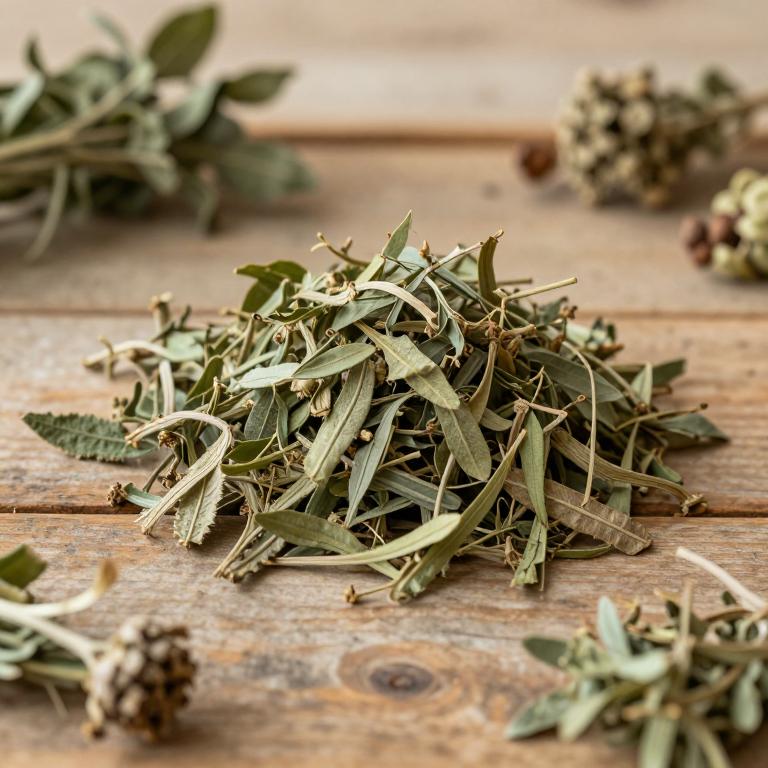
Seablite, scientifically known as Suaeda aegyptiaca, is a resilient halophyte primarily found in coastal saline environments. Renowned for its remarkable ability to thrive in harsh, salty soils, this medicinal plant offers significant therapeutic potential. It is widely studied for its unique antioxidant properties and diverse bioactive compounds.
- Family
- Amaranthaceae
- Native range
- Africa
- Parts used
- Leaf
- Common names
- Suwwad · Seablite
- Scientific synonyms
- Suaeda Hortensis · Suaeda Maris-Mortui · 14 more
Names and Synonyms
Common Names
- Suwwad
- Seablite
Scientific Names
Accepted name
Suaeda aegyptiacaSynonyms
- Suaeda hortensis
- Suaeda maris-mortui
- Suaeda baccata
- Schoberia hortensis
- Suaeda platyphylla
- Salsola divergens
- Salsola baccata
- Chenopodium aegyptiacum
- Chenopodium hortense
- Lerchia hortensis
- Lerchia baccata
- Schanginia baccata
- Schanginia aegyptiaca
- Schanginia hortensis
- Enchylaena aegyptiaca
- Salsola hortensis
Regional and Traditional Names
German:
- Chenopodium aegyptiacum
- Schanginia aegyptiaca
- Suaeda baccata
- Schanginia baccata
- Suaeda hortensis
- Schanginia hortensis
Sources: Wikidata, Catalogue of Life
Taxonomical Classification
This plant, Suaeda aegyptiaca, belongs to the kingdom Plantae and the phylum Streptophyta. Within the class Equisetopsida and subclass Magnoliidae, it is classified under the order Caryophyllales. Finally, it is a member of the family Amaranthaceae and the genus Suaeda.
| Rank | Classification |
|---|---|
| Kingdom | Plantae |
| Phylum | Streptophyta |
| Class | Equisetopsida |
| Subclass | Magnoliidae |
| Order | Caryophyllales |
| Family | Amaranthaceae |
| Genus | Suaeda |
Sources: The World Checklist of Vascular Plants (WCVP)
Distribution
This plant is primarily distributed across the diverse landscapes of Northern Africa. Within this region, its presence is documented in Egypt, Libya, and Tunisia. Beyond the Mediterranean coast, its range extends into the Northeast Tropical Africa zone. Specifically, it can be found growing in the territories of Djibouti and Eritrea. Consequently, its geographical footprint covers a significant portion of the African continent.
| Region | Area |
|---|---|
| Northern Africa | Egypt |
| Northern Africa | Libya |
| Northern Africa | Tunisia |
| Northeast Tropical Africa | Djibouti |
| Northeast Tropical Africa | Eritrea |
| Northeast Tropical Africa | Somalia |
| Northeast Tropical Africa | Sudan-South Sudan |
| Western Asia | Afghanistan |
| Western Asia | Cyprus |
| Western Asia | Iran |
Sources: The World Checklist of Vascular Plants (WCVP)
Botanical Identification
Ecology
The ecology of Suaeda aegypiactica is defined by its specific altitudinal preferences, as the species thrives within a distinct vertical niche. It is predominantly found in environments situated at elevations ranging from a minimum of 500 m AMSL to a maximum of 1000 m AMSL. This specific elevational range suggests an adaptation to particular climatic zones and atmospheric pressures characteristic of these mid-altitude habitats.
- Elevational range max:
- 1000 m AMSL
- Elevational range min:
- 500 m AMSL
Life history
The life history of Suaeda aegyptiaca is characterized by its classification as an annual plant, meaning it completes its entire reproductive cycle within a single growing season. As a therophyte, the species follows a life strategy where the majority of its vegetative structure dies back at the end of the season, leaving only specialized seeds to survive the unfavorable periods and ensure the continuation of the next generation. This specific life form allows the plant to efficiently exploit ephemeral resources in its environment, relying on the rapid development of its life cycle to reach maturity and produce seeds before the onset of seasonal stress.
- Life form :
- therophyte
- Lifecycle :
- annual
Morphology
The morphology of Suaeda aegyptiaca is characterized by a growth form classified as a herb, specifically presenting as a non-woody herb. It functions as an independent organism, neither acting as a parasite nor an epiphyte, as it maintains a terrestrial habitat. The plant is self-supporting in its structure, lacking any climbing tendencies, and occupies terrestrial environments rather than aquatic or semiaquatic zones.
- Aquatic :
- terrestrial
- Climber :
- self-supporting
- Epiphyte :
- terrestrial
- Growth form :
- herb
- Parasite :
- independent
- Woodiness :
- non-woody
Physiology
The physiology of Suaeda aegypteca is characterized by a highly specialized metabolic framework designed to optimize resource efficiency in arid environments. Most notably, the plant utilizes a C4 photosynthetic pathway, a physiological adaptation that allows for the efficient fixation of carbon dioxide while minimizing photorespiration and reducing water loss through transpiration. This C4 mechanism enables the plant to maintain high photosynthetic rates even under conditions of high temperature, intense solar radiation, and limited water availability, which are typical of its natural habitats. By concentrating CO2 around the enzyme RuBisCO within specialized bundle sheath cells, the plant achieves superior carbon assimilation efficiency compared to C3 species. This metabolic specialization is often integrated with halophytic physiological traits, including the ability to regulate osmotic potential and manage salt accumulation within its tissues to sustain cellular functions in saline soils.
- Photosynthetic pathway :
- C4
Reproduction
The reproduction of Suaeda aegyptiaca is characterized by a specific flowering phenology and the production of minute seeds. The flowering period for this species is relatively long, typically beginning in September and extending through October, though the timing can be variable depending on environmental conditions. The seeds produced during this cycle are extremely lightweight, with a mean seed mass of approximately 0.000256667 g. Individual seed weights fluctuate within a narrow range, with a minimum mass of 0.00022 g and a maximum mass reaching 0.00031 g.
- Flowering time :
- Sep
- Flowering time :
- Oct
- Seed mass max:
- 0.00031 g
- Seed mass mean:
- 0.000256667 g
- Seed mass min:
- 0.00022 g
Sources: Global Inventory of Floras and Traits (GIFT)
Plant Parts
Suaeda aegyptiaca has 1 reported plant parts identified across 1 scientific publications and several other databases that are studied for medicinal purposes. The most consistently reported plant part include leaf.
| Plant part | Supporting sources | Consensus |
|---|---|---|
| Leaf | 1 supporting sources | ★☆☆☆☆ |
Leaf
- Archives of Razi Institute
Chemicals
Suaeda aegyptiaca has 3 reported phytochemicals identified across 1 scientific publications and several other databases. The most consistently reported chemicals include Flavonoids, Saponins, Tannins.
| Chemical | Supporting sources | Consensus |
|---|---|---|
| Flavonoids | 1 supporting sources | ★☆☆☆☆ |
| Saponins | 1 supporting sources | ★☆☆☆☆ |
| Tannins | 1 supporting sources | ★☆☆☆☆ |
Flavonoids
- Archives of Razi Institute
Saponins
- Archives of Razi Institute
Tannins
- Archives of Razi Institute
Activities
Suaeda aegyptiaca has 3 reported activities identified across 1 scientific publications and several other databases. The most consistently reported activities include Antifungal, Antimicrobial, Antioxidant.
| Activity | Supporting sources | Consensus |
|---|---|---|
| Antifungal | 1 supporting sources | ★☆☆☆☆ |
| Antimicrobial | 1 supporting sources | ★☆☆☆☆ |
| Antioxidant | 1 supporting sources | ★☆☆☆☆ |
Antifungal
- Materials science & engineering. C, Materials for biological applications
Antimicrobial
- Materials science & engineering. C, Materials for biological applications
Antioxidant
- Materials science & engineering. C, Materials for biological applications
Conditions
Suaeda aegyptiaca has 4 reported investigations on conditions identified across 1 scientific publications and several other databases. The most consistently reported conditions include Escherichia coli, Pseudomonas aeruginosa, Staphylococcus aureus, Staphylococcus epidermidis.
| Condition | Supporting sources | Consensus |
|---|---|---|
| Escherichia coli | 1 supporting sources | ★☆☆☆☆ |
| Pseudomonas aeruginosa | 1 supporting sources | ★☆☆☆☆ |
| Staphylococcus aureus | 1 supporting sources | ★☆☆☆☆ |
| Staphylococcus epidermidis | 1 supporting sources | ★☆☆☆☆ |
Escherichia coli
- Archives of Razi Institute
Pseudomonas aeruginosa
- Archives of Razi Institute
Staphylococcus aureus
- Archives of Razi Institute
Staphylococcus epidermidis
- Archives of Razi Institute
Preparations
Suaeda aegyptiaca has 3 reported preparations identified across 1 scientific publications and several other databases. The most consistently reported preparations include Methanol Extracts of Suaeda aegyptiaca Leaves, methanol extract of Suaeda aegyptiaca leaves, methanolic extract of Suaeda aegyptiaca leaves.
| Preparation | Supporting sources | Consensus |
|---|---|---|
| Methanol extracts of suaeda aegyptiaca leaves | 1 supporting sources | ★☆☆☆☆ |
| Methanol extract of suaeda aegyptiaca leaves | 1 supporting sources | ★☆☆☆☆ |
| Methanolic extract of suaeda aegyptiaca leaves | 1 supporting sources | ★☆☆☆☆ |
Methanol extracts of suaeda aegyptiaca leaves
- Archives of Razi Institute
Methanol extract of suaeda aegyptiaca leaves
- Archives of Razi Institute
Methanolic extract of suaeda aegyptiaca leaves
- Archives of Razi Institute