Chinese scholartree
Styphnolobium japonicum · Accepted scientific name
Scientific literature: Very Extensive (654 studies) · ★★★★★
Chinese scholartree, scientifically known as Styphnolobium japonicum, is a deciduous tree prized in traditional medicine. Renowned for its bioactive flavonoids and alkaloids, it is utilized to treat inflammation, skin conditions, and various ailments. This versatile plant offers significant therapeutic potential, bridging ancient herbal wisdom with modern pharmacological research.
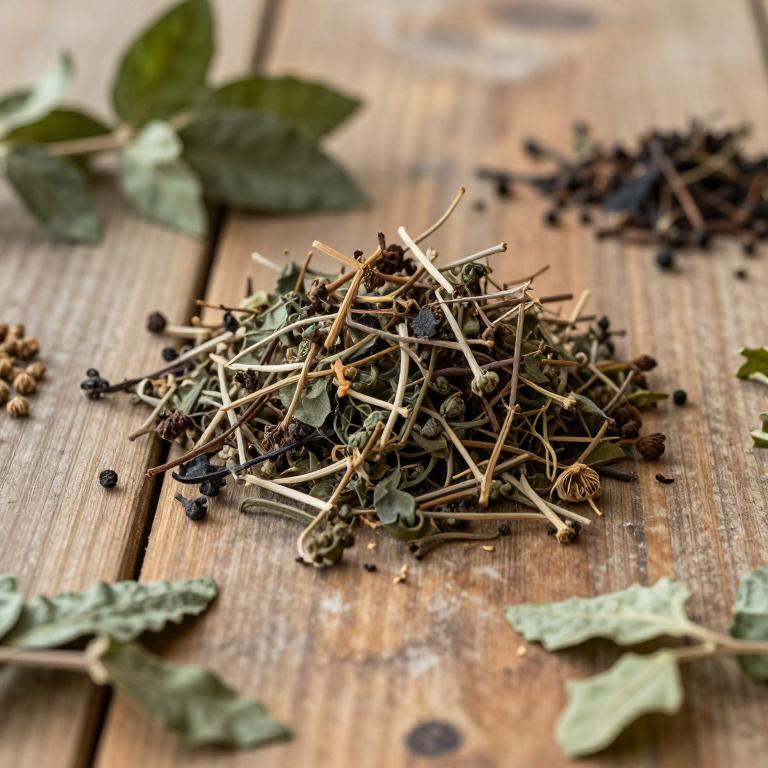
Names and Synonyms
Common Names
- Chinese scholartree
- Japanese pagoda-tree
- pagoda-tree
- Japanese pagoda tree
- pagoda tree
- Scholar tree
Scientific Names
Accepted name
Styphnolobium japonicumSynonyms
- Pongamia chinensis
- Anagyris chinensis
- Styphnolobium japonicum var. pubescens
- Sophora japonica f. pendula
- Sophora pendula
- Sophora japonica var. vestita
- Sophora sinensis
- Sophora japonica f. columnaris
- Ormosia esquirolii
- Sophora angustifoliola
- Sophora vestita
- Sophora japonica f. praecox
- Sophora sinica
- Sophora pubescens
- Styphnolobium japonicum var. pendulum
- Sophora japonica f. violacea
- Sophora korolkowii
- Sophora japonica
- Radiusia chinensis
- Sophora japonica f. oligophylla
- Sophora japonica var. pendula
- Sophora japonica var. pubescens
- Sophora japonica var. violacea
- Styphnolobium japonicum f. violaceum
- Styphnolobium japonicum f. vestitum
- Styphnolobium japonicum f. oligophyllum
- Sophora japonica f. oligophylla
- Styphnolobium japonicum f. pendulum
Regional and Traditional Names
Spanish:
- Sophora japonica
- Acacia del Japón
- Árbol pagoda asiático
- Falsa acacia del Japón
German:
- Japanischer Schnurbaum
- Japanischer Schnurbaum
French:
- Arbre à miel
- Sophora du Japon
- Arbre aux pagodes
- Sophora du Japon
Sources: Wikidata, Catalogue of Life
Taxonomical Classification
This plant belongs to the kingdom Plantae and the phylum Streptophyta, falling under the class Equisetopsida and subclass Magnoliidae. Within the order Fabales, it is classified under the family Fabaceae and is specifically identified by the genus Styphnolobium.
| Rank | Classification |
|---|---|
| Kingdom | Plantae |
| Phylum | Streptophyta |
| Class | Equisetopsida |
| Subclass | Magnoliidae |
| Order | Fabales |
| Family | Fabaceae |
| Genus | Styphnolobium |
Sources: The World Checklist of Vascular Plants (WCVP)
Distribution
This plant exhibits a diverse presence across several key regions of the European continent. In Middle Europe, its distribution includes the territories of Czechia and Slovakia, as well as Hungary. Moving toward the west, the species can be found throughout Southwestern Europe, specifically in France and Spain. Additionally, its range extends into Southeastern Europe within the borders of Romania. Together, these locations illustrate a wide geographical spread across various European climates.
| Region | Area |
|---|---|
| Middle Europe | Czechia-Slovakia |
| Middle Europe | Hungary |
| Southwestern Europe | France |
| Southwestern Europe | Spain |
| Southeastern Europe | Romania |
| Southeastern Europe | Sicilia |
| Eastern Europe | Krym |
| Eastern Europe | South European Russia |
| Eastern Europe | Ukraine |
| Northern Africa | Egypt |
Sources: The World Checklist of Vascular Plants (WCVP)
Botanical Identification
Ecology
The ecology of Styphnolobium japonicum is characterized by its adaptability to various environments, though it has specific historical associations with human-managed landscapes. In particular, the species has been successfully cultivated in gardens throughout the southern regions of the USSR, where it thrives under managed conditions. This cultivation pattern suggests a preference for temperate climates found in these southern latitudes, where it can integrate into ornamental and horticultural settings. Its ecological presence in these regions highlights its capacity to adjust to localized soil and climatic conditions typical of garden ecosystems in those geographic zones.
- Habitat :
- cultivated in dardens in southern regions of the USSR
Life history
The life history of Styphnolobium japonicum is characterized by its status as a perennial organism, allowing it to persist through multiple growing seasons and establish long-term presence in its ecosystem. As a phanerophyte, its regenerative buds are located high above the ground on woody stems, a structural adaptation that enables it to thrive as a robust tree. This phanerophyte life form ensures that the plant can withstand seasonal environmental shifts, maintaining its structural integrity and reproductive potential over many years.
- Life form :
- phanerophyte
- Lifecycle :
- perennial
Morphology
The morphology of Styphnolobium japonicum is characterized by its robust, woody growth form, functioning as a self-supporting tree. It is a terrestrial species that exists as an independent organism, neither acting as a parasite nor as an epiphyte. The plant displays a significant vertical structure, typically reaching a plant height ranging from a minimum of 10 m to a maximum of 20 m. As a purely terrestrial tree, it does not exhibit aquatic or semiaquatic tendencies, maintaining a stable, self-supporting stature throughout its life cycle.
- Aquatic :
- terrestrial
- Climber :
- self-supporting
- Epiphyte :
- terrestrial
- Growth form :
- tree
- Parasite :
- independent
- Plant height max:
- 20 m
- Plant height min:
- 10 m
- Woodiness :
- woody
Physiology
The physiology of Styphnolobium japonicum is characterized by a C3 photosynthetic pathway, which dictates its carbon fixation mechanisms and metabolic efficiency in varying environmental conditions. This metabolic strategy involves the direct fixation of CO2 via the enzyme RuBisCO, typically favoring temperate climates where moisture and temperature are moderate. Furthermore, the structural integrity and mechanical properties of its vegetative components are supported by a stem specific density (SSD) with a mean value of 702 mg/cm³. This density value reflects the internal cellular composition and lignification of the stem tissues, contributing to the plant's overall structural stability and resource transport capabilities.
- Photosynthetic pathway :
- C3
- Stem specific density (SSD) mean:
- 702 mg/cm³
Reproduction
The reproductive cycle of Styphnolobium japonicum is characterized by a specific seasonal flowering period that typically commences in July and concludes in August. The plant produces fleshy fruits, which facilitate a zoochorous dispersal syndrome, relying on animals to aid in the spreading of its offspring. The seeds produced are relatively uniform in size, with a recorded maximum and mean seed volume of 110 mm³. In terms of weight, the seeds exhibit slight variations, with a minimum mass of 0.1012 g, a mean mass of 0.109639 g, and a maximum mass reaching 0.1356 g.
- Dispersal syndrome :
- zoochorous
- Flowering time :
- Jul
- Flowering time :
- Aug
- Fruit dryness :
- fleshy
- Seed mass max:
- 0.1356 g
- Seed mass mean:
- 0.109639 g
- Seed mass min:
- 0.1012 g
- Seed volume max:
- 110 mm³
Sources: Global Inventory of Floras and Traits (GIFT)
Plant Parts
Styphnolobium japonicum has 4 reported plant parts identified across 12 scientific publications and several other databases that are studied for medicinal purposes. The most consistently reported plant part include flower, fruit, leaf, seed.
| Plant part | Supporting sources | Consensus |
|---|---|---|
| Flower | 4 supporting sources | ★★☆☆☆ |
| Fruit | 4 supporting sources | ★★☆☆☆ |
| Leaf | 3 supporting sources | ★★☆☆☆ |
| Seed | 1 supporting sources | ★☆☆☆☆ |
Flower
- Biomedicine & pharmacotherapy = Biomedecine & pharmacotherapie
- Scientific reports
- Ultrasonics sonochemistry
- Genes
Fruit
- Planta medica
- Journal of microbiology and biotechnology
- Nutrients
- Biomedicine & pharmacotherapy = Biomedecine & pharmacotherapie
Leaf
- Biomedicine & pharmacotherapy = Biomedecine & pharmacotherapie
- Journal of natural products
- Wiadomosci lekarskie (Warsaw, Poland : 1960)
Seed
- Plant molecular biology
Chemicals
Styphnolobium japonicum has 99 reported phytochemicals identified across 12 scientific publications and several other databases. The most consistently reported chemicals include quercetin, RUTIN, Flavonoids, Sophoricoside, genistein.
| Chemical | Supporting sources | Consensus |
|---|---|---|
| quercetin | 11 supporting sources | ★★★★★ |
| RUTIN | 10 supporting sources | ★★★★★ |
| Flavonoids | 6 supporting sources | ★★★☆☆ |
| Sophoricoside | 6 supporting sources | ★★★☆☆ |
| genistein | 6 supporting sources | ★★★☆☆ |
| kaempferol | 5 supporting sources | ★★★☆☆ |
| Sophorabioside | 4 supporting sources | ★★☆☆☆ |
| Genistin | 2 supporting sources | ★☆☆☆☆ |
| Isorhamnetin | 2 supporting sources | ★☆☆☆☆ |
| L-Maackiain | 2 supporting sources | ★☆☆☆☆ |
quercetin
- Dr. Duke
- Cytotechnology
- Molecules (Basel, Switzerland)
- The American journal of Chinese medicine
- Zhongguo Zhong yao za zhi = Zhongguo zhongyao zazhi = China journal of Chinese materia medica
View 6 additional sources
- Biomedicine & pharmacotherapy = Biomedecine & pharmacotherapie
- Talanta
- Journal of ethnopharmacology
- Journal of Asian natural products research
- Zhonghua nan ke xue = National journal of andrology
- International journal of biological macromolecules
RUTIN
- Dr. Duke
- Analytical sciences : the international journal of the Japan Society for Analytical Chemistry
- Zhongguo Zhong yao za zhi = Zhongguo zhongyao zazhi = China journal of Chinese materia medica
- Talanta
- Journal of natural products
View 5 additional sources
- Molecules (Basel, Switzerland)
- The American journal of Chinese medicine
- Ultrasonics sonochemistry
- The Analyst
- International journal of biological macromolecules
Flavonoids
- Journal of agricultural and food chemistry
- Chemistry & biodiversity
- Biological & pharmaceutical bulletin
- Journal of ethnopharmacology
- Frontiers in plant science
View 1 additional sources
- International journal of biological macromolecules
Sophoricoside
- Dr. Duke
- Planta medica
- Molecules (Basel, Switzerland)
- Journal of microbiology and biotechnology
- The American journal of Chinese medicine
View 1 additional sources
- Nutrients
genistein
- Dr. Duke
- Planta medica
- Molecules (Basel, Switzerland)
- The American journal of Chinese medicine
- Acta clinica Croatica
View 1 additional sources
- Journal of Asian natural products research
kaempferol
- Dr. Duke
- Naunyn-Schmiedeberg's archives of pharmacology
- Molecules (Basel, Switzerland)
- Talanta
- Journal of Asian natural products research
Sophorabioside
- Dr. Duke
- Journal of microbiology and biotechnology
- Journal of natural products
- The American journal of Chinese medicine
Genistin
- Planta medica
- Journal of natural products
Isorhamnetin
- Cytotechnology
- Journal of Asian natural products research
L-Maackiain
- Dr. Duke
- Journal of Asian natural products research
Activities
Styphnolobium japonicum has 435 reported activities identified across 12 scientific publications and several other databases. The most consistently reported activities include Antioxidant, Antibacterial, Anticancer, Antitumor, Antiviral.
| Activity | Supporting sources | Consensus |
|---|---|---|
| Antioxidant | 6 supporting sources | ★★★☆☆ |
| Antibacterial | 3 supporting sources | ★★☆☆☆ |
| Anticancer | 3 supporting sources | ★★☆☆☆ |
| Antitumor | 3 supporting sources | ★★☆☆☆ |
| Antiviral | 3 supporting sources | ★★☆☆☆ |
| Antihypertensive | 2 supporting sources | ★☆☆☆☆ |
| Antiobesity | 2 supporting sources | ★☆☆☆☆ |
| Hypoglycemic | 2 supporting sources | ★☆☆☆☆ |
| Immunomodulator | 2 supporting sources | ★☆☆☆☆ |
| 11B-HSD-Inhibitor | 1 supporting sources | ★☆☆☆☆ |
Antioxidant
- Dr. Duke
- Journal of ethnopharmacology
- Biomedicine & pharmacotherapy = Biomedecine & pharmacotherapie
- Scientific reports
- Molecules (Basel, Switzerland)
View 1 additional sources
- International journal of biological macromolecules
Antibacterial
- Dr. Duke
- Journal of ethnopharmacology
- Biomedicine & pharmacotherapy = Biomedecine & pharmacotherapie
Anticancer
- Dr. Duke
- Biomedicine & pharmacotherapy = Biomedecine & pharmacotherapie
- International journal of biological macromolecules
Antitumor
- Dr. Duke
- Journal of fungi (Basel, Switzerland)
- Journal of ethnopharmacology
Antiviral
- Dr. Duke
- Journal of ethnopharmacology
- Biomedicine & pharmacotherapy = Biomedecine & pharmacotherapie
Antihypertensive
- Dr. Duke
- Biomedicine & pharmacotherapy = Biomedecine & pharmacotherapie
Antiobesity
- Dr. Duke
- Journal of ethnopharmacology
Hypoglycemic
- Dr. Duke
- Biomedicine & pharmacotherapy = Biomedecine & pharmacotherapie
Immunomodulator
- Dr. Duke
- Molecules (Basel, Switzerland)
11B-HSD-Inhibitor
- Dr. Duke
Conditions
Styphnolobium japonicum has 1 reported investigations on conditions identified across 12 scientific publications and several other databases. The most consistently reported conditions include cancer.
| Condition | Supporting sources | Consensus |
|---|---|---|
| Cancer | 1 supporting sources | ★☆☆☆☆ |
Cancer
- Scientific reports
Preparations
Styphnolobium japonicum has 13 reported preparations identified across 12 scientific publications and several other databases. The most consistently reported preparations include Extracts, ethanolic extract, ethanolic nanoemulsion, extracts, flower buds.
| Preparation | Supporting sources | Consensus |
|---|---|---|
| Extracts | 1 supporting sources | ★☆☆☆☆ |
| Ethanolic extract | 1 supporting sources | ★☆☆☆☆ |
| Ethanolic nanoemulsion | 1 supporting sources | ★☆☆☆☆ |
| Extracts | 1 supporting sources | ★☆☆☆☆ |
| Flower buds | 1 supporting sources | ★☆☆☆☆ |
| N-buoh extract of the pericarp | 1 supporting sources | ★☆☆☆☆ |
| Pericarps | 1 supporting sources | ★☆☆☆☆ |
| Processed sophora japonica | 1 supporting sources | ★☆☆☆☆ |
| Seed extracts | 1 supporting sources | ★☆☆☆☆ |
| Sophoricoside | 1 supporting sources | ★☆☆☆☆ |
Extracts
- Journal of ethnopharmacology
Ethanolic extract
- Food science & nutrition
Ethanolic nanoemulsion
- Food science & nutrition
Extracts
- Medicines (Basel, Switzerland)
Flower buds
- Ultrasonics sonochemistry
N-buoh extract of the pericarp
- Journal of Asian natural products research
Pericarps
- Zhongguo Zhong yao za zhi = Zhongguo zhongyao zazhi = China journal of Chinese materia medica
Processed sophora japonica
- Zhongguo Zhong yao za zhi = Zhongguo zhongyao zazhi = China journal of Chinese materia medica
Seed extracts
- Biological chemistry Hoppe-Seyler
Sophoricoside
- Molecules (Basel, Switzerland)