shrubby stylo
Stylosanthes scabra · Accepted scientific name
Scientific literature: Very Sparse (3 studies) · ★☆☆☆☆
Shrubby stylo, scientifically known as Stylosanthes scabra, is a resilient, spreading legume widely used in traditional medicine. Native to tropical regions, this hardy plant is valued for its bioactive properties, often utilized to treat skin ailments, inflammation, and digestive issues, making it a significant subject in ethnobotanical research.
- Family
- Fabaceae
- Native range
- Australasia
- Parts used
- Not available
- Common names
- Shrubby Stylo · Pencilflower
- Scientific synonyms
- Stylosanthes Subsericea · Stylosanthes Scoparia · 3 more
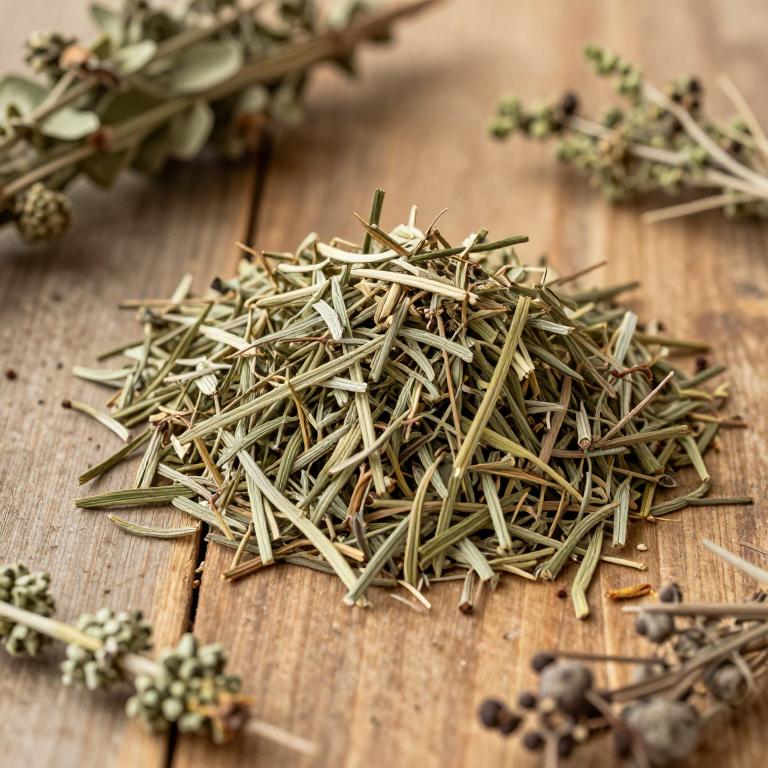
Names and Synonyms
Common Names
- shrubby stylo
- pencilflower
Scientific Names
Accepted name
Stylosanthes scabraSynonyms
- Stylosanthes subsericea
- Stylosanthes scoparia
- Stylosanthes plicata
- Stylosanthes diarthra
- Stylosanthes gloiodes
Sources: Wikidata, Catalogue of Life
Taxonomical Classification
This plant belongs to the kingdom Plantae and the phylum Streptophyta within the class Equisetopsida. Under the subclass Magnoliidae, it is classified under the order Fabales and the family Fabaceae. Finally, it is identified by the genus Stylosanthes.
| Rank | Classification |
|---|---|
| Kingdom | Plantae |
| Phylum | Streptophyta |
| Class | Equisetopsida |
| Subclass | Magnoliidae |
| Order | Fabales |
| Family | Fabaceae |
| Genus | Stylosanthes |
Sources: The World Checklist of Vascular Plants (WCVP)
Distribution
This plant exhibits a widespread geographical distribution spanning across several regions of Oceania. In Australia, it can be found growing in the Northern Territory, Queensland, and Western Australia. Its presence extends significantly into the Pacific islands as well. Specifically, it is located within the North-Central Pacific in Hawaii. Furthermore, the species is also documented in the South-Central Pacific within the Marquesas.
| Region | Area |
|---|---|
| Australia | Northern Territory |
| Australia | Queensland |
| Australia | Western Australia |
| South-Central Pacific | Marquesas |
| North-Central Pacific | Hawaii |
| Northern South America | Venezuela |
| Western South America | Bolivia |
| Western South America | Colombia |
| Western South America | Ecuador |
| Western South America | Peru |
Sources: The World Checklist of Vascular Plants (WCVP)
Botanical Identification
Ecology
The ecology of Stylosanthes scabra is characterized by a broad adaptability to diverse Brazilian biomes and a wide altitudinal distribution. This species thrives in several distinct ecosystems, including the Caatinga (strictu sensu), Campo de Altitude, Campo Limpo, Campo Rupestre, Cerrado (lato sensu), Floresta Estacional Decidual, and Floresta Estacional Semi-decidual. Its ability to inhabit such varied environments—ranging from open grasslands and rocky outcrops to seasonal deciduous forests—demonstrates significant ecological plasticity. Furthermore, the plant exhibits a vast vertical range, occurring from sea level (0 m AMSL) up to elevations of 1950 m AMSL, allowing it to occupy a wide array of climatic and topographic niches.
- Elevational range max:
- 1950 m AMSL
- Elevational range min:
- 0 m AMSL
- Habitat :
- Caatinga (stricto sensu), Campo de Altitude, Campo Limpo, Campo Rupestre, Cerrado (lato sensu), Floresta Estacional Decidual, Floresta Estacional Semidecidual
Life history
The life history of Stylosanthes scabra is characterized by a perennial lifecycle, allowing the species to persist across multiple growing seasons. In terms of its structural growth habit and survival strategy, the plant functions as a therophyte, completing its seasonal development through a specialized life form that prioritizes rapid growth and reproduction. This therophyte classification is consistent across its primary life form designations, indicating a strategy where the plant typically survives unfavorable conditions through ephemeral structures or seeds before re-emerging.
- Life form :
- therophyte
- Lifecycle :
- perennial
Morphology
The morphology of Stylosanthes scabra is characterized by its growth form as a non-woody herb, specifically functioning as a self-supporting plant that does not require climbing structures. It exhibits a versatile ecological habit, ranging from terrestrial to semiaquatic environments, and exists as an independent organism rather than a parasite or epiphyte. The plant maintains a relatively modest stature, with a height that typically ranges from a minimum of 0.3 m to a maximum of 2 m.
- Aquatic :
- terrestrial
- Climber :
- self-supporting
- Epiphyte :
- terrestrial
- Growth form :
- herb
- Parasite :
- independent
- Plant height max:
- 2 m
- Plant height min:
- 0.3 m
- Woodiness :
- non-woody
Physiology
The physiology of Stylosanthes scabra is characterized by a C3 photosynthetic pathway, which dictates its carbon fixation processes and metabolic efficiency in its natural environment. The morphological aspects of its foliage play a crucial role in its physiological functions, specifically regarding gas exchange and light interception. The leaves exhibit a distinct size range, with lengths varying from a minimum of 0.9 cm to a maximum of 3.3 cm. Complementing this longitudinal variation, the leaf width ranges from a minimum of 0.4 cm to a maximum of 1.2 cm, defining the specific surface area available for transpiration and photosynthetic activity.
- Leaf length max:
- 3.3 cm
- Leaf length min:
- 0.9 cm
- Leaf width max:
- 1.2 cm
- Leaf width min:
- 0.4 cm
- Photosynthetic pathway :
- C3
Reproduction
The reproduction of Stylosanthes scabra is characterized by the production of small, specialized fruit structures classified as a pod. These fruits exhibit a variable length, ranging from a minimum of 0.1 cm to a maximum of 0.2 cm. The reproductive process concludes with a dehiscence mechanism, meaning the fruit is dehiscent and splits open to release its contents. The seeds produced are notably minute, with a maximum seed length of 2 mm. In terms of weight, the seeds are extremely lightweight and consistent, maintaining a uniform seed mass of 0.002 g, which serves as both the minimum, mean, and maximum recorded value for the species.
- Dehiscence :
- dehiscent
- Fruit length max:
- 0.2 cm
- Fruit length min:
- 0.1 cm
- Fruit type :
- pod
- Seed length max:
- 2 mm
- Seed mass mean:
- 0.002 g
Sources: Global Inventory of Floras and Traits (GIFT)
Chemicals
Stylosanthes scabra has 2 reported phytochemicals identified across 0 scientific publications and several other databases. The most consistently reported chemicals include Condensed Tannin, SAPONIN.
| Chemical | Supporting sources | Consensus |
|---|---|---|
| Condensed Tannin | 1 supporting sources | ★☆☆☆☆ |
| SAPONIN | 1 supporting sources | ★☆☆☆☆ |
Condensed Tannin
- Tropical animal health and production
SAPONIN
- Tropical animal health and production
Conditions
Stylosanthes scabra has 1 reported investigations on conditions identified across 0 scientific publications and several other databases. The most consistently reported conditions include Water stress.
| Condition | Supporting sources | Consensus |
|---|---|---|
| Water stress | 1 supporting sources | ★☆☆☆☆ |
Water stress
- Journal of experimental botany