Wild Lucerne
Stylosanthes fruticosa · Accepted scientific name
Scientific literature: Very Sparse (6 studies) · ★☆☆☆☆
Wild Lucerne, scientifically known as Stylosanthes fruticosa, is a resilient, woody shrub native to tropical regions. Renowned for its ability to thrive in poor soils, this medicinal plant is valued in traditional medicine for its antimicrobial and anti-inflammatory properties, offering significant potential for treating various skin and systemic ailments.
- Family
- Fabaceae
- Native range
- Africa
- Parts used
- Not available
- Common names
- Wild Lucerne · Shrubby Pencilflower
- Scientific synonyms
- Stylosanthes Suborbiculata · Stylosanthes Setosa · 4 more
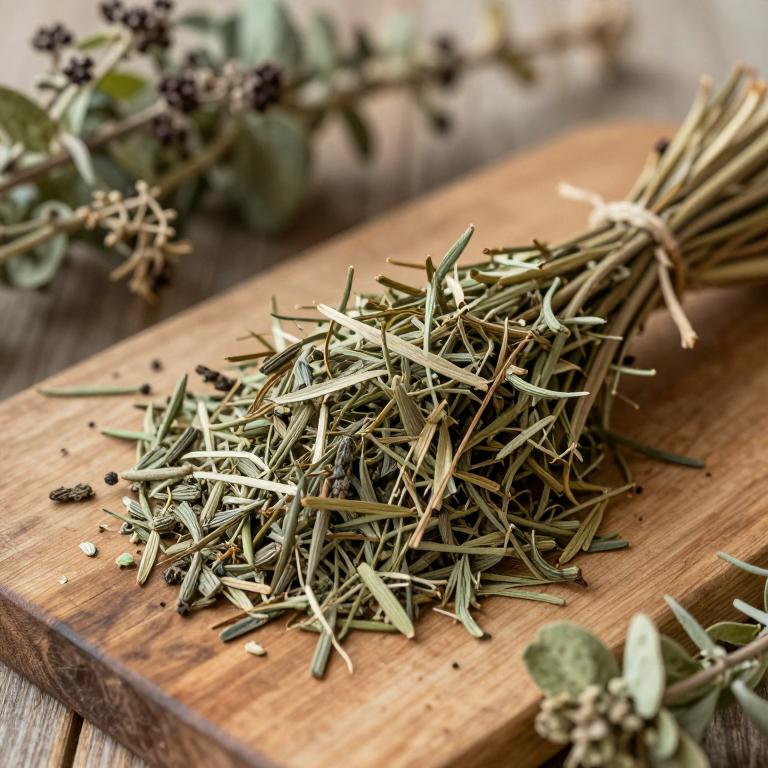
Names and Synonyms
Common Names
- Wild Lucerne
- shrubby pencilflower
Scientific Names
Accepted name
Stylosanthes fruticosaSynonyms
- Stylosanthes suborbiculata
- Stylosanthes setosa
- Stylosanthes bojeri
- Stylosanthes aprica
- Stylosanthes flavicans
- Arachis fruticosa
Regional and Traditional Names
French:
- Stylosanthe arbustif
Sources: Wikidata, Catalogue of Life
Taxonomical Classification
This plant belongs to the kingdom Plantae and the phylum Streptophyta, falling under the class Equisetopsida and subclass Magnoliidae. Within the order Fabales, it is a member of the Fabaceae family. It is specifically classified under the genus Stylosanthes.
| Rank | Classification |
|---|---|
| Kingdom | Plantae |
| Phylum | Streptophyta |
| Class | Equisetopsida |
| Subclass | Magnoliidae |
| Order | Fabales |
| Family | Fabaceae |
| Genus | Stylosanthes |
Sources: The World Checklist of Vascular Plants (WCVP)
Distribution
This plant exhibits a broad geographical distribution spanning across several distinct regions. In the Macaronesian islands, it can be found specifically within the Cape Verde archipelago. Its presence extends significantly into West Tropical Africa, where it inhabits various territories. Specifically, it is documented growing in the nations of Benin and Burkina. Furthermore, the species is also distributed throughout the West African countries of Gambia and Ghana.
| Region | Area |
|---|---|
| Macaronesia | Cape Verde |
| West Tropical Africa | Benin |
| West Tropical Africa | Burkina |
| West Tropical Africa | Gambia |
| West Tropical Africa | Ghana |
| West Tropical Africa | Guinea-Bissau |
| West Tropical Africa | Guinea |
| West Tropical Africa | Ivory Coast |
| West Tropical Africa | Mali |
| West Tropical Africa | Mauritania |
Sources: The World Checklist of Vascular Plants (WCVP)
Botanical Identification
Ecology
The ecology of Stylosanthes fruticosa is characterized by its adaptability to diverse landscapes, primarily occupying habitats such as bushland, Acacia-grassland savanna, and various paddock environments. It thrives across a broad altitudinal gradient, ranging from low-lying areas at 15 m AMSL to higher elevations reaching a maximum of 1370 m AMSL. This wide elevational range allows the species to inhabit a variety of ecological niches within these specific vegetation types.
- Elevational range max:
- 1370 m AMSL
- Elevational range min:
- 15 m AMSL
- Habitat :
- bushland, Acacia-grassland savanna, paddocks
Life history
The life history of Stylosanthes fruticosa is characterized by a perennial lifecycle, allowing the plant to persist across multiple growing seasons. In terms of its structural development and survival strategy, it is classified under the life form of a chamaephyte, a designation that reflects its growth habit where the permanent shoots are situated close to the soil surface. This chamaphyte status, appearing in both its primary and secondary morphological classifications, enables the plant to maintain resilience through various environmental conditions by keeping its vital reproductive and vegetative parts at a low profile near the ground.
- Life form :
- chamaephyte
- Lifecycle :
- perennial
Morphology
The morphology of Stylosanthes fruticosa is characterized by a woody growth form that manifests as both a herb and a shrub. This plant is predominantly terrestrial in its habitat and does not function as an epiphyte or a parasite, maintaining an independent lifestyle. In terms of structural habit, it is a self-supporting plant rather than a climber or vine. The stature of the species varies significantly, with plant heights ranging from a minimum of 0.1 m to a maximum of approximately 0.91 m, maintaining an average height of 0.5 m.
- Aquatic :
- terrestrial
- Climber :
- self-supporting
- Epiphyte :
- terrestrial
- Growth form :
- herb
- Growth form :
- shrub
- Parasite :
- independent
- Plant height max:
- 0.914411119 m
- Plant height mean:
- 0.5 m
- Plant height min:
- 0.1 m
- Woodiness :
- woody
Physiology
The physiology of Stylosanthes fruticosa is primarily characterized by its metabolic processes and adaptive mechanisms for survival in various environmental conditions. Central to its energy production is its photosynthetic pathway, which follows the C3 mechanism, utilizing the Calvin cycle to fix atmospheric carbon dioxide into organic compounds. This C3 pathway dictates the plant's water-use efficiency and gas exchange patterns, often requiring specific stomatal regulation to balance carbon assimilation with transpiration rates. Beyond carbon fixation, the plant exhibits physiological adaptations in its root system and leaf morphology that allow it to manage moisture levels and nutrient uptake effectively. Its metabolic profile also includes the synthesis of various secondary metabolites, which serve as physiological defense mechanisms against herbivory and environmental stressors, contributing to its overall biological resilience.
- Photosynthetic pathway :
- C3
Reproduction
The reproduction of Stylosanthes fruticosa is characterized by the production of specialized seeds that exhibit highly consistent morphological and physical properties. Based on quantitative data, the seed mass is uniform across the observed samples, with a mean seed mass of 0.00328 g. This consistency is further reflected in the maximum and minimum recorded values, which both align at 0.00328 g, indicating a lack of variance in the mass of the reproductive units produced. This precise seed mass is a critical factor in the plant's dispersal and germination strategies within its ecological niche.
- Seed mass mean:
- 0.00328 g
Sources: Global Inventory of Floras and Traits (GIFT)
Activities
Stylosanthes fruticosa has 1 reported activities identified across 0 scientific publications and several other databases. The most consistently reported activities include Analgesic.
| Activity | Supporting sources | Consensus |
|---|---|---|
| Analgesic | 1 supporting sources | ★☆☆☆☆ |
Analgesic
- Journal of ethnopharmacology
Conditions
Stylosanthes fruticosa has 4 reported investigations on conditions identified across 0 scientific publications and several other databases. The most consistently reported conditions include analgesic, anthelmintic, kidney diseases, toothache.
| Condition | Supporting sources | Consensus |
|---|---|---|
| Analgesic | 1 supporting sources | ★☆☆☆☆ |
| Anthelmintic | 1 supporting sources | ★☆☆☆☆ |
| Kidney diseases | 1 supporting sources | ★☆☆☆☆ |
| Toothache | 1 supporting sources | ★☆☆☆☆ |
Analgesic
- Journal of ethnopharmacology
Anthelmintic
- Journal of ethnopharmacology
Kidney diseases
- Journal of ethnopharmacology
Toothache
- Journal of ethnopharmacology