Stryphnodendron rotundifolium
Stryphnodendron rotundifolium · Accepted scientific name
Scientific literature: Very Sparse (9 studies) · ★☆☆☆☆
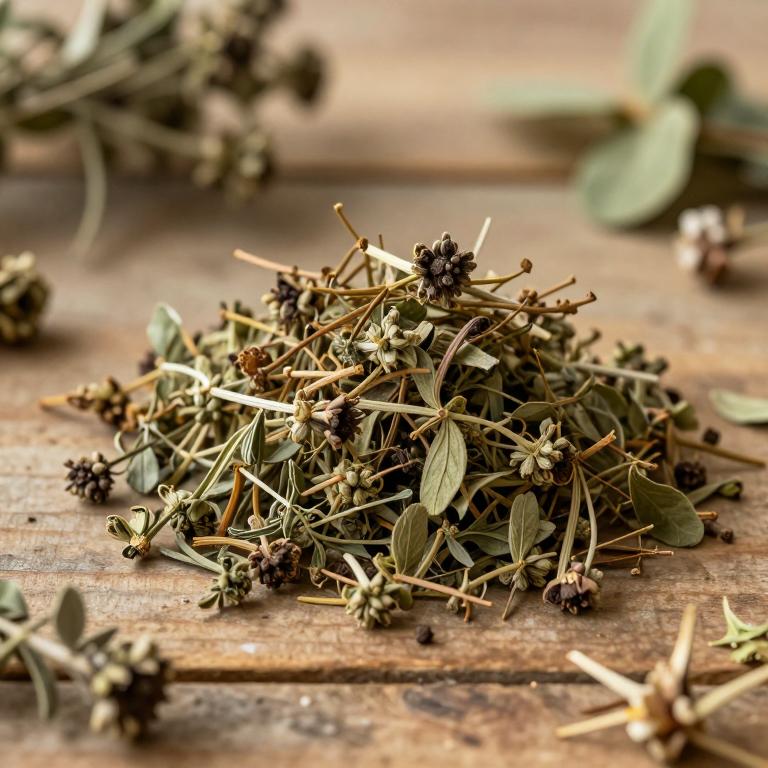
Stryphnodendron rotundifolium, is a resilient shrub native to the Brazilian Cerrado. Renowned for its medicinal properties, this plant is traditionally utilized in folk medicine to treat inflammation and digestive ailments. Its bioactive compounds offer significant therapeutic potential, making it a subject of interest for pharmacological research and herbal studies.
- Family
- Fabaceae
- Native range
- Southern America
- Parts used
- Leaf
- Common names
- Not available
- Scientific synonyms
- Not available
Names and Synonyms
Scientific Names
Accepted name
Stryphnodendron rotundifoliumSources: Wikidata, Catalogue of Life
Taxonomical Classification
This plant belongs to the kingdom Plantae and is classified within the phylum Streptophyta and the class Equisetopsida. It is further categorized under the subclass Magnoliidae and the order Fabales, placing it in the family Fabaceae. Finally, its specific taxonomic identity is defined by the genus Stryphnodendron.
| Rank | Classification |
|---|---|
| Kingdom | Plantae |
| Phylum | Streptophyta |
| Class | Equisetopsida |
| Subclass | Magnoliidae |
| Order | Fabales |
| Family | Fabaceae |
| Genus | Stryphnodendron |
Sources: The World Checklist of Vascular Plants (WCVP)
Distribution
This plant exhibits a broad presence across several key regions of South America. In the western part of the continent, its range extends into the country of Bolivia. Within Brazil, the species is widely distributed across multiple distinct zones. It can be found throughout the North, Northeast, and Southeast regions of the Brazilian territory. Furthermore, its geographical footprint includes the West-Central area of Brazil.
| Region | Area |
|---|---|
| Western South America | Bolivia |
| Brazil | Brazil West-Central |
| Brazil | Brazil Northeast |
| Brazil | Brazil Southeast |
| Brazil | Brazil North |
| Brazil | Brazil South |
| Southern South America | Paraguay |
Sources: The World Checklist of Vascular Plants (WCVP)
Botanical Identification
Ecology
The ecology of Stryphnodendron rotundifolium is characterized by its adaptation to diverse tropical landscapes, primarily inhabiting ecosystems such as Campo Limpo, Campo Rupestre, and the broader Cerrado (latu sensu) biome. This species thrives within a specific altitudinal gradient, ranging from sea level (0 m AMSL) up to a maximum elevation of 500 m AMSL. Its presence in these varied habitats suggests a high degree of resilience to the seasonal moisture fluctuations and nutrient-poor soils typical of the Brazilian savanna and rocky outcrop environments.
- Elevational range max:
- 500 m AMSL
- Elevational range min:
- 0 m AMSL
- Habitat :
- Campo Limpo, Campo Rupestre, Cerrado (lato sensu)
Life history
The life history of Stryphnodendron rotundifolium is characterized by a perennial lifecycle, allowing the plant to persist in its environment over many years through successive growing seasons. Morphologically, it is classified as a phanerophyte, specifically exhibiting characteristics of both phanerophyte and nanophanerophyte life forms, which indicates that its perennating buds are located on aerial shoots well above the soil surface. This growth strategy enables the plant to maintain a stable presence within its ecological niche, utilizing its elevated structural framework to survive seasonal variations.
- Life form :
- phanerophyte
- Lifecycle :
- perennial
Morphology
The morphology of Stryphnodendron rotundifolium is characterized by its growth form as a woody tree. It is a terrestrial species that grows independently, rather than functioning as a parasite or an epiphyte. In terms of its structural dimensions, the plant exhibits a varying height, with a maximum recorded height of 4 m and a mean height of approximately 15 m. Although it possesses a self-supporting habit, it does not exhibit the characteristics of a liana or a vine.
- Aquatic :
- terrestrial
- Climber :
- self-supporting
- Epiphyte :
- terrestrial
- Growth form :
- tree
- Parasite :
- independent
- Plant height max:
- 4 m
- Plant height mean:
- 15 m
- Woodiness :
- woody
Physiology
The physiology of Stryphnodendron rotundifolium is characterized by complex metabolic processes adapted to nutrient-poor, acidic soils typical of the Brazilian Cerrado. Central to its survival is its nutrient acquisition strategy; specifically, regarding its nitrogen metabolism, the plant is not a nitrogen fixer, meaning it lacks the symbiotic relationship with rhizobia required to convert atmospheric nitrogen into bioavailable forms. Consequently, it relies heavily on the uptake of organic and inorganic nitrogen from the soil through an extensive root system. To compensate for the low fertility of its environment, the plant exhibits high efficiency in phosphorus mobilization and often relies on specialized mycorrhizal associations to enhance nutrient absorption. Its physiological resilience is further supported by specialized leaf anatomy and sclerophyllous traits that facilitate water regulation and minimize transpiration under intense solar radiation and seasonal drought conditions.
- Nitrogen fixer :
- no
Sources: Global Inventory of Floras and Traits (GIFT)
Plant Parts
Stryphnodendron rotundifolium has 1 reported plant parts identified across 1 scientific publications and several other databases that are studied for medicinal purposes. The most consistently reported plant part include leaf.
| Plant part | Supporting sources | Consensus |
|---|---|---|
| Leaf | 1 supporting sources | ★☆☆☆☆ |
Leaf
- Molecules (Basel, Switzerland)
Chemicals
Stryphnodendron rotundifolium has 4 reported phytochemicals identified across 1 scientific publications and several other databases. The most consistently reported chemicals include CATECHIN, Gallic acid, RUTIN, caffeic acid.
| Chemical | Supporting sources | Consensus |
|---|---|---|
| CATECHIN | 1 supporting sources | ★☆☆☆☆ |
| Gallic acid | 1 supporting sources | ★☆☆☆☆ |
| RUTIN | 1 supporting sources | ★☆☆☆☆ |
| caffeic acid | 1 supporting sources | ★☆☆☆☆ |
CATECHIN
- Molecules (Basel, Switzerland)
Gallic acid
- Molecules (Basel, Switzerland)
RUTIN
- Molecules (Basel, Switzerland)
caffeic acid
- Molecules (Basel, Switzerland)
Activities
Stryphnodendron rotundifolium has 1 reported activities identified across 1 scientific publications and several other databases. The most consistently reported activities include Antioxidant.
| Activity | Supporting sources | Consensus |
|---|---|---|
| Antioxidant | 1 supporting sources | ★☆☆☆☆ |
Antioxidant
- Molecules (Basel, Switzerland)
Conditions
Stryphnodendron rotundifolium has 1 reported investigations on conditions identified across 1 scientific publications and several other databases. The most consistently reported conditions include oxidative stress.
| Condition | Supporting sources | Consensus |
|---|---|---|
| Oxidative stress | 1 supporting sources | ★☆☆☆☆ |
Oxidative stress
- Molecules (Basel, Switzerland)
Preparations
Stryphnodendron rotundifolium has 2 reported preparations identified across 1 scientific publications and several other databases. The most consistently reported preparations include aqueous extract (AL) from the leaves, hydroalcoholic (HAB) and aqueous extracts (AB) from the bark.
| Preparation | Supporting sources | Consensus |
|---|---|---|
| Aqueous extract (al) from the leaves | 1 supporting sources | ★☆☆☆☆ |
| Hydroalcoholic (hab) and aqueous extracts (ab) from the bark | 1 supporting sources | ★☆☆☆☆ |
Aqueous extract (al) from the leaves
- Molecules (Basel, Switzerland)
Hydroalcoholic (hab) and aqueous extracts (ab) from the bark
- Molecules (Basel, Switzerland)