Yellow Bitterberry
Strychnos mitis · Accepted scientific name
Scientific literature: Very Sparse (9 studies) · ★☆☆☆☆
Yellow Bitterberry, scientifically known as Strychnos mitis, is a climbing woody vine native to tropical African forests. Renowned in traditional medicine, its various parts are utilized for their potent bioactive compounds. Often used to treat ailments like malaria and skin infections, it remains a significant subject in ethnobotanical research.
- Family
- Loganiaceae
- Native range
- Africa
- Parts used
- Leaf
- Common names
- Pit-Leaved Strychnos
- Scientific synonyms
- Strychnos Adolfi-Friderici
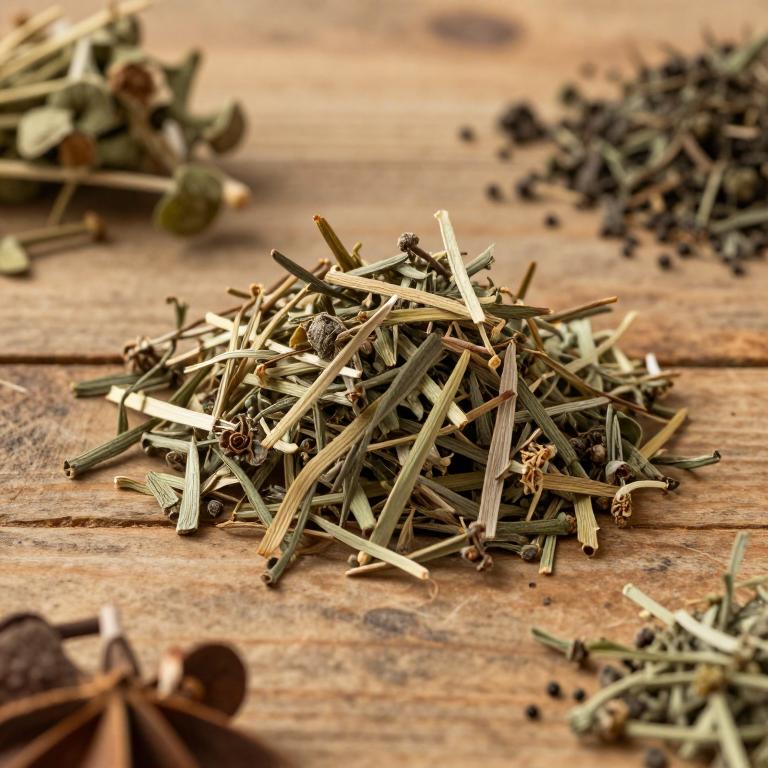
Names and Synonyms
Common Names
- Pit-Leaved Strychnos
Scientific Names
Accepted name
Strychnos mitisSynonyms
- Strychnos adolfi-friderici
Sources: Wikidata, Catalogue of Life
Taxonomical Classification
This plant belongs to the kingdom Plantae and the phylum Streptophyta, falling under the class Equisetopsida and subclass Magnoliidae. Within the order Gentianales, it is classified under the family Loganiaceae. Finally, it is identified by the genus Strychnos.
| Rank | Classification |
|---|---|
| Kingdom | Plantae |
| Phylum | Streptophyta |
| Class | Equisetopsida |
| Subclass | Magnoliidae |
| Order | Gentianales |
| Family | Loganiaceae |
| Genus | Strychnos |
Sources: The World Checklist of Vascular Plants (WCVP)
Distribution
This plant exhibits a diverse geographical distribution across several key regions of the African continent. In West Tropical Africa, its presence has been documented in Sierra Leone. Moving towards the center of the continent, it is found within the vast landscapes of the DR Congo in West-Central Tropical Africa. The species also extends into Northeast Tropical Africa, specifically inhabiting Ethiopia and the areas of Sudan and South Sudan. Finally, its range stretches into East Tropical Africa, where it can be located in Kenya.
| Region | Area |
|---|---|
| West Tropical Africa | Sierra Leone |
| West-Central Tropical Africa | DR Congo |
| Northeast Tropical Africa | Ethiopia |
| Northeast Tropical Africa | Sudan-South Sudan |
| East Tropical Africa | Kenya |
| East Tropical Africa | Tanzania |
| East Tropical Africa | Uganda |
| South Tropical Africa | Angola |
| South Tropical Africa | Malawi |
| South Tropical Africa | Mozambique |
Sources: The World Checklist of Vascular Plants (WCVP)
Botanical Identification
Ecology
The ecology of Strychnos mitis is characterized by its preference for moist, densely vegetated environments, specifically thriving within rainforest and riverine forest habitats. This species occupies a broad altitudinal gradient, distributed from low-lying areas starting at 10 m AMSL up to higher elevations reaching a maximum of 1200 m AMSL.
- Elevational range max:
- 1200 m AMSL
- Elevational range min:
- 10 m AMSL
- Habitat :
- rainforest and riverine forest
Life history
The life history of Strychnos mitis is characterized by its status as a perennial organism, meaning it persists through multiple growing seasons rather than completing its cycle within a single year. As a long-lived woody species, it follows a developmental trajectory that extends far beyond the brief intervals of annuals or biennials, allowing it to establish a stable presence within its ecological niche. This perennial nature enables the plant to invest significant energy into structural growth and complex physiological processes over many years, contributing to its long-term survival and ability to withstand seasonal fluctuations in its environment.
- Lifecycle :
- perennial
Morphology
The morphology of Strychnos mitis is characterized by a woody growth form, specifically manifesting as a tree. As a terrestrial species, it is an independent organism rather than a parasite or an epiphyte. This plant exhibits significant vertical dimensions, with a height that typically ranges from a minimum of 4 m to a maximum of 35 m, maintaining an average height of approximately 18 m. Regarding its structural habit, it is classified as a self-supporting climber.
- Aquatic :
- terrestrial
- Climber :
- self-supporting
- Epiphyte :
- terrestrial
- Growth form :
- tree
- Parasite :
- independent
- Plant height max:
- 35 m
- Plant height mean:
- 18 m
- Plant height min:
- 4 m
- Woodiness :
- woody
Sources: Global Inventory of Floras and Traits (GIFT)
Plant Parts
Strychnos mitis has 1 reported plant parts identified across 1 scientific publications and several other databases that are studied for medicinal purposes. The most consistently reported plant part include leaf.
| Plant part | Supporting sources | Consensus |
|---|---|---|
| Leaf | 1 supporting sources | ★☆☆☆☆ |
Leaf
- BMC complementary and alternative medicine
Chemicals
Strychnos mitis has 6 reported phytochemicals identified across 1 scientific publications and several other databases. The most consistently reported chemicals include Anthraquinones, Glycosides, Phenols, Saponins, Tannins.
| Chemical | Supporting sources | Consensus |
|---|---|---|
| Anthraquinones | 1 supporting sources | ★☆☆☆☆ |
| Glycosides | 1 supporting sources | ★☆☆☆☆ |
| Phenols | 1 supporting sources | ★☆☆☆☆ |
| Saponins | 1 supporting sources | ★☆☆☆☆ |
| Tannins | 1 supporting sources | ★☆☆☆☆ |
| Terpenoids | 1 supporting sources | ★☆☆☆☆ |
Anthraquinones
- BMC complementary and alternative medicine
Glycosides
- BMC complementary and alternative medicine
Phenols
- BMC complementary and alternative medicine
Saponins
- BMC complementary and alternative medicine
Tannins
- BMC complementary and alternative medicine
Terpenoids
- BMC complementary and alternative medicine
Conditions
Strychnos mitis has 2 reported investigations on conditions identified across 1 scientific publications and several other databases. The most consistently reported conditions include malaria, weight loss.
| Condition | Supporting sources | Consensus |
|---|---|---|
| Malaria | 1 supporting sources | ★☆☆☆☆ |
| Weight loss | 1 supporting sources | ★☆☆☆☆ |
Malaria
- BMC complementary and alternative medicine
Weight loss
- BMC complementary and alternative medicine
Preparations
Strychnos mitis has 3 reported preparations identified across 1 scientific publications and several other databases. The most consistently reported preparations include crude aqueous and hydro-methanolic extracts of the leaves, crude extracts, solvent fractions of the leaves.
| Preparation | Supporting sources | Consensus |
|---|---|---|
| Crude aqueous and hydro-methanolic extracts of the leaves | 1 supporting sources | ★☆☆☆☆ |
| Crude extracts | 1 supporting sources | ★☆☆☆☆ |
| Solvent fractions of the leaves | 1 supporting sources | ★☆☆☆☆ |
Crude aqueous and hydro-methanolic extracts of the leaves
- BMC complementary and alternative medicine
Crude extracts
- BMC complementary and alternative medicine
Solvent fractions of the leaves
- BMC complementary and alternative medicine