corky-bark monkey-orange
Strychnos cocculoides · Accepted scientific name
Scientific literature: Very Sparse (8 studies) · ★☆☆☆☆
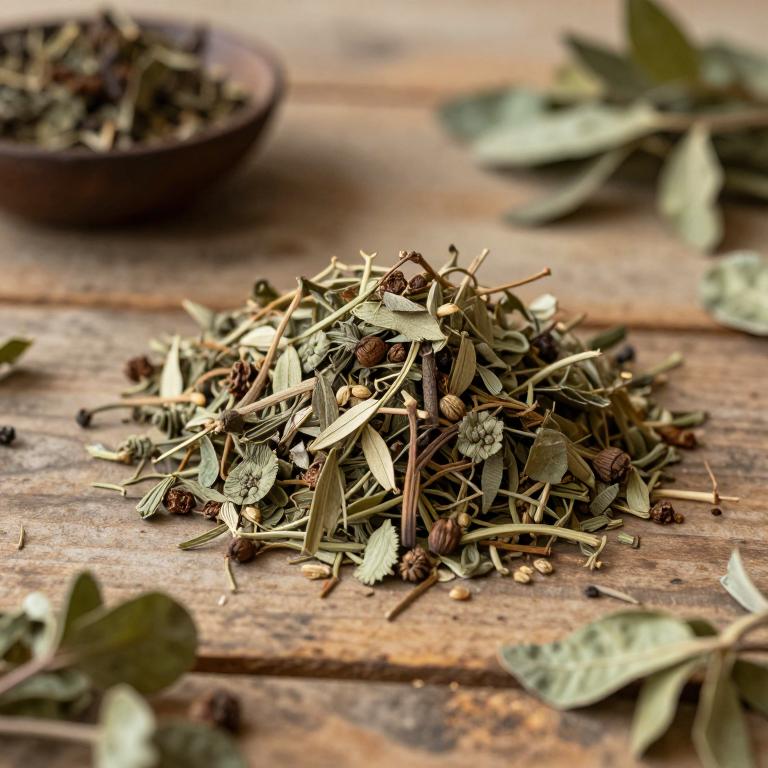
Corky-bark monkey-orange, scientifically known as Strychnos cocculoides, is a distinctive shrub native to African savannas. Renowned for its thick, textured bark and bright orange fruits, this plant holds significant ethnobotanical value. It is traditionally utilized in various medicinal practices to treat ailments ranging from skin conditions to digestive issues.
Names and Synonyms
Common Names
- corky-bark monkey-orange
- Bitter Bush Orange
- Bitter Monkey-Orange
- Corky Monkey-Orange
- Corky-Bark Monkey Orange
- Corky-Barked Monkey-Orange
- Kaffir Orange
Scientific Names
Accepted name
Strychnos cocculoidesSynonyms
- Strychnos paralleloneura
- Strychnos goetzei
- Strychnos dekindtiana
- Strychnos suberosa
- Strychnos suberifera
- Strychnos thomsiana
- Strychnos schumanniana
Sources: Wikidata, Catalogue of Life
Taxonomical Classification
This plant belongs to the kingdom Plantae and is classified under the phylum Streptophyta and class Equisetopsida. Within the subclass Magnoliidae, it falls under the order Gentianales and the family Loganiaceae. Finally, it is categorized under the genus Strychnos.
| Rank | Classification |
|---|---|
| Kingdom | Plantae |
| Phylum | Streptophyta |
| Class | Equisetopsida |
| Subclass | Magnoliidae |
| Order | Gentianales |
| Family | Loganiaceae |
| Genus | Strychnos |
Sources: The World Checklist of Vascular Plants (WCVP)
Distribution
This plant exhibits a specific distribution pattern across several regions of the African continent. In West-Central Tropical Africa, it can be found in Burundi, Congo, and Gabon. Its presence is also noted within the Democratic Republic of the Congo. Additionally, the species extends its range into East Tropical Africa. Specifically, it has been documented growing in Kenya.
| Region | Area |
|---|---|
| West-Central Tropical Africa | Burundi |
| West-Central Tropical Africa | Congo |
| West-Central Tropical Africa | Gabon |
| West-Central Tropical Africa | DR Congo |
| East Tropical Africa | Kenya |
| East Tropical Africa | Tanzania |
| South Tropical Africa | Angola |
| South Tropical Africa | Malawi |
| South Tropical Africa | Mozambique |
| South Tropical Africa | Zambia |
Sources: The World Checklist of Vascular Plants (WCVP)
Botanical Identification
Ecology
The ecology of Strychnos cocculoides is characterized by its preference for forest habitats, where it plays a role within the complex structural layers of the ecosystem. This species is distributed across a significant altitudinal gradient, thriving in diverse montane and sub-montane environments. Its ecological niche spans an elevational range starting from a minimum of 795 m AMSL and extending up to a maximum of 1675 m AMSL, allowing it to adapt to varying temperature regimes and moisture levels found within these forested zones.
- Elevational range max:
- 1675 m AMSL
- Elevational range min:
- 795 m AMSL
- Habitat :
- forest
Life history
The life history of Strychnos cocculoides is characterized by its classification as a perennial plant, ensuring its presence in the ecosystem over multiple growing seasons. As a phanerophyte, it maintains its persistent buds well above the ground, a growth form that allows it to thrive within its specific ecological niche. This species exhibits a deciduous nature, shedding its foliage periodically as part of its seasonal physiological cycle. Its developmental strategy and structural habit are defined by these phanerophyte characteristics, which dictate its long-term survival and interaction with its environment.
- Deciduousness :
- deciduous
- Life form :
- phanerophyte
- Lifecycle :
- perennial
Morphology
The morphology of Strychnos cocculoides is characterized by a woody growth form that manifests as both a tree and a shrub. As a terrestrial organism, it functions as an independent species rather than a parasite or an epiphyte. The plant exhibits varying physical dimensions, with a height that ranges from a minimum of 1 meter to a maximum of 6 meters, though it reaches a mean height of approximately 8 meters. In terms of its structural habit, it is described as a self-supporting climber, maintaining its posture without the need for external support structures.
- Aquatic :
- terrestrial
- Climber :
- self-supporting
- Epiphyte :
- terrestrial
- Growth form :
- tree
- Growth form :
- shrub
- Parasite :
- independent
- Plant height max:
- 6 m
- Plant height mean:
- 8 m
- Plant height min:
- 1 m
- Woodiness :
- woody
Physiology
The physiology of Strychnos cocculoides is characterized by a standard C3 photosynthetic pathway, utilizing the Calvin cycle to fix atmospheric carbon dioxide during the light-independent reactions. This metabolic approach indicates that the plant does not employ specialized C4 or CAM adaptations for carbon fixation, relying instead on the direct carboxylation of ribulose-1,5-bisphosphate by the enzyme RuBisCO. Furthermore, regarding its nutrient acquisition processes, the species is not a nitrogen fixer; it lacks the specialized symbiotic relationships with diazotrophic bacteria, such as Rhizobium, required to convert atmospheric nitrogen into bioavailable forms, and therefore depends on the uptake of nitrates or ammonium from the soil substrate.
- Nitrogen fixer :
- no
- Photosynthetic pathway :
- C3
Reproduction
The reproduction of Strychnos cocculoides is characterized by specific seed morphology and specialized dispersal mechanisms. The plant produces seeds with a variable mass, ranging from a minimum of 0.36422 g to a maximum of 0.6 g, with an average seed mass recorded at approximately 0.475555 g. In terms of its dispersal strategy, the species exhibits a zoochorous syndrome, meaning it relies on animals for the movement of its seeds. More specifically, the dispersal process is identified as endozoochorous, indicating that the seeds are ingested by animals and subsequently dispersed through their digestive tracts.
- Dispersal syndrome :
- zoochorous
- Dispersal syndrome :
- endozoochorous
- Seed mass max:
- 0.6 g
- Seed mass mean:
- 0.475555 g
- Seed mass min:
- 0.36422 g
Sources: Global Inventory of Floras and Traits (GIFT)
Plant Parts
Strychnos cocculoides has 3 reported plant parts identified across 3 scientific publications and several other databases that are studied for medicinal purposes. The most consistently reported plant part include leaf, root, stem.
| Plant part | Supporting sources | Consensus |
|---|---|---|
| Leaf | 1 supporting sources | ★☆☆☆☆ |
| Root | 1 supporting sources | ★☆☆☆☆ |
| Stem | 1 supporting sources | ★☆☆☆☆ |
Leaf
- Toxicology reports
Root
- Toxicology reports
Stem
- Toxicology reports
Chemicals
Strychnos cocculoides has 2 reported phytochemicals identified across 3 scientific publications and several other databases. The most consistently reported chemicals include Flavonoids, Saponins.
| Chemical | Supporting sources | Consensus |
|---|---|---|
| Flavonoids | 1 supporting sources | ★☆☆☆☆ |
| Saponins | 1 supporting sources | ★☆☆☆☆ |
Flavonoids
- BMC complementary medicine and therapies
Saponins
- BMC complementary medicine and therapies
Activities
Strychnos cocculoides has 2 reported activities identified across 3 scientific publications and several other databases. The most consistently reported activities include Antiproliferative, Cytotoxic.
| Activity | Supporting sources | Consensus |
|---|---|---|
| Antiproliferative | 1 supporting sources | ★☆☆☆☆ |
| Cytotoxic | 1 supporting sources | ★☆☆☆☆ |
Antiproliferative
- BMC complementary medicine and therapies
Cytotoxic
- BMC complementary medicine and therapies
Conditions
Strychnos cocculoides has 1 reported investigations on conditions identified across 3 scientific publications and several other databases. The most consistently reported conditions include cancer.
| Condition | Supporting sources | Consensus |
|---|---|---|
| Cancer | 1 supporting sources | ★☆☆☆☆ |
Cancer
- BMC complementary medicine and therapies
Preparations
Strychnos cocculoides has 2 reported preparations identified across 3 scientific publications and several other databases. The most consistently reported preparations include extracts, methanolic extracts.
| Preparation | Supporting sources | Consensus |
|---|---|---|
| Extracts | 1 supporting sources | ★☆☆☆☆ |
| Methanolic extracts | 1 supporting sources | ★☆☆☆☆ |
Extracts
- BMC complementary medicine and therapies
Methanolic extracts
- BMC complementary medicine and therapies