Struthanthus marginatus
Struthanthus marginatus · Accepted scientific name
Scientific literature: Very Sparse (7 studies) · ★☆☆☆☆
Struthanthus marginatus, scientifically known as Struthanthus marginatus, is a remarkable medicinal plant valued for its diverse therapeutic properties. Indigenous to specific subtropical regions, it is traditionally used to treat various ailments. This botanical specimen offers significant potential in pharmacological research, particularly for its unique bioactive compounds and healing benefits.
- Family
- Loranthaceae
- Native range
- Northern America
- Parts used
- Leaf
- Common names
- Not available
- Scientific synonyms
- Struthanthus Vulgaris · Eichlerina Vulgaris · 3 more
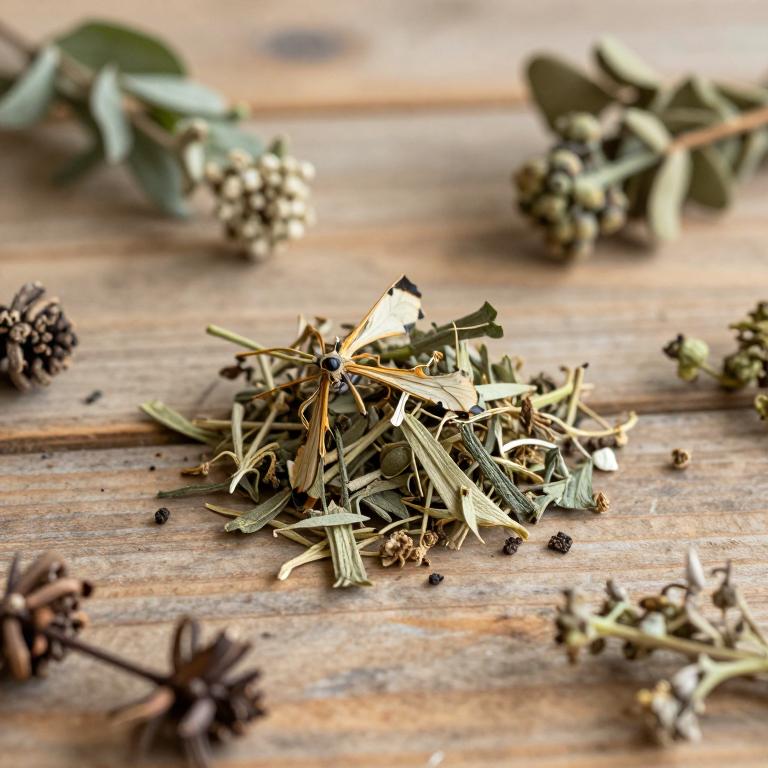
Names and Synonyms
Scientific Names
Accepted name
Struthanthus marginatusSynonyms
- Struthanthus vulgaris
- Eichlerina vulgaris
- Loranthus vulgaris
- Loranthus avium
- Struthanthus marginatus var. friburgensis
Sources: Wikidata
Taxonomical Classification
This plant belongs to the kingdom Plantae and the phylum Streptophyta, specifically falling under the class Equisetopsida and subclass Magnoliidae. Within the order Santalales, it is classified under the family Loranthaceae. Finally, it is identified by its scientific genus, Struthanthus.
| Rank | Classification |
|---|---|
| Kingdom | Plantae |
| Phylum | Streptophyta |
| Class | Equisetopsida |
| Subclass | Magnoliidae |
| Order | Santalales |
| Family | Loranthaceae |
| Genus | Struthanthus |
Sources: The World Checklist of Vascular Plants (WCVP)
Distribution
This plant exhibits a broad geographical distribution spanning several regions in Mexico and parts of Central America. Within Mexico, it can be found across the Northeast and the Gulf regions. Its presence also extends into the Southwest and Southeast portions of the country. Additionally, the species is located within Central America, specifically in El Salvador. Together, these locations highlight the diverse range inhabited by Strychnus marginatus.
| Region | Area |
|---|---|
| Mexico | Mexico Northeast |
| Mexico | Mexico Gulf |
| Mexico | Mexico Southwest |
| Mexico | Mexico Southeast |
| Central America | El Salvador |
| Central America | Guatemala |
| Central America | Honduras |
| Northern South America | Guyana |
| Northern South America | Venezuela |
| Brazil | Brazil West-Central |
Sources: The World Checklist of Vascular Plants (WCVP)
Botanical Identification
Ecology
The ecology of Struchlanthus marginatus is characterized by its presence across a diverse array of specialized ecosystems, ranging from the semi-arid Caatinga (strictu sensu) and the open woody landscapes of the Cerrado (lato sensu) to more humid environments such as Floresta Ciliar or Galeria, Floresta de Terra Firme, Floresta de Várzea, and the moisture-rich Floresta Ombrófila (Floresta Pluvial). This plant occupies a specific altitudinal niche, thriving within a narrow elevational belt that begins at 1500 m AMSL and reaches a maximum of 1600 m AMSL.
- Elevational range max:
- 1600 m AMSL
- Elevational range min:
- 1500 m AMSL
- Habitat :
- Caatinga (stricto sensu), Cerrado (lato sensu), Floresta Ciliar ou Galeria, Floresta de Terra Firme, Floresta de Várzea, Floresta Ombrófila (= Floresta Pluvial)
Morphology
The morphology of Strychnus marginatus is characterized by a non-woody structure that primarily functions as a herb. It exhibits a versatile growth habit, acting as a liana that can climb using a vine-like progression, though it also possesses self-supporting capabilities. While it can occupy terrestrial environments, its ecological positioning is diverse, ranging from terrestrial to semiaquatic habitats. The plant demonstrates facultative parasitic behavior and can exist in a terrestrial state rather than acting as a true epiphyte.
- Aquatic :
- terrestrial
- Climber :
- liana
- Climber :
- self-supporting
- Epiphyte :
- terrestrial
- Growth form :
- herb
- Parasite :
- facultative
- Woodiness :
- non-woody
Sources: Global Inventory of Floras and Traits (GIFT)
Plant Parts
Struthanthus marginatus has 1 reported plant parts identified across 1 scientific publications and several other databases that are studied for medicinal purposes. The most consistently reported plant part include leaf.
| Plant part | Supporting sources | Consensus |
|---|---|---|
| Leaf | 1 supporting sources | ★☆☆☆☆ |
Leaf
- Planta medica
Chemicals
Struthanthus marginatus has 5 reported phytochemicals identified across 1 scientific publications and several other databases. The most consistently reported chemicals include IL 10, Obtusifoliol, Steroids, Terpenoids, nitric oxide.
| Chemical | Supporting sources | Consensus |
|---|---|---|
| IL 10 | 1 supporting sources | ★☆☆☆☆ |
| Obtusifoliol | 1 supporting sources | ★☆☆☆☆ |
| Steroids | 1 supporting sources | ★☆☆☆☆ |
| Terpenoids | 1 supporting sources | ★☆☆☆☆ |
| nitric oxide | 1 supporting sources | ★☆☆☆☆ |
IL 10
- Journal of ethnopharmacology
Obtusifoliol
- Journal of ethnopharmacology
Steroids
- Journal of ethnopharmacology
Terpenoids
- Journal of ethnopharmacology
nitric oxide
- Journal of ethnopharmacology
Conditions
Struthanthus marginatus has 1 reported investigations on conditions identified across 1 scientific publications and several other databases. The most consistently reported conditions include tuberculosis.
| Condition | Supporting sources | Consensus |
|---|---|---|
| Tuberculosis | 1 supporting sources | ★☆☆☆☆ |
Tuberculosis
- Journal of ethnopharmacology
Preparations
Struthanthus marginatus has 3 reported preparations identified across 1 scientific publications and several other databases. The most consistently reported preparations include ethanol leaf extract, hexane extracts, ointment.
| Preparation | Supporting sources | Consensus |
|---|---|---|
| Ethanol leaf extract | 1 supporting sources | ★☆☆☆☆ |
| Hexane extracts | 1 supporting sources | ★☆☆☆☆ |
| Ointment | 1 supporting sources | ★☆☆☆☆ |
Ethanol leaf extract
- Planta medica
Hexane extracts
- Journal of ethnopharmacology
Ointment
- Journal of ethnopharmacology