pride of big pine
Strumpfia maritima · Accepted scientific name
Scientific literature: Very Sparse (2 studies) · ★☆☆☆☆
Pride of big pine, scientifically known as Strumpfia maritima, is a fascinating coastal succulent native to tropical shorelines. Renowned for its fleshy leaves and delicate blooms, this plant offers significant ethnobotanical potential. Its unique chemical profile suggests therapeutic properties, making it a subject of interest for medicinal research.
- Family
- Rubiaceae
- Native range
- Northern America
- Parts used
- Flower
- Common names
- Pride Of Big Pine · Strumpfia · 1 more
- Scientific synonyms
- Not available
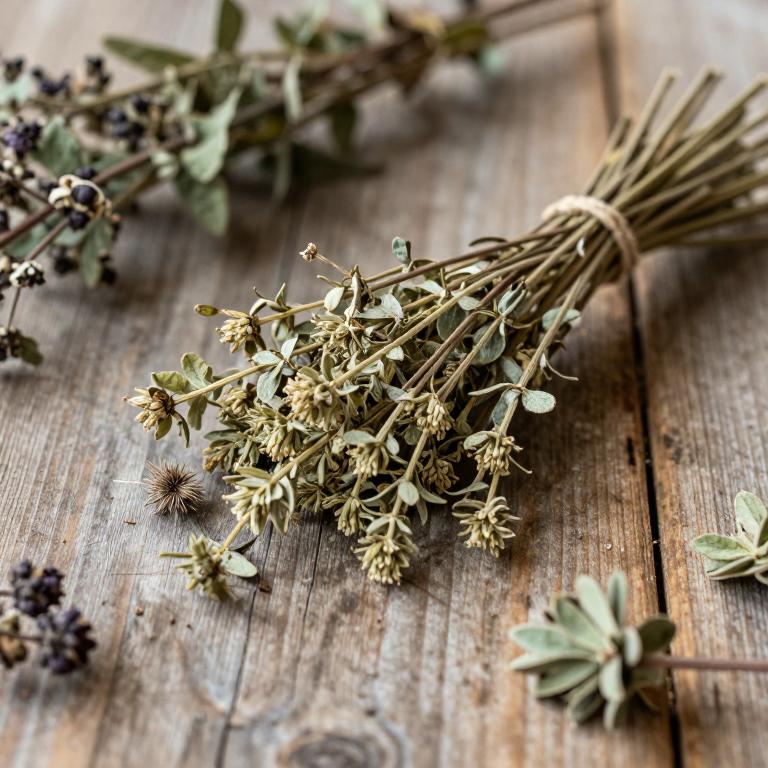
Names and Synonyms
Common Names
- Pride of Big Pine
- Strumpfia
- pride-of-Big Pine
Scientific Names
Accepted name
Strumpfia maritimaRegional and Traditional Names
Spanish:
- Strumpfia
- Patsjotti
- lirio
- Romero falso
French:
- Strumpfia
Sources: Wikidata, Catalogue of Life
Taxonomical Classification
This plant belongs to the kingdom Plantae and is classified within the phylum Streptophyta and the class Equisetopsida. As a member of the subclass Magnoliidae and the order Gentianales, it is further categorized under the family Rubiaceae. Ultimately, its specific taxonomic identity is defined by its placement within the genus Strumpfia.
| Rank | Classification |
|---|---|
| Kingdom | Plantae |
| Phylum | Streptophyta |
| Class | Equisetopsida |
| Subclass | Magnoliidae |
| Order | Gentianales |
| Family | Rubiaceae |
| Genus | Strumpfia |
Sources: The World Checklist of Vascular Plants (WCVP)
Distribution
This plant is primarily distributed throughout the coastal regions of the Southeastern United States, specifically within Florida. Its range extends southward into Mexico, where it is found in the southeastern portion of the country. The species is also well-represented across various Caribbean territories. Specifically, it can be located on the islands of Aruba and the Bahamas. Additionally, its presence is noted within the Cayman Islands.
| Region | Area |
|---|---|
| Southeastern U.S.A. | Florida |
| Mexico | Mexico Southeast |
| Caribbean | Aruba |
| Caribbean | Bahamas |
| Caribbean | Cayman Is. |
| Caribbean | Cuba |
| Caribbean | Dominican Republic |
| Caribbean | Haiti |
| Caribbean | Jamaica |
| Caribbean | Leeward Is. |
Sources: The World Checklist of Vascular Plants (WCVP)
Botanical Identification
Life history
The life history of Strumphia maritima is characterized by its status as a perennial plant, allowing it to persist through multiple growing seasons. In terms of its structural organization and survival strategy, the species exhibits a chamaephyte life form, meaning its perennating buds are located close to the ground surface, often just above the soil level. This growth habit enables the plant to withstand environmental stressors typical of its habitat while maintaining its ability to regenerate and expand over time.
- Life form :
- chamaephyte
- Lifecycle :
- perennial
Morphology
The morphology of Strumphfia maritima is characterized by its distinct growth form and structural adaptations. It functions as a woody shrub, exhibiting a sturdy and perennial architecture. Unlike many climbing species, it is not a climber; it does not possess the mechanisms to be obligatory, facultative, or self-supporting in a climbing capacity. The plant is entirely independent, lacking any parasitic tendencies, and is classified as a terrestrial species rather than an epiphyte. Its physical structure is defined by its woodiness, providing the necessary stability for its life in its natural habitat.
- Climber :
- self-supporting
- Epiphyte :
- terrestrial
- Growth form :
- shrub
- Parasite :
- independent
- Woodiness :
- woody
Sources: Global Inventory of Floras and Traits (GIFT)
Plant Parts
Strumpfia maritima has 1 reported plant parts identified across 1 scientific publications and several other databases that are studied for medicinal purposes. The most consistently reported plant part include flower.
| Plant part | Supporting sources | Consensus |
|---|---|---|
| Flower | 1 supporting sources | ★☆☆☆☆ |
Flower
- Journal of pharmaceutical sciences
Chemicals
Strumpfia maritima has 1 reported phytochemicals identified across 1 scientific publications and several other databases. The most consistently reported chemicals include Narcissin.
| Chemical | Supporting sources | Consensus |
|---|---|---|
| Narcissin | 1 supporting sources | ★☆☆☆☆ |
Narcissin
- Journal of pharmaceutical sciences
Preparations
Strumpfia maritima has 1 reported preparations identified across 1 scientific publications and several other databases. The most consistently reported preparations include aqueous extract of the flowering tops.
| Preparation | Supporting sources | Consensus |
|---|---|---|
| Aqueous extract of the flowering tops | 1 supporting sources | ★☆☆☆☆ |
Aqueous extract of the flowering tops
- Journal of pharmaceutical sciences