water soldiers
Stratiotes aloides · Accepted scientific name
Scientific literature: Very Sparse (13 studies) · ★☆☆☆☆
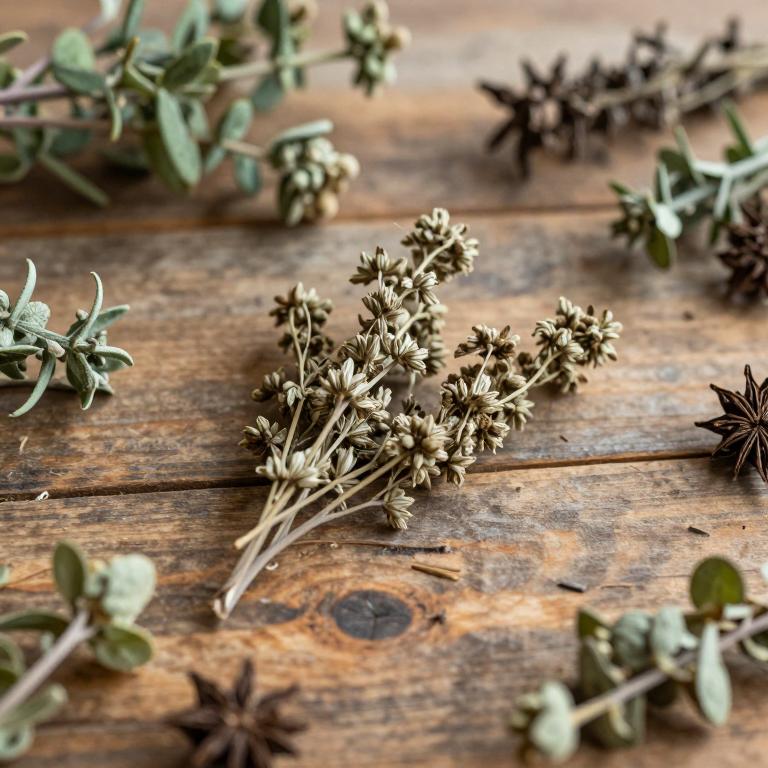
Water soldiers, scientifically known as Stratiotes aloides, is a floating aquatic perennial distinguished by its rosette of fleshy, lanceolate leaves. Often found in stagnant ponds, this plant plays a vital role in aquatic ecosystems, providing shelter for microorganisms while exhibiting unique medicinal potential in traditional herbal treatments and pharmacology.
Names and Synonyms
Common Names
- water soldiers
- Water-Soldier
- water-aloe
- Water pineapple
- Water soldier
Scientific Names
Accepted name
Stratiotes aloidesSynonyms
- Stratiotes aquaticus
- Stratiotes generalis
- Stratiotes aculeatus
Regional and Traditional Names
Spanish:
- Stratiotes
German:
- Krebsschere
- Afteraloe
- Sichelkraut
- Säbelkraut
- Donnerbart-Wasserfenchel
- Wassersegen
- Wasserscheer
- Wassersichel
- Wassersäge
- Falscher Wasserfenchel
- Sumpfaloe
- Reiterskraut
- Wasserschere
- Krebsschere
- Wassersaege
French:
- faux-aloès
- Stratiotès faux aloès
- aloès d'eau
- faux aloès
- stratiote faux-aloès
- stratiotès faux aloès
- Stratiotes aloes
- Ananas d'eau
- Faux-aloès
Sources: Wikidata, Catalogue of Life
Taxonomical Classification
This plant belongs to the kingdom Plantae and the phylum Streptophyta. Within the class Equisetopsida and subclass Magnoliidae, it is categorized under the order Alismatales. Finally, it is classified under the family Hydrocharitaceae within the genus Stratiotes.
| Rank | Classification |
|---|---|
| Kingdom | Plantae |
| Phylum | Streptophyta |
| Class | Equisetopsida |
| Subclass | Magnoliidae |
| Order | Alismatales |
| Family | Hydrocharitaceae |
| Genus | Stratiotes |
Sources: The World Checklist of Vascular Plants (WCVP)
Distribution
This plant exhibits a specific distribution across several regions in Northern Europe. Its presence can be documented within the borders of Denmark and Finland. Furthermore, it is found across the landscapes of Great Britain and Ireland. The species also extends its range into the territory of Sweden. Consequently, these northern countries represent the primary geographical locations for this medicinal plant.
| Region | Area |
|---|---|
| Northern Europe | Denmark |
| Northern Europe | Finland |
| Northern Europe | Great Britain |
| Northern Europe | Ireland |
| Northern Europe | Sweden |
| Middle Europe | Austria |
| Middle Europe | Belgium |
| Middle Europe | Czechia-Slovakia |
| Middle Europe | Germany |
| Middle Europe | Hungary |
Sources: The World Checklist of Vascular Plants (WCVP)
Botanical Identification
Ecology
The ecology of Stratiotes aloides is characterized by its specialized existence as a free-floating aquatic macrophyte that thrives in lentic environments. It is most commonly found colonizing the surface waters of lakes and slow-moving bodies of water, where it forms dense, floating mats that can significantly alter the local microhabitat. This species exhibits a notable tolerance for varying degrees of salinity, frequently occupying brackish water habitats where other freshwater species might struggle to persist. By occupying the surface layer, it plays a critical role in the ecosystem's nutrient cycling and light availability, influencing the submerged community by shading the water column and potentially moderating temperature fluctuations within its immediate environment.
- Habitat :
- brackish water, lakes
Life history
The life history of Stratiotes aloides is characterized by a perennial lifecycle, allowing the plant to persist across multiple growing seasons. Functioning primarily as a cryptophyte, it employs specialized survival strategies adapted to its aquatic environment. Its life form is specifically classified as a hemicryptophyte, which influences its structural development and persistence. Furthermore, the plant exhibits deciduousness, shedding its foliage as part of its seasonal biological cycle.
- Deciduousness :
- deciduous
- Life form :
- hemicryptophyte
- Life form :
- cryptophyte
- Lifecycle :
- perennial
Morphology
The morphology of Stratiotes aloides is characterized by its growth form as a non-woody herb and forb, specifically adapted to an aquatic lifestyle. This independent plant, which does not function as a parasite or an epiphyte, typically occupies terrestrial or aquatic environments as a self-supporting organism. In terms of stature, it exhibits a relatively modest plant height, with a minimum height of 0.15 m, a mean height of 0.125 m, and a maximum height reaching up to 0.45 m.
- Aquatic :
- aquatic
- Climber :
- self-supporting
- Epiphyte :
- terrestrial
- Growth form :
- herb
- Growth form :
- forb
- Parasite :
- independent
- Plant height max:
- 0.45 m
- Plant height mean:
- 0.125 m
- Plant height min:
- 0.15 m
- Woodiness :
- non-woody
Physiology
The physiology of Stratiotes aloides is characterized by a C3 photosynthetic pathway, which dictates its carbon fixation processes and metabolic efficiency. The plant exhibits a mean leaf size of 34.805 cm², a structural attribute that facilitates its surface area requirements for light interception and gas exchange. In terms of nutritional strategy, it is classified as a non-carnivorous species, relying on standard nutrient uptake rather than the capture of prey. Furthermore, the plant maintains a mean Specific Leaf Area (SLA) of 217.3 cm²/g, reflecting a specific leaf mass distribution that influences its resource allocation and adaptive capacity within its aquatic habitat.
- Carnivory :
- non-carnivorous
- Leaf size mean:
- 34.805 cm²
- Photosynthetic pathway :
- C3
- Specific Leaf Area (SLA) mean:
- 217.3 cm²/g
Reproduction
The reproduction of Stratiotes aloides is characterized by a specialized seasonal cycle and specific biological mechanisms. The flowering period typically commences in May and extends through August. During this time, the plant engages in sexual reproduction facilitated by biotic pollination syndromes, specifically relying on insects to facilitate the transfer of pollen. Notably, self-fertilization is absent in this species, necessitating external agents for successful fertilization. Following pollination, the plant produces fruit in the form of a berry, which is categorized as indehiscent, meaning it does not open at maturity to release seeds. The dispersal of these seeds follows a hydrochorous syndrome, utilizing water as the primary medium to transport the offspring to new aquatic habitats. While the plant is primarily driven by these sexual processes, asexual reproduction is documented as absent in its reproductive profile.
- Dehiscence :
- indehiscent
- Dispersal syndrome :
- hydrochorous
- Flowering time :
- May
- Flowering time :
- Aug
- Fruit type :
- berry
- Pollination syndrome :
- insect
- Pollination syndrome :
- biotic
- Reproduction asexual :
- absent
- Self fertilization :
- absent
Sources: Global Inventory of Floras and Traits (GIFT)
Plant Parts
Stratiotes aloides has 2 reported plant parts identified across 2 scientific publications and several other databases that are studied for medicinal purposes. The most consistently reported plant part include leaf, root.
| Plant part | Supporting sources | Consensus |
|---|---|---|
| Leaf | 1 supporting sources | ★☆☆☆☆ |
| Root | 1 supporting sources | ★☆☆☆☆ |
Leaf
- Molecules (Basel, Switzerland)
Root
- Molecules (Basel, Switzerland)
Chemicals
Stratiotes aloides has 10 reported phytochemicals identified across 2 scientific publications and several other databases. The most consistently reported chemicals include Alpha Arbutine, Isoleucine, Phaeophorbide A, arginine, choline.
| Chemical | Supporting sources | Consensus |
|---|---|---|
| Alpha Arbutine | 1 supporting sources | ★☆☆☆☆ |
| Isoleucine | 1 supporting sources | ★☆☆☆☆ |
| Phaeophorbide A | 1 supporting sources | ★☆☆☆☆ |
| arginine | 1 supporting sources | ★☆☆☆☆ |
| choline | 1 supporting sources | ★☆☆☆☆ |
| cis-Aconitic acid | 1 supporting sources | ★☆☆☆☆ |
| leucine | 1 supporting sources | ★☆☆☆☆ |
| phenylalanine | 1 supporting sources | ★☆☆☆☆ |
| tryptophan | 1 supporting sources | ★☆☆☆☆ |
| tyrosine | 1 supporting sources | ★☆☆☆☆ |
Alpha Arbutine
- Journal of natural products
Isoleucine
- Journal of natural products
Phaeophorbide A
- Journal of natural products
arginine
- Journal of natural products
choline
- Journal of natural products
cis-Aconitic acid
- Journal of natural products
leucine
- Journal of natural products
phenylalanine
- Journal of natural products
tryptophan
- Journal of natural products
tyrosine
- Journal of natural products
Conditions
Stratiotes aloides has 1 reported investigations on conditions identified across 2 scientific publications and several other databases. The most consistently reported conditions include wounds.
| Condition | Supporting sources | Consensus |
|---|---|---|
| Wounds | 1 supporting sources | ★☆☆☆☆ |
Wounds
- Molecules (Basel, Switzerland)