Stizolophus balsamita
Stizolophus balsamita · Accepted scientific name
Scientific literature: Very Sparse (18 studies) · ★☆☆☆☆
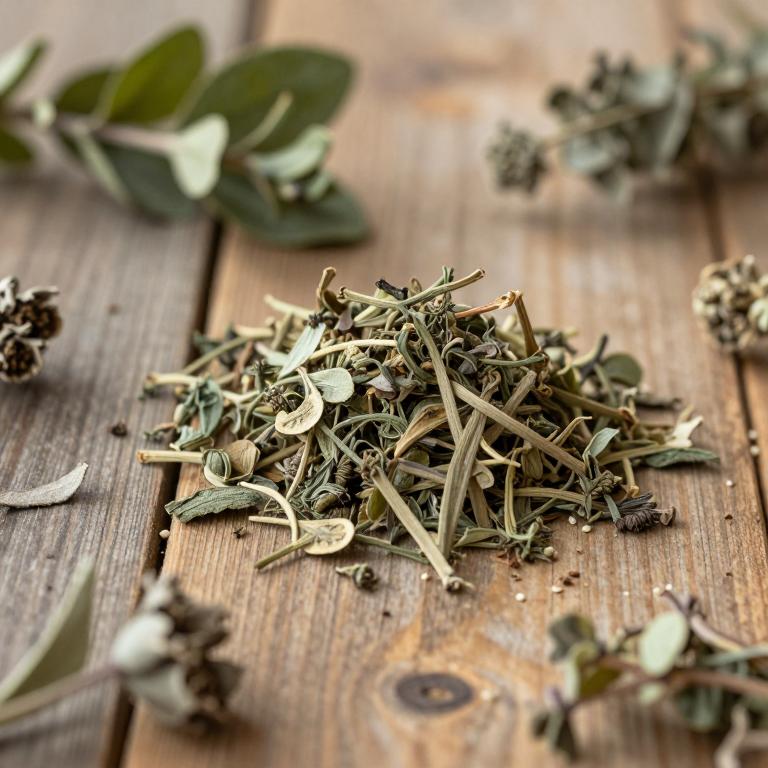
Stizolophus balsamita, is a remarkable medicinal plant cherished for its potent aromatic properties. Renowned for its soothing essence, it is widely utilized in traditional remedies to alleviate respiratory discomfort and digestive issues. Its unique bioactive compounds offer significant therapeutic benefits, making it a vital resource in natural wellness practices.
- Family
- Asteraceae
- Native range
- Europe
- Parts used
- Leaf · Flower
- Common names
- Not available
- Scientific synonyms
- Stizolophus Balsamitella · Centaurea Balsamitella · 2 more
Names and Synonyms
Scientific Names
Accepted name
Stizolophus balsamitaSynonyms
- Stizolophus balsamitella
- Centaurea balsamitella
- Calcitrapa balsamita
- Centaurea balsamita
Sources: Wikidata, Catalogue of Life
Taxonomical Classification
This plant belongs to the kingdom Plantae and the phylum Streptophyta, falling under the class Equisetopsida and subclass Magnoliidae. Within the order Asterales, it is classified under the family Asteraceae. Finally, it is identified by the genus Stizolophus as Stizolophus balsamita.
| Rank | Classification |
|---|---|
| Kingdom | Plantae |
| Phylum | Streptophyta |
| Class | Equisetopsida |
| Subclass | Magnoliidae |
| Order | Asterales |
| Family | Asteraceae |
| Genus | Stizolophus |
Sources: The World Checklist of Vascular Plants (WCVP)
Distribution
This plant exhibits a broad geographical distribution across several distinct regions. In Middle Europe, its presence is specifically noted within Germany. Moving eastward, it is widely distributed throughout various parts of Central Asia. Within this region, the species can be found growing in Kazakhstan and Kirgizstan. Furthermore, its range extends into the territories of Turkmenistan and Tadzhikistan.
| Region | Area |
|---|---|
| Middle Europe | Germany |
| Central Asia | Kazakhstan |
| Central Asia | Kirgizstan |
| Central Asia | Turkmenistan |
| Central Asia | Tadzhikistan |
| Central Asia | Uzbekistan |
| Caucasus | Transcaucasus |
| Western Asia | Afghanistan |
| Western Asia | Iran |
| Western Asia | Iraq |
Sources: The World Checklist of Vascular Plants (WCVP)
Botanical Identification
Ecology
The ecology of Stizolophus balsamita is defined by its presence across diverse landscapes, ranging from managed environments like cropfields and parks to more rugged, natural terrains such as mountains. This species demonstrates a significant vertical distribution within its environment, occupying an elevational range that begins at 1100 m AMSL and extends up to a maximum altitude of 2400 m AMSL.
- Elevational range max:
- 2400 m AMSL
- Elevational range min:
- 1100 m AMSL
- Habitat :
- cropfields,mountains,parks
Life history
The life history of Stizolophon balsamita is characterized by an annual lifecycle, meaning the plant completes its entire biological development—from germination and vegetative growth to flowering and seed production—within a single growing season. Following the germination of seeds in favorable soil conditions, the plant focuses its energy on establishing a leafy structure before transitioning into its reproductive phase. Once the flowering stage is achieved, the plant produces seeds to ensure the continuation of the species, after which the individual plant expires. This rapid developmental cycle allows the species to exploit seasonal windows of resource availability, relying on a prolific seed bank to persist in its environment through successive generations.
- Lifecycle :
- annual
Morphology
The morphology of Stizolophon balsamita is characterized by a growth form classified as a herb, exhibiting a non-woody structure throughout its development. The plant displays a versatile habitat adaptability, capable of existing in aquatic, semiaquatic, or terrestrial environments. In terms of stature, it is a relatively low-growing species, with a plant height that typically ranges from a minimum of 0.25 m to a maximum of 1.5 m. Furthermore, the species functions as an independent organism, maintaining a non-parasitic lifestyle.
- Aquatic :
- terrestrial
- Growth form :
- herb
- Parasite :
- independent
- Plant height max:
- 1.5 m
- Plant height min:
- 0.25 m
- Woodiness :
- non-woody
Sources: Global Inventory of Floras and Traits (GIFT)
Plant Parts
Stizolophus balsamita has 2 reported plant parts identified across 4 scientific publications and several other databases that are studied for medicinal purposes. The most consistently reported plant part include leaf, flower.
| Plant part | Supporting sources | Consensus |
|---|---|---|
| Leaf | 3 supporting sources | ★★☆☆☆ |
| Flower | 1 supporting sources | ★☆☆☆☆ |
Leaf
- Phytochemistry
- Data in brief
- Molecules (Basel, Switzerland)
Flower
- Phytochemistry
Chemicals
Stizolophus balsamita has 8 reported phytochemicals identified across 4 scientific publications and several other databases. The most consistently reported chemicals include Stizolicin, Stizolin, TAXIFOLIN, Balsamin, Flavonoid.
| Chemical | Supporting sources | Consensus |
|---|---|---|
| Stizolicin | 2 supporting sources | ★☆☆☆☆ |
| Stizolin | 2 supporting sources | ★☆☆☆☆ |
| TAXIFOLIN | 2 supporting sources | ★☆☆☆☆ |
| Balsamin | 1 supporting sources | ★☆☆☆☆ |
| Flavonoid | 1 supporting sources | ★☆☆☆☆ |
| Flavonoids | 1 supporting sources | ★☆☆☆☆ |
| TXF | 1 supporting sources | ★☆☆☆☆ |
| parthenolide | 1 supporting sources | ★☆☆☆☆ |
Stizolicin
- Phytochemistry
- Molecules (Basel, Switzerland)
Stizolin
- Phytochemistry
- Molecules (Basel, Switzerland)
TAXIFOLIN
- Antioxidants (Basel, Switzerland)
- International journal of molecular sciences
Balsamin
- Phytochemistry
Flavonoid
- Antioxidants (Basel, Switzerland)
Flavonoids
- International journal of molecular sciences
TXF
- Antioxidants (Basel, Switzerland)
parthenolide
- Molecules (Basel, Switzerland)
Conditions
Stizolophus balsamita has 2 reported investigations on conditions identified across 4 scientific publications and several other databases. The most consistently reported conditions include erythema, hyperpigmentation.
| Condition | Supporting sources | Consensus |
|---|---|---|
| Erythema | 1 supporting sources | ★☆☆☆☆ |
| Hyperpigmentation | 1 supporting sources | ★☆☆☆☆ |
Erythema
- Antioxidants (Basel, Switzerland)
Hyperpigmentation
- Antioxidants (Basel, Switzerland)
Preparations
Stizolophus balsamita has 4 reported preparations identified across 4 scientific publications and several other databases. The most consistently reported preparations include 3% S. balsamita extract, extract, inflorescence, standardised methanol extract from the leaves.
| Preparation | Supporting sources | Consensus |
|---|---|---|
| 3% s. balsamita extract | 1 supporting sources | ★☆☆☆☆ |
| Extract | 1 supporting sources | ★☆☆☆☆ |
| Inflorescence | 1 supporting sources | ★☆☆☆☆ |
| Standardised methanol extract from the leaves | 1 supporting sources | ★☆☆☆☆ |
3% s. balsamita extract
- Antioxidants (Basel, Switzerland)
Extract
- International journal of molecular sciences
Inflorescence
- International journal of molecular sciences
Standardised methanol extract from the leaves
- Molecules (Basel, Switzerland)