Stephania rotunda
Stephania rotunda · Accepted scientific name
Scientific literature: Sparse (94 studies) · ★★☆☆☆
Stephania rotunda, scientifically known as Stephania rotunda, is a climbing medicinal shrub native to tropical regions. Renowned for its diverse pharmacological properties, this plant is traditionally utilized in folk medicine to treat various ailments. Its bioactive compounds offer significant potential for developing new therapeutic agents in modern herbal pharmacology.
- Family
- Menispermaceae
- Native range
- Asia-Temperate
- Parts used
- Root
- Common names
- Not available
- Scientific synonyms
- Menispermum Roxburghii · Clypea Glabra · 4 more
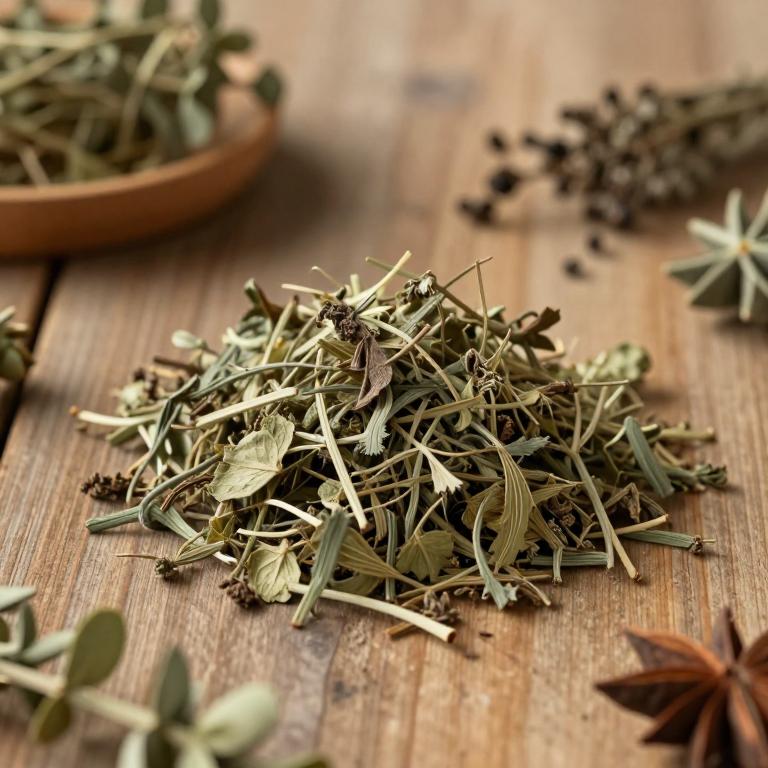
Names and Synonyms
Scientific Names
Accepted name
Stephania rotundaSynonyms
- Menispermum roxburghii
- Clypea glabra
- Clypea rotunda
- Cissampelos glabra
- Stephania hexandra
- Stephania glabra
Sources: Wikidata, Catalogue of Life
Taxonomical Classification
This plant belongs to the kingdom Plantae and is classified under the phylum Streptophyta within the class Equisetopsida. As a member of the subclass Magnoliidae and the order Ranunculales, it is further categorized into the family Menispermaceae. Ultimately, its taxonomic identity is defined by its placement in the genus Stephania.
| Rank | Classification |
|---|---|
| Kingdom | Plantae |
| Phylum | Streptophyta |
| Class | Equisetopsida |
| Subclass | Magnoliidae |
| Order | Ranunculales |
| Family | Menispermaceae |
| Genus | Stephania |
Sources: The World Checklist of Vascular Plants (WCVP)
Distribution
This plant exhibits a broad distribution across several key regions in Asia. In China, it can be found growing specifically within the Tibet region. Its presence extends into the Indian Subcontinent, where it is located in Assam and throughout India. Furthermore, the species is distributed across Bangladesh and the East Himalaya area. These diverse locations highlight the wide ecological range of Stephanotis rotundata.
| Region | Area |
|---|---|
| China | Tibet |
| Indian Subcontinent | Assam |
| Indian Subcontinent | Bangladesh |
| Indian Subcontinent | East Himalaya |
| Indian Subcontinent | India |
| Indian Subcontinent | Nepal |
| Indian Subcontinent | West Himalaya |
| Indo-China | Cambodia |
| Indo-China | Laos |
| Indo-China | Myanmar |
Sources: The World Checklist of Vascular Plants (WCVP)
Botanical Identification
Ecology
The ecology of Stephania rotunda is characterized by its specific distribution across varying altitudinal gradients, where it thrives within a defined vertical niche. This species is typically found inhabiting mid-altitude montane environments, occupying an elevational range that extends from a minimum of 600 m AMSL to a maximum of 1600 m AMSL. Within this altitudinal belt, the plant adapts to the specific temperature regimes, moisture availability, and soil compositions characteristic of these subtropical or tropical highland zones. Its presence within this specific range suggests a specialized ecological requirement for the atmospheric conditions and environmental pressures found between these two elevations.
- Elevational range max:
- 1600 m AMSL
- Elevational range min:
- 600 m AMSL
Life history
The life history of Stephania rotunda is characterized by its status as a perennial plant, allowing it to persist through multiple growing seasons. In terms of its ecological classification and growth habit, the species is categorized as a phanerophyte, specifically exhibiting traits consistent with both phanerophyte and nanophanerophyte life forms. This indicates that its perennating buds are located high above the ground, supporting its specialized development over time.
- Life form :
- phanerophyte
- Lifecycle :
- perennial
Morphology
The morphology of Stephania rotunda is characterized by its specialized growth habit and structural composition. It functions as an obligatory climber, relying on external structures for support to ascend. While its growth form is categorized under other developmental types, it specifically exhibits a shrub-like structure in its physical presence. The plant is terrestrial in nature rather than epiphytic, establishing itself within the soil substrate. Furthermore, its stem architecture is non-woody, lacking the rigid lignification found in truly woody species.
- Climber :
- obligatory
- Epiphyte :
- terrestrial
- Growth form :
- other
- Growth form :
- shrub
- Woodiness :
- non-woody
Physiology
The physiology of Stephanotis rotundifolia (often referred to in botanical contexts as Stephanotis, though noted here as Stephanis rotundis) is characterized by a standard metabolic framework typical of many woody climbers. The plant utilizes a C3 photosynthetic pathway, meaning it fixes carbon dioxide through the Calvin cycle using the enzyme RuBisCO, a process that is most efficient under moderate temperatures and well-watered conditions. Furthermore, this species does not function as a nitrogen fixer, lacking the symbiotic relationship with nitrogen-fixing bacteria (such as Rhizobium or Frankia) required to convert atmospheric nitrogen into bioavailable forms.
- Nitrogen fixer :
- no
- Photosynthetic pathway :
- C3
Sources: Global Inventory of Floras and Traits (GIFT)
Plant Parts
Stephania rotunda has 1 reported plant parts identified across 1 scientific publications and several other databases that are studied for medicinal purposes. The most consistently reported plant part include root.
| Plant part | Supporting sources | Consensus |
|---|---|---|
| Root | 1 supporting sources | ★☆☆☆☆ |
Root
- Journal of ethnopharmacology
Chemicals
Stephania rotunda has 21 reported phytochemicals identified across 1 scientific publications and several other databases. The most consistently reported chemicals include tetrahydropalmatine, Dehydrocorydalmine, Palmatine, stepharanine, (+)-Pronuciferine.
| Chemical | Supporting sources | Consensus |
|---|---|---|
| tetrahydropalmatine | 3 supporting sources | ★★☆☆☆ |
| Dehydrocorydalmine | 2 supporting sources | ★☆☆☆☆ |
| Palmatine | 2 supporting sources | ★☆☆☆☆ |
| stepharanine | 2 supporting sources | ★☆☆☆☆ |
| (+)-Pronuciferine | 1 supporting sources | ★☆☆☆☆ |
| (-)-Stepholidine | 1 supporting sources | ★☆☆☆☆ |
| (-)-corydalmine | 1 supporting sources | ★☆☆☆☆ |
| Bisbenzylisoquinolines | 1 supporting sources | ★☆☆☆☆ |
| Columbamine | 1 supporting sources | ★☆☆☆☆ |
| Corydalmine | 1 supporting sources | ★☆☆☆☆ |
tetrahydropalmatine
- Dr. Duke
- ACS omega
- Natural product communications
Dehydrocorydalmine
- Dr. Duke
- Journal of Asian natural products research
Palmatine
- Dr. Duke
- Journal of Asian natural products research
stepharanine
- Dr. Duke
- Journal of Asian natural products research
(+)-Pronuciferine
- Dr. Duke
(-)-Stepholidine
- Dr. Duke
(-)-corydalmine
- Dr. Duke
Bisbenzylisoquinolines
- Natural product research
Columbamine
- Dr. Duke
Corydalmine
- Dr. Duke
Activities
Stephania rotunda has 51 reported activities identified across 1 scientific publications and several other databases. The most consistently reported activities include Analgesic, Antiplasmodial, Antipyretic, Abortifacient, Adrenocorticotrophic.
| Activity | Supporting sources | Consensus |
|---|---|---|
| Analgesic | 2 supporting sources | ★☆☆☆☆ |
| Antiplasmodial | 2 supporting sources | ★☆☆☆☆ |
| Antipyretic | 2 supporting sources | ★☆☆☆☆ |
| Abortifacient | 1 supporting sources | ★☆☆☆☆ |
| Adrenocorticotrophic | 1 supporting sources | ★☆☆☆☆ |
| Antiaggregant | 1 supporting sources | ★☆☆☆☆ |
| Antialopecic | 1 supporting sources | ★☆☆☆☆ |
| Antialzheimeran? | 1 supporting sources | ★☆☆☆☆ |
| Antiarrhythmic | 1 supporting sources | ★☆☆☆☆ |
| Antiarthritic | 1 supporting sources | ★☆☆☆☆ |
Analgesic
- Dr. Duke
- Natural product research
Antiplasmodial
- Dr. Duke
- Journal of ethnopharmacology
Antipyretic
- Dr. Duke
- Natural product research
Abortifacient
- Dr. Duke
Adrenocorticotrophic
- Dr. Duke
Antiaggregant
- Dr. Duke
Antialopecic
- Dr. Duke
Antialzheimeran?
- Dr. Duke
Antiarrhythmic
- Dr. Duke
Antiarthritic
- Dr. Duke
Conditions
Stephania rotunda has 5 reported investigations on conditions identified across 1 scientific publications and several other databases. The most consistently reported conditions include asthma, cancer, fever, headache, malaria.
| Condition | Supporting sources | Consensus |
|---|---|---|
| Asthma | 1 supporting sources | ★☆☆☆☆ |
| Cancer | 1 supporting sources | ★☆☆☆☆ |
| Fever | 1 supporting sources | ★☆☆☆☆ |
| Headache | 1 supporting sources | ★☆☆☆☆ |
| Malaria | 1 supporting sources | ★☆☆☆☆ |
Asthma
- Journal of ethnopharmacology
Cancer
- Journal of ethnopharmacology
Fever
- Journal of ethnopharmacology
Headache
- Journal of ethnopharmacology
Malaria
- Journal of ethnopharmacology
Preparations
Stephania rotunda has 2 reported preparations identified across 1 scientific publications and several other databases. The most consistently reported preparations include aqueous extracts, dichloromethane extracts.
| Preparation | Supporting sources | Consensus |
|---|---|---|
| Aqueous extracts | 1 supporting sources | ★☆☆☆☆ |
| Dichloromethane extracts | 1 supporting sources | ★☆☆☆☆ |
Aqueous extracts
- Journal of ethnopharmacology
Dichloromethane extracts
- Journal of ethnopharmacology