swamp vine fern
Stenochlaena palustris · Accepted scientific name
Scientific literature: Very Sparse (8 studies) · ★☆☆☆☆
Swamp vine fern, scientifically known as Stenochlaena palustris, is a versatile medicinal plant found in tropical wetlands. Renowned in traditional medicine, its rhizomes and leaves are utilized to treat various ailments, including inflammation, skin conditions, and digestive issues. This fern represents a vital resource in ethnobotanical healing practices.
- Family
- Aspleniaceae
- Native range
- Asia-Temperate
- Parts used
- Leaf
- Common names
- Swamp Vine Fern · Climbing Swamp Fern
- Scientific synonyms
- Acrostichum Laurifolium · Lomaria Juglandifolia · 9 more
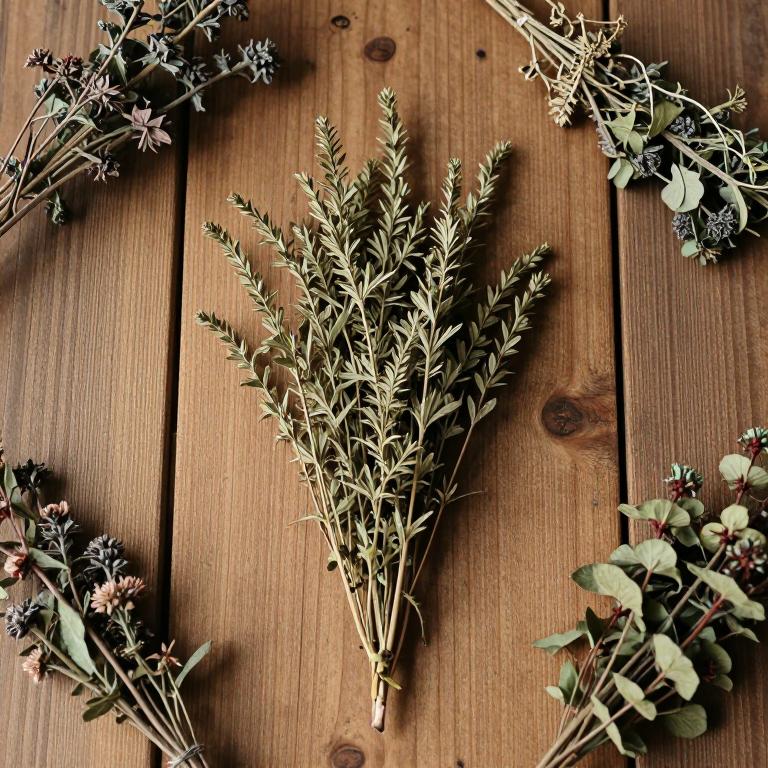
Names and Synonyms
Common Names
- swamp vine fern
- Climbing Swamp fern
Scientific Names
Accepted name
Stenochlaena palustrisSynonyms
- Acrostichum laurifolium
- Lomaria juglandifolia
- Stenochlaena fraxinifolia
- Stenochlaena laurifolia
- Stenochlaena blumeana
- Stenochlaena haenkeana
- Stenochlaena juglandifolia
- Lomariopsis fraxinifolia
- Chrysodium palustre
- Stenochlaena hainanensis
- Lomaria haenkeana
Sources: Wikidata, Catalogue of Life
Taxonomical Classification
This plant belongs to the kingdom Plantae and is classified under the phylum Streptophyta within the class Equisetopsida. It is further categorized under the subclass Polypodiinae and the order Polypodiales. Finally, it is a member of the family Aspleniaceae and is identified by the genus Stenochlaena.
| Rank | Classification |
|---|---|
| Kingdom | Plantae |
| Phylum | Streptophyta |
| Class | Equisetopsida |
| Subclass | Polypodiinae |
| Order | Polypodiales |
| Family | Aspleniaceae |
| Genus | Stenochlaena |
Sources: The World Checklist of Vascular Plants (WCVP)
Distribution
This plant exhibits a broad geographical distribution across several key regions in Asia. In China, it is widely documented in the South-Central, Southeast, and Hainan areas. Its presence extends into the Indian Subcontinent, where it can be found in the state of Assam. Additionally, the species is recorded within the borders of Bangladesh. Together, these locations highlight the plant's preference for specific tropical and subtropical environments.
| Region | Area |
|---|---|
| China | China South-Central |
| China | Hainan |
| China | China Southeast |
| Indian Subcontinent | Assam |
| Indian Subcontinent | Bangladesh |
| Indian Subcontinent | East Himalaya |
| Indian Subcontinent | India |
| Indian Subcontinent | Nepal |
| Indian Subcontinent | Sri Lanka |
| Indo-China | Cambodia |
Sources: The World Checklist of Vascular Plants (WCVP)
Botanical Identification
Life history
The life history of Stenochlaena palustris is characterized by its status as a perennial plant, allowing it to persist in its habitat over multiple growing seasons. As a phanerophyte, its regenerative buds are located high above the ground on aerial stems, a structural adaptation that defines its life form. This species maintains an evergreen deciduousness, meaning it retains its green foliage throughout the year rather than shedding it seasonally.
- Deciduousness :
- evergreen
- Life form :
- phanerophyte
- Lifecycle :
- perennial
Morphology
The morphology of Stenochlaena palustris is characterized by its growth form as a non-woody herb. The plant exhibits a significant range in stature, with a minimum height of 0.4 m and a maximum potential height reaching up to 20 m, maintaining a mean height of approximately 5 m. In terms of its structural habit, it is a self-supporting species, though it is classified under obligatory climbing traits within certain contexts. It functions as an independent organism rather than a parasite and is strictly terrestrial in its ecological positioning, neither acting as an epiphyte nor inhabiting aquatic or semiaquatic environments.
- Aquatic :
- terrestrial
- Climber :
- self-supporting
- Climber :
- obligatory
- Epiphyte :
- terrestrial
- Growth form :
- herb
- Parasite :
- independent
- Plant height max:
- 20 m
- Plant height mean:
- 5 m
- Plant height min:
- 0.4 m
- Woodiness :
- non-woody
Physiology
The physiology of Stenochlaena palustris is characterized by a C3 photosynthetic pathway, which dictates its carbon fixation processes and metabolic efficiency within its natural habitat. The plant does not exhibit any form of succulence, meaning it lacks specialized thickened tissues for water storage and relies on consistent environmental moisture to maintain turgor pressure. Furthermore, it does not function as a nitrogen fixer, lacking the symbiotic relationships or biological mechanisms required to convert atmospheric nitrogen into usable forms, thus depending instead on available soil nutrients for its nitrogen requirements.
- Nitrogen fixer :
- no
- Photosynthetic pathway :
- C3
- Succulence :
- no
Sources: Global Inventory of Floras and Traits (GIFT)
Plant Parts
Stenochlaena palustris has 1 reported plant parts identified across 1 scientific publications and several other databases that are studied for medicinal purposes. The most consistently reported plant part include leaf.
| Plant part | Supporting sources | Consensus |
|---|---|---|
| Leaf | 1 supporting sources | ★☆☆☆☆ |
Leaf
- Malaysian journal of nutrition
Chemicals
Stenochlaena palustris has 3 reported phytochemicals identified across 1 scientific publications and several other databases. The most consistently reported chemicals include Antioxidant, ETHYL ACETATE, Hydroxycinnamic Acids.
| Chemical | Supporting sources | Consensus |
|---|---|---|
| Antioxidant | 1 supporting sources | ★☆☆☆☆ |
| ETHYL ACETATE | 1 supporting sources | ★☆☆☆☆ |
| Hydroxycinnamic Acids | 1 supporting sources | ★☆☆☆☆ |
Antioxidant
- Food chemistry
ETHYL ACETATE
- Advances in pharmacological and pharmaceutical sciences
Hydroxycinnamic Acids
- Food chemistry
Activities
Stenochlaena palustris has 1 reported activities identified across 1 scientific publications and several other databases. The most consistently reported activities include Free-Radical Scavenging.
| Activity | Supporting sources | Consensus |
|---|---|---|
| Free-Radical Scavenging | 1 supporting sources | ★☆☆☆☆ |
Free-Radical Scavenging
- Advances in pharmacological and pharmaceutical sciences
Conditions
Stenochlaena palustris has 3 reported investigations on conditions identified across 1 scientific publications and several other databases. The most consistently reported conditions include Aspergillus niger, infection, wound healing.
| Condition | Supporting sources | Consensus |
|---|---|---|
| Aspergillus niger | 1 supporting sources | ★☆☆☆☆ |
| Infection | 1 supporting sources | ★☆☆☆☆ |
| Wound healing | 1 supporting sources | ★☆☆☆☆ |
Aspergillus niger
- Malaysian journal of nutrition
Infection
- Advances in pharmacological and pharmaceutical sciences
Wound healing
- Advances in pharmacological and pharmaceutical sciences
Preparations
Stenochlaena palustris has 9 reported preparations identified across 1 scientific publications and several other databases. The most consistently reported preparations include Water fraction (WF), Water fraction of edible medicinal fern Stenochlaena palustris, chloroform, ethyl acetate, hexane.
| Preparation | Supporting sources | Consensus |
|---|---|---|
| Water fraction (wf) | 1 supporting sources | ★☆☆☆☆ |
| Water fraction of edible medicinal fern stenochlaena palustris | 1 supporting sources | ★☆☆☆☆ |
| Chloroform | 1 supporting sources | ★☆☆☆☆ |
| Ethyl acetate | 1 supporting sources | ★☆☆☆☆ |
| Hexane | 1 supporting sources | ★☆☆☆☆ |
| Leaf extract | 1 supporting sources | ★☆☆☆☆ |
| Methanol | 1 supporting sources | ★☆☆☆☆ |
| Methanol extract (me) | 1 supporting sources | ★☆☆☆☆ |
| Water | 1 supporting sources | ★☆☆☆☆ |
Water fraction (wf)
- Food chemistry
Water fraction of edible medicinal fern stenochlaena palustris
- Food chemistry
Chloroform
- Food chemistry
Ethyl acetate
- Food chemistry
Hexane
- Food chemistry
Leaf extract
- Malaysian journal of nutrition
Methanol
- Food chemistry
Methanol extract (me)
- Food chemistry
Water
- Food chemistry