Stenocereus thurberi
Stenocereus thurberi · Accepted scientific name
Scientific literature: Very Sparse (13 studies) · ★☆☆☆☆
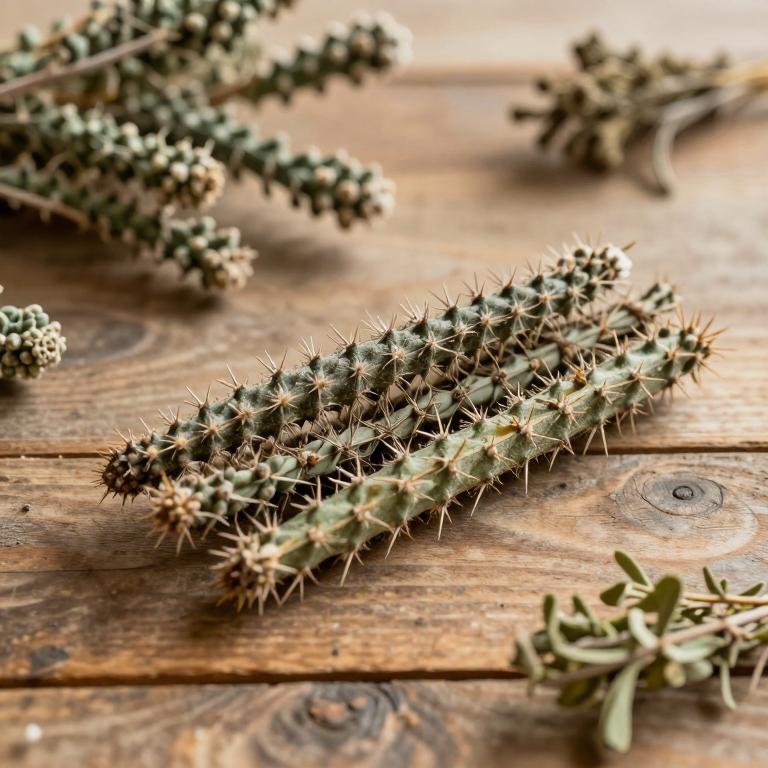
, scientifically known as Stenocereus thuurberi, is a columnar cactus native to Mexico. Often called pitaya or mezcalero, this resilient plant offers more than just edible fruit. In traditional medicine, various parts are utilized to treat digestive issues, promote healing, and provide nutritional support within indigenous desert communities.
- Family
- Not available
- Native range
- Northern America
- Parts used
- Not available
- Common names
- Not available
- Scientific synonyms
- Not available
Names and Synonyms
Scientific Names
Accepted name
Stenocereus thurberiDistribution
This plant, known as Stenocereus thuurberi, exhibits a specific range across North American landscapes. Its presence can be found in the Southwestern United States, specifically within the state of Arizona. Moving south, the species is widely distributed throughout the nation of Mexico. It occupies significant portions of the Mexican Northeast, thriving in those particular climates. Additionally, the plant is common throughout the Northwest region of Mexico.
| Region | Area |
|---|---|
| Southwestern U.S.A. | Arizona |
| Mexico | Mexico Northeast |
| Mexico | Mexico Northwest |
Sources: The World Checklist of Vascular Plants (WCVP)
Botanical Identification
Life history
The life history of Stenocereus thurberi is characterized by its status as a perennial organism, allowing it to persist in its environment over many years through long-term survival strategies. Throughout its development, the plant maintains an evergreen habit, retaining its photosynthetic structures and foliage across successive growing seasons rather than shedding them seasonally. This combination of a long-lived perennial lifecycle and evergreen physiological traits enables the species to maintain consistent metabolic activity and structural stability within its ecological niche.
- Deciduousness :
- evergreen
- Lifecycle :
- perennial
Morphology
The morphology of Stenocereus thurberi is characterized by a woody structure that exhibits a growth form ranging from a shrub to a tree, reaching an average plant height of approximately 6.05 m. This species is strictly terrestrial in its habitat, functioning as a self-supporting plant rather than a climber or vine. As an independent organism, it does not exhibit parasitic behavior and maintains a non-epiphytic, terrestrial existence.
- Aquatic :
- terrestrial
- Climber :
- self-supporting
- Epiphyte :
- terrestrial
- Growth form :
- tree
- Growth form :
- shrub
- Parasite :
- independent
- Plant height mean:
- 6.05 m
- Woodiness :
- woody
Physiology
The physiology of Stenocereus thuurberi is characterized by specialized adaptations for survival in arid environments, primarily through the use of Crassulacean Acid Metabolism (CAM) photosynthesis. This metabolic pathway allows the plant to fix carbon dioxide at night, minimizing transpirational water loss by keeping its stomata closed during the heat of the day. The plant utilizes its succulent, ribbed stem to facilitate efficient water storage and to provide structural expansion and contraction during fluctuating moisture availability. In terms of nutrient cycling, Stenocereus thuurberi is not a nitrogen fixer; it lacks the symbiotic relationships with diazotrophic bacteria required to convert atmospheric nitrogen into bioavailable forms, meaning it relies on the decomposition of organic matter in its substrate for nitrogen uptake. Its physiological processes are highly synchronized with seasonal rainfall, triggering rapid metabolic shifts to support reproductive cycles and the development of its fleshy fruits.
- Nitrogen fixer :
- no
Reproduction
The reproduction of Stenocereus thuurberi is characterized by a specific seed morphology and a specialized dispersal mechanism. The plant produces seeds that are remarkably uniform in size, with a consistent seed mass measured at a mean, maximum, and minimum of 0.0019 g. These small seeds are distributed through a zoochorous dispersal syndrome, meaning they rely on animals to facilitate their movement and subsequent germination across the landscape.
- Dispersal syndrome :
- zoochorous
- Seed mass mean:
- 0.0019 g
Sources: Global Inventory of Floras and Traits (GIFT)
Chemicals
Stenocereus thurberi has 1 reported phytochemicals identified across 0 scientific publications and several other databases. The most consistently reported chemicals include Betulin.
| Chemical | Supporting sources | Consensus |
|---|---|---|
| Betulin | 1 supporting sources | ★☆☆☆☆ |
Betulin
- Dr. Duke
Activities
Stenocereus thurberi has 12 reported activities identified across 0 scientific publications and several other databases. The most consistently reported activities include AntiHIV, Anticarcinomic, Antifeedant, Antiflu, Antiinflammatory.
| Activity | Supporting sources | Consensus |
|---|---|---|
| AntiHIV | 1 supporting sources | ★☆☆☆☆ |
| Anticarcinomic | 1 supporting sources | ★☆☆☆☆ |
| Antifeedant | 1 supporting sources | ★☆☆☆☆ |
| Antiflu | 1 supporting sources | ★☆☆☆☆ |
| Antiinflammatory | 1 supporting sources | ★☆☆☆☆ |
| Antitumor | 1 supporting sources | ★☆☆☆☆ |
| Antiviral | 1 supporting sources | ★☆☆☆☆ |
| Aphidifuge | 1 supporting sources | ★☆☆☆☆ |
| Cytotoxic | 1 supporting sources | ★☆☆☆☆ |
| Hypolipemic | 1 supporting sources | ★☆☆☆☆ |
AntiHIV
- Dr. Duke
Anticarcinomic
- Dr. Duke
Antifeedant
- Dr. Duke
Antiflu
- Dr. Duke
Antiinflammatory
- Dr. Duke
Antitumor
- Dr. Duke
Antiviral
- Dr. Duke
Aphidifuge
- Dr. Duke
Cytotoxic
- Dr. Duke
Hypolipemic
- Dr. Duke