Stenocereus gummosus
Stenocereus gummosus · Accepted scientific name
Scientific literature: Very Sparse (19 studies) · ★☆☆☆☆
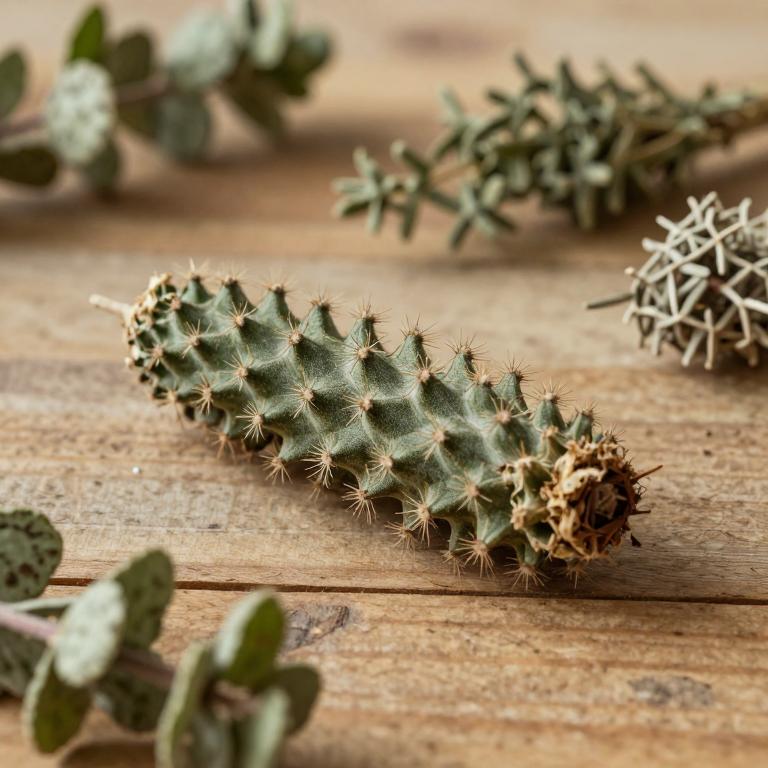
Stenocereus gummosus, is a resilient columnar cactus native to the arid regions of Mexico. Traditionally valued for its nutrient-rich fruit, known as pitaya, this plant offers significant medicinal potential. It is frequently utilized in folk medicine to support digestive health and provide essential antioxidants within various holistic healing practices.
- Family
- Not available
- Native range
- Northern America
- Parts used
- Not available
- Common names
- Not available
- Scientific synonyms
- Not available
Names and Synonyms
Scientific Names
Accepted name
Stenocereus gummosusDistribution
This plant is primarily found within the specific regional boundaries of Mexico. Its geographical presence is concentrated in the northwest portion of the country. This area provides the unique environmental conditions necessary for its natural growth. Consequently, the species is a characteristic element of the northwestern Mexican landscape. Therefore, its distribution remains localized to this particular part of the nation.
| Region | Area |
|---|---|
| Mexico | Mexico Northwest |
Sources: The World Checklist of Vascular Plants (WCVP)
Botanical Identification
Life history
The life history of Stenocereus gummosus is characterized by its status as a perennial organism, allowing it to maintain its presence within its ecosystem over many years. As an evergreen species, it does not undergo a seasonal shedding of its foliage, maintaining its structural integrity and photosynthetic capacity throughout the year. This combination of a long-lived life cycle and constant greenery enables the plant to adapt to its specific environmental conditions, ensuring stability and continuous growth over its extended lifespan.
- Deciduousness :
- evergreen
- Lifecycle :
- perennial
Morphology
The morphology of Stenocereus gummosus is characterized by a woody growth form, specifically classified as a shrub, which allows it to maintain a sturdy and structural presence. As a terrestrial plant, it is adapted to land-based environments and functions as an independent organism, lacking any parasitic relationship with other species. The plant is self-supporting rather than a climber, utilizing its woody stems to remain upright without external assistance. In terms of dimensions, it typically reaches a plant height with a mean of approximately 2 m.
- Aquatic :
- terrestrial
- Climber :
- self-supporting
- Growth form :
- shrub
- Parasite :
- independent
- Plant height mean:
- 2 m
- Woodiness :
- woody
Physiology
The physiology of Stenocereus gummosus is characterized by highly specialized adaptations to arid environments, most notably through its utilization of the Crassulacean Acid Metabolism (CAM) photosynthetic pathway. By employing this CAM mechanism, the plant optimizes water-use efficiency by keeping its stomata closed during the intense heat of the day to prevent transpiration and opening them at night to collect carbon dioxide, which is subsequently stored as organic acids for daytime photosynthesis. Furthermore, in terms of nutrient cycling and symbiotic relationships, the plant does not function as a nitrogen fixer, meaning it lacks the biological machinery or symbiotic associations with nitrogen-fixing bacteria required to convert atmospheric nitrogen into usable forms for its growth.
- Nitrogen fixer :
- no
- Photosynthetic pathway :
- CAM
Sources: Global Inventory of Floras and Traits (GIFT)
Chemicals
Stenocereus gummosus has 1 reported phytochemicals identified across 0 scientific publications and several other databases. The most consistently reported chemicals include betulinic acid.
| Chemical | Supporting sources | Consensus |
|---|---|---|
| betulinic acid | 1 supporting sources | ★☆☆☆☆ |
betulinic acid
- Dr. Duke
Activities
Stenocereus gummosus has 18 reported activities identified across 0 scientific publications and several other databases. The most consistently reported activities include Anthelmintic, AntiHIV, Antibacterial, Anticancer, Anticarcinomic.
| Activity | Supporting sources | Consensus |
|---|---|---|
| Anthelmintic | 1 supporting sources | ★☆☆☆☆ |
| AntiHIV | 1 supporting sources | ★☆☆☆☆ |
| Antibacterial | 1 supporting sources | ★☆☆☆☆ |
| Anticancer | 1 supporting sources | ★☆☆☆☆ |
| Anticarcinomic | 1 supporting sources | ★☆☆☆☆ |
| Antiedemic | 1 supporting sources | ★☆☆☆☆ |
| Antiinflammatory | 1 supporting sources | ★☆☆☆☆ |
| Antileukemic | 1 supporting sources | ★☆☆☆☆ |
| Antimalarial | 1 supporting sources | ★☆☆☆☆ |
| Antimelanomic | 1 supporting sources | ★☆☆☆☆ |
Anthelmintic
- Dr. Duke
AntiHIV
- Dr. Duke
Antibacterial
- Dr. Duke
Anticancer
- Dr. Duke
Anticarcinomic
- Dr. Duke
Antiedemic
- Dr. Duke
Antiinflammatory
- Dr. Duke
Antileukemic
- Dr. Duke
Antimalarial
- Dr. Duke
Antimelanomic
- Dr. Duke