Stenocereus griseus
Stenocereus griseus · Accepted scientific name
Scientific literature: Very Sparse (25 studies) · ★☆☆☆☆
Stenocereus griseus, is a resilient columnar cactus native to the arid regions of Mexico and Central America. Commonly known as pitaya or pitahaya, this species is highly valued for its nutrient-dense fruits and traditional medicinal uses, offering significant antioxidant properties and supporting digestive health within various indigenous healing practices.
- Family
- Not available
- Native range
- Northern America
- Parts used
- Not available
- Common names
- Not available
- Scientific synonyms
- Not available
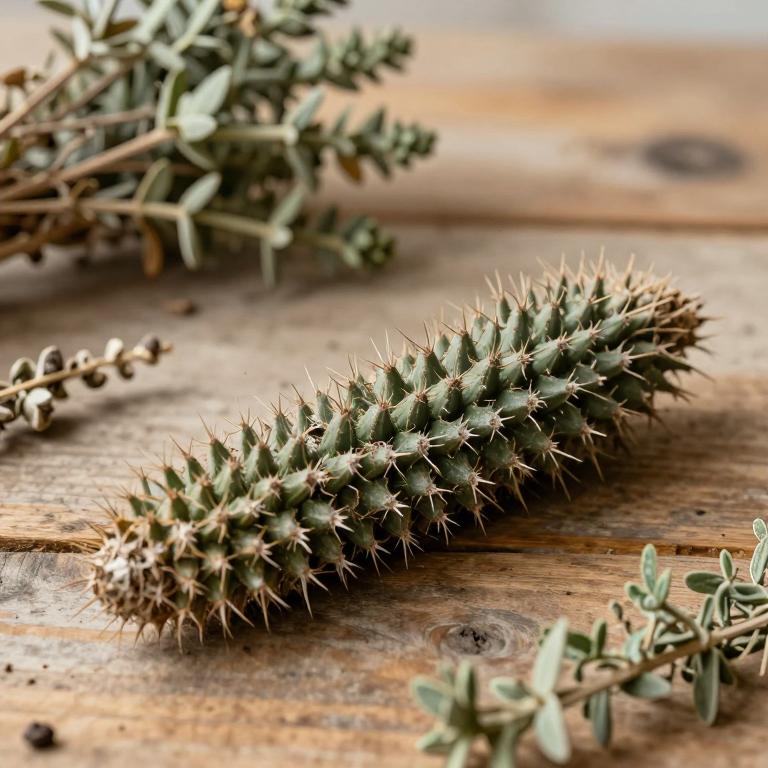
Names and Synonyms
Scientific Names
Accepted name
Stenocereus griseusDistribution
This plant is widely distributed across various regions of Mexico, reflecting its adaptability to diverse environments. Its presence is well-documented throughout Mexico Central, where it occupies specific ecological niches. The species also thrives in the landscapes of Mexico Northeast and the coastal areas of Mexico Gulf. Furthermore, its range extends into the arid terrains of Mexico Southwest. Finally, the plant can be found reaching into the tropical and subtropical zones of Mexico Southeast.
| Region | Area |
|---|---|
| Mexico | Mexico Central |
| Mexico | Mexico Northeast |
| Mexico | Mexico Gulf |
| Mexico | Mexico Southwest |
| Mexico | Mexico Southeast |
| Central America | Guatemala |
| Caribbean | Aruba |
| Caribbean | Netherlands Antilles |
| Caribbean | Trinidad-Tobago |
| Caribbean | Venezuelan Antilles |
Sources: The World Checklist of Vascular Plants (WCVP)
Botanical Identification
Ecology
The ecology of Stenocereus griseus is defined by its adaptation to arid and semi-arid environments, where it thrives within diverse tropical dry forest and coastal scrubland ecosystems. This species exhibits a broad altitudinal distribution, colonizing habitats that span from sea level up to an elevation of 1200 m AMSL. It is typically found in regions characterized by low annual rainfall and high solar radiation, often playing a structural role in its community by providing nesting sites and food resources for various fauna. Its ability to inhabit such a wide elevational range, from 0 to 1200 m AMSL, allows it to occupy various ecological niches within its geographic range, from low-lying coastal plains to mid-elevation slopes.
- Elevational range max:
- 1200 m AMSL
- Elevational range min:
- 0 m AMSL
Life history
The life history of Stenocereus griseus is characterized by its nature as a perennial organism, meaning it lives for many years and maintains a continuous presence within its arid ecosystem. As an evergreen species, it does not undergo a seasonal shedding of its photosynthetic tissues, allowing it to maintain its green, columnar structure throughout the year despite fluctuating environmental conditions. This long-lived life cycle enables the plant to establish a robust presence in its habitat, slowly accumulating biomass and structural integrity over successive seasons.
- Deciduousness :
- evergreen
- Lifecycle :
- perennial
Morphology
The morphology of Stenocereus griseus is characterized by a robust, woody structure that functions as a self-supporting growth form. It manifests in various growth forms, ranging from a shrub to a tree, reaching an average plant height of approximately 7 m. As a terrestrial species, it does not exhibit aquatic, semiaquatic, or epiphytic tendencies, maintaining an independent life cycle without acting as a parasite. Its physical architecture is distinctly self-supporting rather than acting as a climber, liana, or vine, and its perennial nature is defined by its consistently woody tissue.
- Aquatic :
- terrestrial
- Climber :
- self-supporting
- Epiphyte :
- terrestrial
- Growth form :
- tree
- Growth form :
- shrub
- Parasite :
- independent
- Plant height mean:
- 7 m
- Woodiness :
- woody
Physiology
The physiology of Stenocereus griseus is characterized by highly specialized adaptations for survival in arid environments, primarily through the utilization of Crassulacean Acid Metabolism (CAM) to optimize water-use efficiency. By fixing carbon dioxide at night and storing it as malic acid, the plant minimizes transpirational water loss during the intense heat of the day. Its succulent stem serves as a vital reservoir for water storage, supported by a complex vascular system designed to move moisture rapidly during infrequent rainfall events. The root system typically consists of a shallow, widespread network capable of immediate absorption of surface moisture, supplemented by a deep anchoring structure. Regarding nutrient cycling and metabolic processes, Stenocereus griseus is not a nitrogen fixer; it lacks the symbiotic relationship with diazotrophic bacteria, such as Rhizobium, required to convert atmospheric nitrogen into usable forms, meaning it relies instead on the decomposition of organic matter and mineral availability within the soil for its nitrogen requirements.
- Nitrogen fixer :
- no
Reproduction
Reproduction in Stenocereus griseus is primarily driven by a zoochorous dispersal syndrome, where animals play a critical role in the movement of seeds away from the parent plant. While the species exhibits a complex range of potential dispersal mechanisms—including anemochorous (wind), autochorous (self-dispersal), hydrochorous (water), and unspecialized methods—it relies heavily on biotic vectors to ensure effective colonization. The plant produces fleshy fruits that serve as nutritional rewards for various fauna, facilitating the transport of seeds through ingestion and subsequent excretion. This reliance on animal vectors is a fundamental component of its reproductive strategy, allowing the seeds to be distributed across different habitats and reducing competition with the maternal plant.
- Dispersal syndrome :
- zoochorous
Sources: Global Inventory of Floras and Traits (GIFT)
Chemicals
Stenocereus griseus has 2 reported phytochemicals identified across 0 scientific publications and several other databases. The most consistently reported chemicals include Betulin, betulinic acid.
| Chemical | Supporting sources | Consensus |
|---|---|---|
| Betulin | 1 supporting sources | ★☆☆☆☆ |
| betulinic acid | 1 supporting sources | ★☆☆☆☆ |
Betulin
- Dr. Duke
betulinic acid
- Dr. Duke
Activities
Stenocereus griseus has 23 reported activities identified across 0 scientific publications and several other databases. The most consistently reported activities include Anthelmintic, AntiHIV, Antibacterial, Anticancer, Anticarcinomic.
| Activity | Supporting sources | Consensus |
|---|---|---|
| Anthelmintic | 1 supporting sources | ★☆☆☆☆ |
| AntiHIV | 1 supporting sources | ★☆☆☆☆ |
| Antibacterial | 1 supporting sources | ★☆☆☆☆ |
| Anticancer | 1 supporting sources | ★☆☆☆☆ |
| Anticarcinomic | 1 supporting sources | ★☆☆☆☆ |
| Antiedemic | 1 supporting sources | ★☆☆☆☆ |
| Antifeedant | 1 supporting sources | ★☆☆☆☆ |
| Antiflu | 1 supporting sources | ★☆☆☆☆ |
| Antiinflammatory | 1 supporting sources | ★☆☆☆☆ |
| Antileukemic | 1 supporting sources | ★☆☆☆☆ |
Anthelmintic
- Dr. Duke
AntiHIV
- Dr. Duke
Antibacterial
- Dr. Duke
Anticancer
- Dr. Duke
Anticarcinomic
- Dr. Duke
Antiedemic
- Dr. Duke
Antifeedant
- Dr. Duke
Antiflu
- Dr. Duke
Antiinflammatory
- Dr. Duke
Antileukemic
- Dr. Duke