Stemona curtisii
Stemona curtisii · Accepted scientific name
Scientific literature: Very Sparse (2 studies) · ★☆☆☆☆
Stemona curtisii, scientifically known as Stemona curtisii, is a medicinal plant valued in traditional pharmacology. Renowned for its potent alkaloids, it is primarily utilized for its antiparasitic and antitussive properties. This species plays a crucial role in treating respiratory ailments and various infections within diverse herbal medicine practices.
- Family
- Stemonaceae
- Native range
- Asia-Tropical
- Parts used
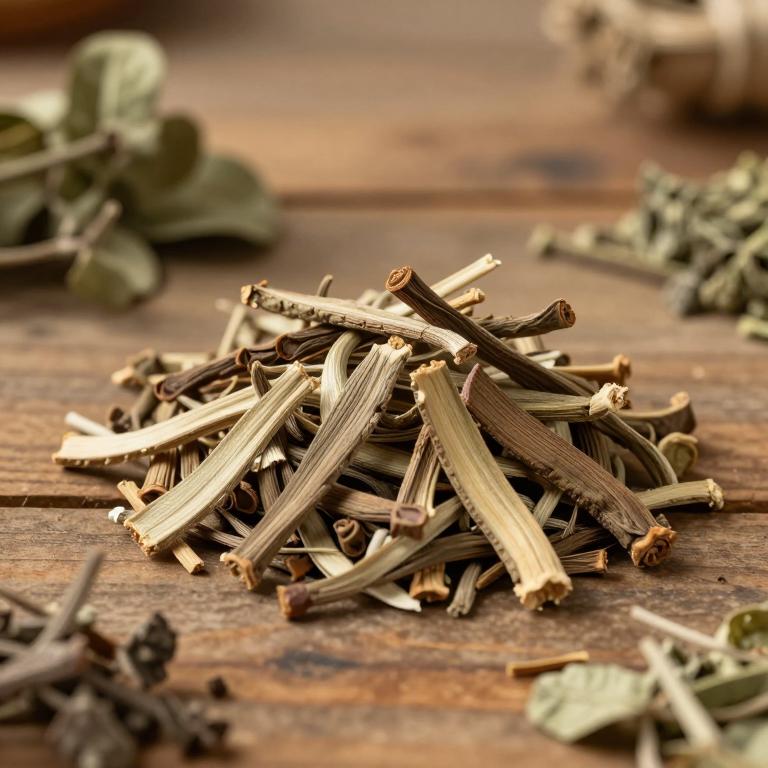
- Root
- Common names
- Not available
- Scientific synonyms
- Not available
Names and Synonyms
Scientific Names
Accepted name
Stemona curtisiiSources: Wikidata
Taxonomical Classification
This plant, Stemona curtisii, belongs to the kingdom Plantae and the phylum Streptophyta. Within the class Equisetopsida and subclass Magnoliidae, it is categorized under the order Pandanales. Finally, it is classified under the family Stemonaceae and the genus Stemona.
| Rank | Classification |
|---|---|
| Kingdom | Plantae |
| Phylum | Streptophyta |
| Class | Equisetopsida |
| Subclass | Magnoliidae |
| Order | Pandanales |
| Family | Stemonaceae |
| Genus | Stemona |
Sources: The World Checklist of Vascular Plants (WCVP)
Distribution
This plant exhibits a specific geographical distribution across several key regions in Southeast Asia. Within the Indo-China region, it can be found on the Nicobar Islands and throughout Thailand. Moving into the Malesia region, its presence extends into the area of Malaya. Additionally, the species is documented to grow on the island of Sumatera. Together, these locations highlight the plant's localized range across these tropical territories.
| Region | Area |
|---|---|
| Indo-China | Nicobar Is. |
| Indo-China | Thailand |
| Malesia | Malaya |
| Malesia | Sumatera |
Sources: The World Checklist of Vascular Plants (WCVP)
Botanical Identification
Life history
The life history of Stemona curtisii is characterized by its specialized survival strategy as a cryptophyte, specifically functioning as a geophyte. This means that the plant relies on underground storage organs to endure unfavorable environmental conditions or seasonal changes. As a geophyte, it maintains its perennating buds or vegetative structures beneath the soil surface, allowing it to remain dormant during periods of stress and emerge rapidly when favorable growing conditions return. This life form enables the plant to bypass harsh surface environments, ensuring its long-term persistence within its ecological niche through its subterranean life cycle.
- Life form :
- geophyte
- Life form :
- cryptophyte
Morphology
The morphology of Stemona curtisii is characterized by its growth form as a non-woody herb that exhibits climbing behavior. It functions as a climber, manifesting as a liana or vine that can be both self-supporting and facultative in its climbing habit. As an independent organism, it does not exhibit parasitic tendencies and maintains a terrestrial lifestyle rather than being epiphytic. The plant reaches a maximum height of approximately 3 meters.
- Climber :
- vine
- Climber :
- self-supporting
- Epiphyte :
- terrestrial
- Growth form :
- herb
- Parasite :
- independent
- Plant height max:
- 3 m
- Woodiness :
- non-woody
Sources: Global Inventory of Floras and Traits (GIFT)
Plant Parts
Stemona curtisii has 1 reported plant parts identified across 1 scientific publications and several other databases that are studied for medicinal purposes. The most consistently reported plant part include root.
| Plant part | Supporting sources | Consensus |
|---|---|---|
| Root | 1 supporting sources | ★☆☆☆☆ |
Root
- Journal of natural products
Chemicals
Stemona curtisii has 1 reported phytochemicals identified across 1 scientific publications and several other databases. The most consistently reported chemicals include stemocurtisine.
| Chemical | Supporting sources | Consensus |
|---|---|---|
| stemocurtisine | 1 supporting sources | ★☆☆☆☆ |
stemocurtisine
- Journal of natural products
Preparations
Stemona curtisii has 1 reported preparations identified across 1 scientific publications and several other databases. The most consistently reported preparations include root extract.
| Preparation | Supporting sources | Consensus |
|---|---|---|
| Root extract | 1 supporting sources | ★☆☆☆☆ |
Root extract
- Journal of natural products