Obeah Bush
Stemodia maritima · Accepted scientific name
Scientific literature: Very Sparse (21 studies) · ★☆☆☆☆
Obeah Bush, scientifically known as Stemodia maritima, is a versatile medicinal herb widely used in traditional Caribbean folk medicine. Often utilized to treat respiratory ailments, skin irritations, and digestive issues, this plant holds significant cultural importance. Its therapeutic properties make it a vital resource in various herbal healing practices.
- Family
- Plantaginaceae
- Native range
- Northern America
- Parts used
- Not available
- Common names
- Obeah Bush
- Scientific synonyms
- Stemodiacra Maritima · Stemodia Maritima Var. Rigida
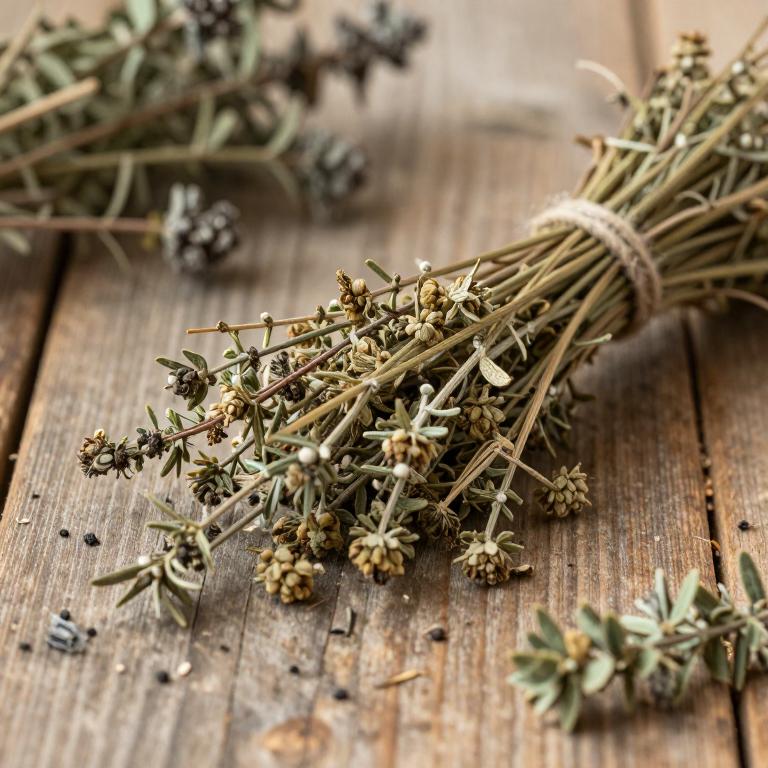
Names and Synonyms
Common Names
- Obeah Bush
Scientific Names
Accepted name
Stemodia maritimaSynonyms
- Stemodiacra maritima
- Stemodia maritima var. rigida
Sources: Wikidata, Catalogue of Life
Taxonomical Classification
This plant belongs to the kingdom Plantae within the phylum Streptophyta and the class Equisetopsida. As a member of the subclass Magnoliidae and the order Lamiales, it is classified under the family Plantaginaceae. Finally, its specific taxonomic identification falls under the genus Stemodia.
| Rank | Classification |
|---|---|
| Kingdom | Plantae |
| Phylum | Streptophyta |
| Class | Equisetopsida |
| Subclass | Magnoliidae |
| Order | Lamiales |
| Family | Plantaginaceae |
| Genus | Stemodia |
Sources: The World Checklist of Vascular Plants (WCVP)
Distribution
This plant exhibits a broad geographical distribution spanning several distinct regions. In North America, its presence is noted specifically in Southeast Mexico. Moving southward, it can be found within the tropical landscapes of Belize in Central America. The species also extends into the Caribbean, where it inhabits the islands of Aruba and the Bahamas. Additionally, its range includes the coastal areas of the Cayman Islands.
| Region | Area |
|---|---|
| Mexico | Mexico Southeast |
| Central America | Belize |
| Caribbean | Aruba |
| Caribbean | Bahamas |
| Caribbean | Cayman Is. |
| Caribbean | Cuba |
| Caribbean | Dominican Republic |
| Caribbean | Haiti |
| Caribbean | Jamaica |
| Caribbean | Leeward Is. |
Sources: The World Checklist of Vascular Plants (WCVP)
Botanical Identification
Ecology
The ecology of Stemodia maritima is characterized by its presence in diverse and specialized Brazilian ecosystems, specifically inhabiting the Caatinga (strictu sensu), Campo Rupestre, and Restinga environments. These distinct habitats reflect a capacity to adapt to varying moisture levels and soil compositions, ranging from the semi-arid conditions of the Caatinga to the sandy, coastal substrates of the Restinga and the rocky outcrops of the Campo Rupestre. The species typically thrives at a mean elevation of approximately 300 m AMSL, positioning it within low-to-mid altitude ecological zones.
- Elevational range mean:
- 300 m AMSL
- Habitat :
- Caatinga (stricto sensu), Campo Rupestre, Restinga
Life history
The life history of Stemodia maritima is characterized by its status as a perennial plant, allowing it to persist through multiple growing seasons. As a perennial species, it maintains a continuous presence in its natural habitat, often utilizing specialized structures to survive unfavorable environmental conditions before regenerating. This long-term growth strategy enables the plant to establish stable populations within its ecological niche, undergoing cycles of vegetative growth and reproductive phases over several years.
- Lifecycle :
- perennial
Morphology
The morphology of Stemodia maritima is characterized by its classification as a non-woody herb and a forb, exhibiting a growth habit that is predominantly terrestrial rather than aquatic or semiaquatic. As a self-supporting plant, it does not function as an obligatory or facultative climber, nor does it possess the structure of a liana or vine. The species is entirely independent, showing no parasitic tendencies, and it lacks any epiphytic qualities, remaining strictly terrestrial instead of acting as a holoepiphyte, hemiepiphyte, or any other form of epiphyte. Its structural integrity is defined by its non-woody nature, maintaining a soft, herbaceous form throughout its development.
- Aquatic :
- terrestrial
- Climber :
- self-supporting
- Epiphyte :
- terrestrial
- Growth form :
- herb
- Growth form :
- forb
- Parasite :
- independent
- Woodiness :
- non-woody
Sources: Global Inventory of Floras and Traits (GIFT)
Chemicals
Stemodia maritima has 6 reported phytochemicals identified across 0 scientific publications and several other databases. The most consistently reported chemicals include Stemarin, Stemodin, Stemodinone, Maritimol, Stemodane.
| Chemical | Supporting sources | Consensus |
|---|---|---|
| Stemarin | 2 supporting sources | ★☆☆☆☆ |
| Stemodin | 2 supporting sources | ★☆☆☆☆ |
| Stemodinone | 2 supporting sources | ★☆☆☆☆ |
| Maritimol | 1 supporting sources | ★☆☆☆☆ |
| Stemodane | 1 supporting sources | ★☆☆☆☆ |
| Stemodinol | 1 supporting sources | ★☆☆☆☆ |
Stemarin
- Dr. Duke
- Phytochemistry
Stemodin
- Dr. Duke
- Phytochemistry
Stemodinone
- Dr. Duke
- Phytochemistry
Maritimol
- Dr. Duke
Stemodane
- Phytochemistry
Stemodinol
- Dr. Duke
Activities
Stemodia maritima has 5 reported activities identified across 0 scientific publications and several other databases. The most consistently reported activities include Antimicrobial, Antioxidant, Antiviral, Cytotoxic, Pesticide.
| Activity | Supporting sources | Consensus |
|---|---|---|
| Antimicrobial | 1 supporting sources | ★☆☆☆☆ |
| Antioxidant | 1 supporting sources | ★☆☆☆☆ |
| Antiviral | 1 supporting sources | ★☆☆☆☆ |
| Cytotoxic | 1 supporting sources | ★☆☆☆☆ |
| Pesticide | 1 supporting sources | ★☆☆☆☆ |
Antimicrobial
- Frontiers in physiology
Antioxidant
- Frontiers in physiology
Antiviral
- Dr. Duke
Cytotoxic
- Dr. Duke
Pesticide
- Dr. Duke
Conditions
Stemodia maritima has 4 reported investigations on conditions identified across 0 scientific publications and several other databases. The most consistently reported conditions include Alveolar Bone Loss, Inflammation, Oxidative Stress, periodontitis.
| Condition | Supporting sources | Consensus |
|---|---|---|
| Alveolar bone loss | 1 supporting sources | ★☆☆☆☆ |
| Inflammation | 1 supporting sources | ★☆☆☆☆ |
| Oxidative stress | 1 supporting sources | ★☆☆☆☆ |
| Periodontitis | 1 supporting sources | ★☆☆☆☆ |
Alveolar bone loss
- Frontiers in physiology
Inflammation
- Frontiers in physiology
Oxidative stress
- Frontiers in physiology
Periodontitis
- Frontiers in physiology