fleshy starwort
Stellaria crassifolia · Accepted scientific name
Scientific literature: Very Sparse (4 studies) · ★☆☆☆☆
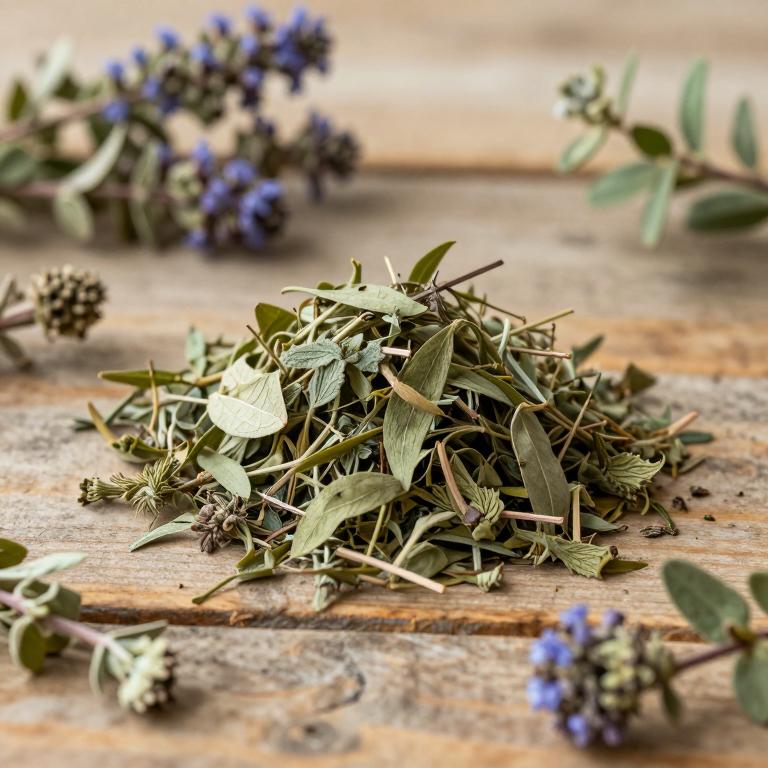
Fleshy starwort, scientifically known as Stellaria crassifolia, is a distinctive succulent herb native to specific tropical regions. Characterized by its thick, moisture-retaining leaves and delicate star-shaped blooms, this plant is valued in traditional medicine for its unique bioactive properties and its ability to thrive in specialized ecological niches.
Names and Synonyms
Common Names
- fleshy starwort
- fleshy stitchwort
- fleshy-leaved chickweed
- thick-leaved starwort
Scientific Names
Accepted name
Stellaria crassifoliaSynonyms
- Alsine crassifolia
- Stellaria crassifolia var. subalpina
- Stellaria uliginosa var. paludosa
- Stellaria crassifolia var. paludosa
- Stellaria crassifolia var. minor
- Stellaria crassifolia var. grandiflora
- Stellaria crassifolia var. micropetala
- Cerastium tetragonum
- Larbrea crassifolia
- Stellaria crassifolia var. linearis
- Spergula fontinalis
- Stellaria elodes
- Stellaria gracilis
Regional and Traditional Names
German:
- Dickblättrige Sternmiere
- Dickblättrige Sternmiere
French:
- stellaire à feuilles charnues
Sources: Wikidata, Catalogue of Life
Taxonomical Classification
This plant belongs to the kingdom Plantae and is classified within the phylum Streptophyta and the class Equisetopsida. Following its placement in the subclass Magnoliidae and the order Caryophyllales, it is further categorized under the family Caryophyllaceae. Ultimately, it is identified by its genus, Stellaria.
| Rank | Classification |
|---|---|
| Kingdom | Plantae |
| Phylum | Streptophyta |
| Class | Equisetopsida |
| Subclass | Magnoliidae |
| Order | Caryophyllales |
| Family | Caryophyllaceae |
| Genus | Stellaria |
Sources: The World Checklist of Vascular Plants (WCVP)
Distribution
This plant is primarily distributed throughout the northern regions of Europe. Within this geographical range, it can be found growing in the country of Denmark. Its presence also extends to the Scandinavian nations of Norway and Sweden. Furthermore, the species is documented across the landscape of Finland. Finally, the distribution of this medicinal plant reaches as far as Iceland.
| Region | Area |
|---|---|
| Northern Europe | Denmark |
| Northern Europe | Finland |
| Northern Europe | Iceland |
| Northern Europe | Norway |
| Northern Europe | Sweden |
| Middle Europe | Germany |
| Middle Europe | Poland |
| Eastern Europe | Belarus |
| Eastern Europe | Baltic States |
| Eastern Europe | Central European Russia |
Sources: The World Checklist of Vascular Plants (WCVP)
Botanical Identification
Ecology
The ecology of Stellaria crassifolia is characterized by its remarkable adaptability to diverse and often extreme hydrological environments. This species flourishes within a variety of meadow ecosystems, demonstrating a specialized capacity to thrive in wet landscapes ranging from high-altitude mountain terrains to low-lying riverine corridors. Its distribution is notably broad, allowing it to occupy niche habitats such as saturated swamps and even saline places, where many other plant species might struggle to survive. By occupying these moisture-rich and mineral-diverse zones, Stellaria crassifolia integrates into complex wetland communities, playing a role in the nutrient cycling and soil stabilization of these highly dynamic aquatic and semi-aquatic habitats.
- Habitat :
- meadows: wet, mountains, rivers, saline places, swamps
Life history
The life history of Stellaria crassifolia is characterized by its status as a perennial plant, ensuring its persistence across multiple growing seasons. It adopts a hemicryptophyte life form, a strategy where the perennating buds are located at or just below the soil surface, protected by leaf litter or surface debris. Throughout its existence, the plant maintains an evergreen deciduousness, retaining its foliage to sustain photosynthetic activity across different periods. This combination of a perennial lifecycle and a hemicryptophyte growth habit allows the species to maintain stability and resilience within its ecological niche.
- Deciduousness :
- evergreen
- Life form :
- hemicryptophyte
- Lifecycle :
- perennial
Morphology
The morphology of Stellaria crassifolia is characterized by its growth form as a non-woody herb and specifically a forb. It is a terrestrial plant that functions as an independent organism, neither acting as a parasite nor an epiphyte. In terms of its structural habit, the plant is self-supporting rather than being a liana or vine. It exhibits a relatively low stature, with a plant height that ranges from a minimum of 0.05 m to a maximum of 0.3 m, maintaining a mean height of approximately 0.08 m.
- Aquatic :
- terrestrial
- Climber :
- self-supporting
- Epiphyte :
- terrestrial
- Growth form :
- herb
- Growth form :
- forb
- Parasite :
- independent
- Plant height max:
- 0.3 m
- Plant height mean:
- 0.08 m
- Plant height min:
- 0.05 m
- Woodiness :
- non-woody
Physiology
The physiology of Stellaria crassifolia is characterized by a C3 photosynthetic pathway, which governs its carbon fixation processes and metabolic efficiency. The plant's vegetative structure is defined by relatively small, specialized foliage, where the leaves exhibit a mean length of 1 cm, ranging from a minimum of 0.5 cm to a maximum of 1.5 cm. Complementing this longitudinal dimension, the leaf width displays a narrow profile, with a mean width of 0.3 cm, varying from a minimum of 0.2 cm to a maximum of 0.4 cm. These morphological dimensions reflect the plant's physiological adaptations to its specific environmental niche, balancing surface area for gas exchange with moisture retention.
- Leaf length max:
- 1.5 cm
- Leaf length mean:
- 1 cm
- Leaf length min:
- 0.5 cm
- Leaf width max:
- 0.4 cm
- Leaf width mean:
- 0.3 cm
- Leaf width min:
- 0.2 cm
- Photosynthetic pathway :
- C3
Reproduction
The reproduction of Stellaria crassifolia is characterized by a specific seasonal flowering cycle and specialized biological mechanisms for pollination and seed dispersal. The plant enters its flowering period in May and continues through to August. During this time, the reproductive process is driven by biotic pollination syndromes, specifically relying on insects to facilitate the transfer of pollen. The plant possesses the capability for self-fertilization, ensuring reproductive success even when pollinators are scarce. Once fertilization is complete, the dispersal of seeds is primarily an anemochorous process, meaning the seeds are dispersed by the wind through both primary and secondary dispersal mechanisms.
- Dispersal syndrome :
- anemochorous
- Flowering time :
- May
- Flowering time :
- Aug
- Pollination syndrome :
- insect
- Pollination syndrome :
- biotic
- Self fertilization :
- present
Sources: Global Inventory of Floras and Traits (GIFT)
Plant Parts
Stellaria crassifolia has 1 reported plant parts identified across 1 scientific publications and several other databases that are studied for medicinal purposes. The most consistently reported plant part include root.
| Plant part | Supporting sources | Consensus |
|---|---|---|
| Root | 1 supporting sources | ★☆☆☆☆ |
Root
- Journal of natural products
Chemicals
Stellaria crassifolia has 1 reported phytochemicals identified across 1 scientific publications and several other databases. The most consistently reported chemicals include RUTIN.
| Chemical | Supporting sources | Consensus |
|---|---|---|
| RUTIN | 1 supporting sources | ★☆☆☆☆ |
RUTIN
- Natural product research
Activities
Stellaria crassifolia has 1 reported activities identified across 1 scientific publications and several other databases. The most consistently reported activities include Vasorelaxant.
| Activity | Supporting sources | Consensus |
|---|---|---|
| Vasorelaxant | 1 supporting sources | ★☆☆☆☆ |
Vasorelaxant
- Journal of natural products
Preparations
Stellaria crassifolia has 1 reported preparations identified across 1 scientific publications and several other databases. The most consistently reported preparations include aqueous ethanolic extract.
| Preparation | Supporting sources | Consensus |
|---|---|---|
| Aqueous ethanolic extract | 1 supporting sources | ★☆☆☆☆ |
Aqueous ethanolic extract
- Journal of natural products