Common Euscaphis
Staphylea japonica · Accepted scientific name
Scientific literature: Very Sparse (18 studies) · ★☆☆☆☆
Common Euscaphis, scientifically known as Staphylea japonica, is a resilient medicinal plant valued for its diverse therapeutic properties. Native to specific East Asian regions, it is traditionally utilized in folk medicine to address various ailments. This species holds significant botanical interest for its unique phytochemical profile and potential pharmacological applications.
- Family
- Staphyleaceae
- Native range
- Asia-Temperate
- Parts used
- Fruit · Leaf
- Common names
- Common Euscaphis
- Scientific synonyms
- Triceros Japonica · Euscaphis Japonica · 19 more
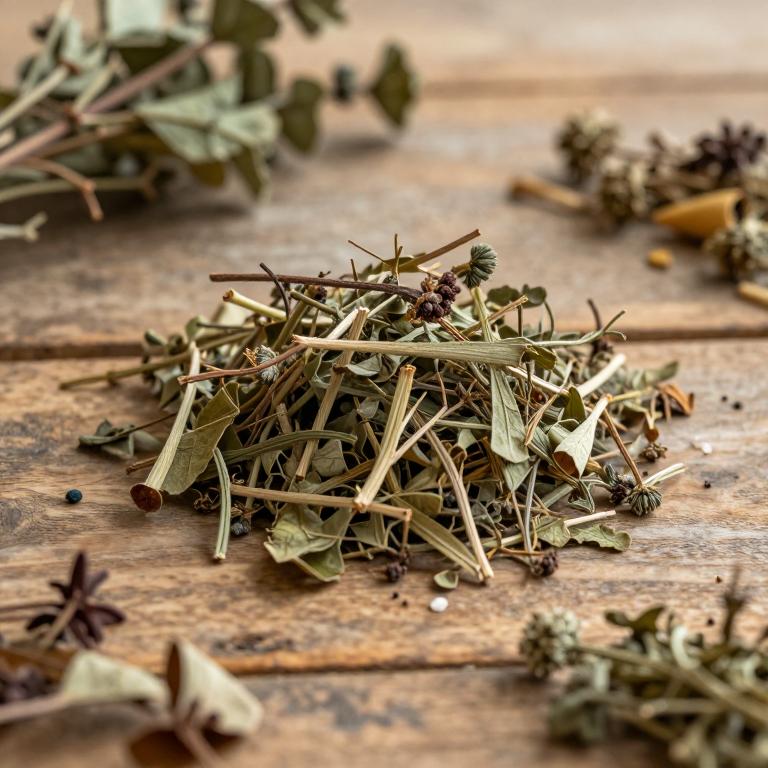
Names and Synonyms
Common Names
- Common Euscaphis
Scientific Names
Accepted name
Staphylea japonicaSynonyms
- Triceros japonica
- Euscaphis japonica
- Euscaphis japonica f. lanata
- Hebokia japonica
- Staphylea japonica f. eburnea
- Euscaphis japonica var. wupingensis
- Euodia chaffanjoni
- Euscaphis chinensis
- Euscaphis fukienensis
- Euscaphis konishii
- Euscaphis saponica
- Euscaphis simplicifolia
- Euscaphis tonkinensis
- Euscaphis japonica var. formosana
- Sapindus cavaleriei
- Sambucus japonica
- Euscaphis japonica var. jianningensis
- Euscaphis japonica var. lanata
- Euscaphis japonica var. pubescens
- Staphylea japonica f. lanata
- Euscaphis japonica f. eburnea
Sources: Wikidata, Catalogue of Life
Taxonomical Classification
This plant belongs to the kingdom Plantae within the phylum Streptophyta and the class Equisetopsida. It is further classified under the subclass Magnoliidae and the order Crossosomatales. Finally, it is a member of the family Staphyleaceae and falls under the genus Staphylea.
| Rank | Classification |
|---|---|
| Kingdom | Plantae |
| Phylum | Streptophyta |
| Class | Equisetopsida |
| Subclass | Magnoliidae |
| Order | Crossosomatales |
| Family | Staphyleaceae |
| Genus | Staphylea |
Sources: The World Checklist of Vascular Plants (WCVP)
Distribution
This plant exhibits a wide geographical distribution across several key regions of East Asia. Within China, it can be found growing in the South-Central and North-Central provinces. Its presence also extends to the southeastern coastal areas of China and the tropical island of Hainan. Furthermore, the species is native to the islands of Japan within Eastern Asia. Collectively, these locations define the specific natural habitat where this medicinal species thrives.
| Region | Area |
|---|---|
| China | China South-Central |
| China | Hainan |
| China | China North-Central |
| China | China Southeast |
| Eastern Asia | Japan |
| Eastern Asia | Korea |
| Eastern Asia | Nansei-shoto |
| Eastern Asia | Taiwan |
| Indo-China | Vietnam |
Sources: The World Checklist of Vascular Plants (WCVP)
Botanical Identification
Life history
The life history of Staphylea japonica is characterized by its nature as a perennial species, allowing it to persist through multiple growing seasons and establish a stable presence within its ecological niche. Throughout its development, the plant exhibits a deciduous growth habit, meaning it undergoes a seasonal cycle where it sheds its foliage annually, typically in response to decreasing temperatures or changing light availability. This cycle of dormancy and regrowth is a fundamental aspect of its biological rhythm, ensuring its survival across varying climatic conditions.
- Deciduousness :
- deciduous
- Lifecycle :
- perennial
Morphology
The morphology of Staphylea japonica is characterized by a woody growth form that primarily manifests as a shrub or a small tree. This plant is a self-supporting species, exhibiting no climbing or parasitic tendencies, and it functions as an independent organism. It is strictly terrestrial in its habitat, neither aquatic nor epiphytic. In terms of stature, the plant reaches a varying height, typically ranging from a minimum of 3 m to a maximum of 6 m, with a mean height of approximately 4.5 m.
- Aquatic :
- terrestrial
- Climber :
- self-supporting
- Epiphyte :
- terrestrial
- Growth form :
- tree
- Growth form :
- shrub
- Parasite :
- independent
- Plant height max:
- 6 m
- Plant height mean:
- 4.5 m
- Plant height min:
- 3 m
- Woodiness :
- woody
Physiology
The physiology of Staphylea japonica is characterized by a C3 photosynthetic pathway, which governs its carbon fixation and energy production processes. The vegetative structure is defined by its elliptic leaf form, featuring toothed margins that aid in gas exchange and transpiration regulation. The leaves exhibit specific morphological dimensions, typically maintaining a mean length of 5 cm, with a range spanning from a minimum of 4 cm to a maximum of 6 cm. In terms of width, the leaves vary from a minimum of 2 cm to a maximum of 3 cm, with a mean width recorded at 2.5 cm. Furthermore, the foliage is characterized by a lack of defensive physical structures, as it possesses no leaf thorns and no leaf spines.
- Leaf form :
- elliptic
- Leaf length max:
- 6 cm
- Leaf length mean:
- 5 cm
- Leaf length min:
- 4 cm
- Leaf margin :
- toothed
- Leaf spines :
- no
- Leaf thorns :
- no
- Leaf width max:
- 3 cm
- Leaf width mean:
- 2.5 cm
- Leaf width min:
- 2 cm
- Photosynthetic pathway :
- C3
Reproduction
The reproduction of Staphylea japonica is characterized by a specific sequence of floral and fruit development. The flowering stage produces relatively small blossoms, with individual flower lengths ranging from a minimum of 0.4 cm to a maximum of 0.5 cm. Following successful pollination, the plant develops dry fruits that vary in size, with an average fruit length of 1.5 cm, though they can range from as small as 1 cm to as large as 2 cm. Within these fruits, the seeds exhibit consistent morphological traits, maintaining a uniform seed volume of 40 mm³ (where both the minimum and maximum recorded volumes are 40 mm³). The mass of these seeds shows slight variability, with a mean seed mass of 0.04728 g, ranging from a minimum of 0.03526 g to a maximum of 0.0593 g.
- Flower length max:
- 0.5 cm
- Flower length min:
- 0.4 cm
- Fruit dryness :
- dry
- Fruit length max:
- 2 cm
- Fruit length mean:
- 1.5 cm
- Fruit length min:
- 1 cm
- Seed mass max:
- 0.0593 g
- Seed mass mean:
- 0.04728 g
- Seed mass min:
- 0.03526 g
- Seed volume max:
- 40 mm³
Sources: Global Inventory of Floras and Traits (GIFT)
Plant Parts
Staphylea japonica has 2 reported plant parts identified across 3 scientific publications and several other databases that are studied for medicinal purposes. The most consistently reported plant part include fruit, leaf.
| Plant part | Supporting sources | Consensus |
|---|---|---|
| Fruit | 2 supporting sources | ★☆☆☆☆ |
| Leaf | 1 supporting sources | ★☆☆☆☆ |
Fruit
- PeerJ
- Frontiers in genetics
Leaf
- Chemical & pharmaceutical bulletin
Chemicals
Staphylea japonica has 7 reported phytochemicals identified across 3 scientific publications and several other databases. The most consistently reported chemicals include ANTHOCYANIN, Biflorin, Chromones, Isobiflorin, Megastigmane.
| Chemical | Supporting sources | Consensus |
|---|---|---|
| ANTHOCYANIN | 2 supporting sources | ★☆☆☆☆ |
| Biflorin | 1 supporting sources | ★☆☆☆☆ |
| Chromones | 1 supporting sources | ★☆☆☆☆ |
| Isobiflorin | 1 supporting sources | ★☆☆☆☆ |
| Megastigmane | 1 supporting sources | ★☆☆☆☆ |
| Tetraketide | 1 supporting sources | ★☆☆☆☆ |
| triterpenoids | 1 supporting sources | ★☆☆☆☆ |
ANTHOCYANIN
- PeerJ
- Frontiers in genetics
Biflorin
- Journal of agricultural and food chemistry
Chromones
- Journal of agricultural and food chemistry
Isobiflorin
- Journal of agricultural and food chemistry
Megastigmane
- Chemical & pharmaceutical bulletin
Tetraketide
- Chemical & pharmaceutical bulletin
triterpenoids
- Frontiers in genetics
Preparations
Staphylea japonica has 1 reported preparations identified across 3 scientific publications and several other databases. The most consistently reported preparations include extracts.
| Preparation | Supporting sources | Consensus |
|---|---|---|
| Extracts | 1 supporting sources | ★☆☆☆☆ |
Extracts
- Journal of biosciences