giant stapelia
Stapelia gigantea · Accepted scientific name
Scientific literature: Very Sparse (4 studies) · ★☆☆☆☆
Giant stapelia, scientifically known as Stapelia gigantea, is a captivating succulent native to Southern Africa. Renowned for its massive, star-shaped flowers, it mimics the appearance of carrion to attract pollinators. This remarkable plant serves as a fascinating botanical specimen, blending striking visual beauty with unique, evolutionary survival strategies.
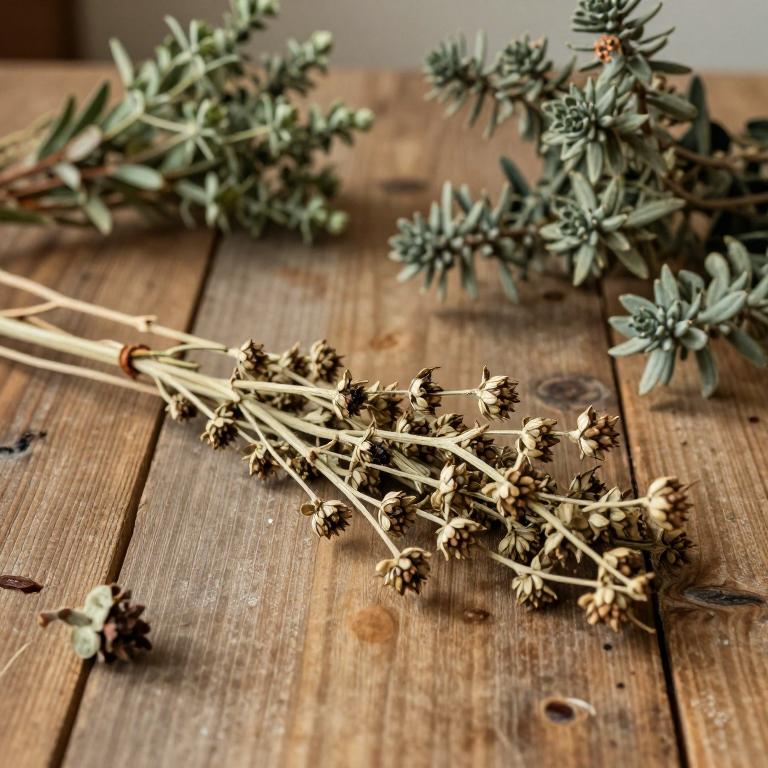
Names and Synonyms
Common Names
- giant stapelia
- giant toadflower
- giant toadplant
- zulu-giant
- Carrion Flower
- Carrion Plant
- Giant Carrion Flower
- Zulu Giant
Scientific Names
Accepted name
Stapelia giganteaSynonyms
- Ceropegia gigantea
- Gonostemon giganteus
- Stapelia marlothii
- Gonostemon giganteus var. marlothii
- Stapelia nobilis
- Gonostemon giganteus var. nobilis
- Stapelia youngii
- Gonostemon giganteus var. pallidus
- Gonostemon giganteus var. youngii
- Stapelia gigantea var. pallida
- Stapelia cylista
Regional and Traditional Names
Spanish:
- Planta africana de carroña
German:
- riesenblütige Aasblume
Sources: Wikidata, Catalogue of Life
Taxonomical Classification
This plant belongs to the kingdom Plantae and the phylum Streptophyta, falling under the class Equisetopsida and subclass Magnoliidae. Within the order Gentianaales, it is classified under the family Apocynaceae and is specifically identified by the genus Stapelia.
| Rank | Classification |
|---|---|
| Kingdom | Plantae |
| Phylum | Streptophyta |
| Class | Equisetopsida |
| Subclass | Magnoliidae |
| Order | Gentianales |
| Family | Apocynaceae |
| Genus | Stapelia |
Sources: The World Checklist of Vascular Plants (WCVP)
Distribution
This plant is widely distributed across several key regions within the African continent. In East Tropical Africa, its presence is noted in both Kenya and Tanzania. Moving toward the southern part of the continent, the species is also found throughout South Tropical Africa. Specifically, it inhabits the territories of Malawi and Mozambique. Additionally, its geographical range extends into the country of Zambia.
| Region | Area |
|---|---|
| East Tropical Africa | Kenya |
| East Tropical Africa | Tanzania |
| South Tropical Africa | Malawi |
| South Tropical Africa | Mozambique |
| South Tropical Africa | Zambia |
| South Tropical Africa | Zimbabwe |
| Southern Africa | Botswana |
| Southern Africa | KwaZulu-Natal |
| Southern Africa | Eswatini |
| Southern Africa | Northern Provinces |
Sources: The World Checklist of Vascular Plants (WCVP)
Botanical Identification
Ecology
The ecology of Stapelia gigantea is defined by its adaptation to specific topographical gradients, typically thriving within an elevational range that begins at 50 m AMSL and extends up to a maximum of 1200 m AMSL. Within this altitudinal spectrum, the plant occupies niche habitats characterized by semi-arid conditions where it can exploit rocky outcrops and well-draining substrates. Its distribution is closely tied to these specific elevations, allowing it to inhabit diverse microclimates ranging from lowland coastal regions to more moderate mid-altitude terrains. By occupying this broad vertical range, the species manages to navigate varying thermal profiles and moisture availability, ensuring its survival across different ecological zones within its native landscape.
- Elevational range max:
- 1200 m AMSL
- Elevational range min:
- 50 m AMSL
Life history
The life history of Stapelia gigantea is characterized by its nature as a perennial plant, meaning it lives for many years and undergoes continuous growth cycles rather than completing its life cycle in a single season. As a succulent, its longevity is supported by its ability to store water within its fleshy, star-shaped stems, allowing it to persist through varying environmental conditions. The lifecycle begins with the germination of seeds, which are typically dispersed by wind, leading to the development of a slow-growing individual. As the plant matures, it focuses on vegetative expansion through the production of new stem segments, eventually reaching a stage of reproductive maturity. During its flowering phase, it produces large, carrion-scented blooms designed to attract specific pollinators, such as flies, to ensure genetic diversity through seed production. Because it is perennial, the plant can repeat this reproductive cycle multiple times throughout its lifespan, provided it maintains sufficient moisture and light to support its structural integrity and metabolic processes.
- Lifecycle :
- perennial
Morphology
The morphology of Stapelia gigantea is characterized by a non-woody, succulent growth form that functions as both a herb and a forb. It is a terrestrial plant, existing independently without parasitic or epiphytic dependencies. Although it possesses a self-supporting climbing habit, it does not rely on external structures as an obligatory vine or liana. In terms of stature, the plant maintains a relatively low profile, with a plant height ranging from a minimum of 0.15 m to a maximum of 0.5 m.
- Aquatic :
- terrestrial
- Climber :
- self-supporting
- Epiphyte :
- terrestrial
- Growth form :
- herb
- Growth form :
- forb
- Parasite :
- independent
- Plant height max:
- 0.5 m
- Plant height min:
- 0.15 m
- Woodiness :
- non-woody
Reproduction
Reproduction in Stapelia gigantea is a specialized process characterized by the production of numerous small seeds designed for efficient dispersal. The reproductive output of this species is marked by a highly consistent seed mass, with both the mean, maximum, and minimum values recorded at exactly 0.00356 g. This uniformity in seed mass suggests a stable evolutionary strategy for seed development, ensuring that each individual seed carries a precise amount of biological material necessary for germination. Such precise metrics in seed mass are critical for the plant's ability to colonize new habitats through wind or insect-mediated dispersal mechanisms.
- Seed mass mean:
- 0.00356 g
Sources: Global Inventory of Floras and Traits (GIFT)
Chemicals
Stapelia gigantea has 4 reported phytochemicals identified across 0 scientific publications and several other databases. The most consistently reported chemicals include Candicine, N-Methyltyramine, choline, tyramine.
| Chemical | Supporting sources | Consensus |
|---|---|---|
| Candicine | 1 supporting sources | ★☆☆☆☆ |
| N-Methyltyramine | 1 supporting sources | ★☆☆☆☆ |
| choline | 1 supporting sources | ★☆☆☆☆ |
| tyramine | 1 supporting sources | ★☆☆☆☆ |
Candicine
- Planta medica
N-Methyltyramine
- Planta medica
choline
- Planta medica
tyramine
- Planta medica