Cayenne snakeweed
Stachytarpheta cayennensis · Accepted scientific name
Scientific literature: Moderate (105 studies) · ★★★☆☆
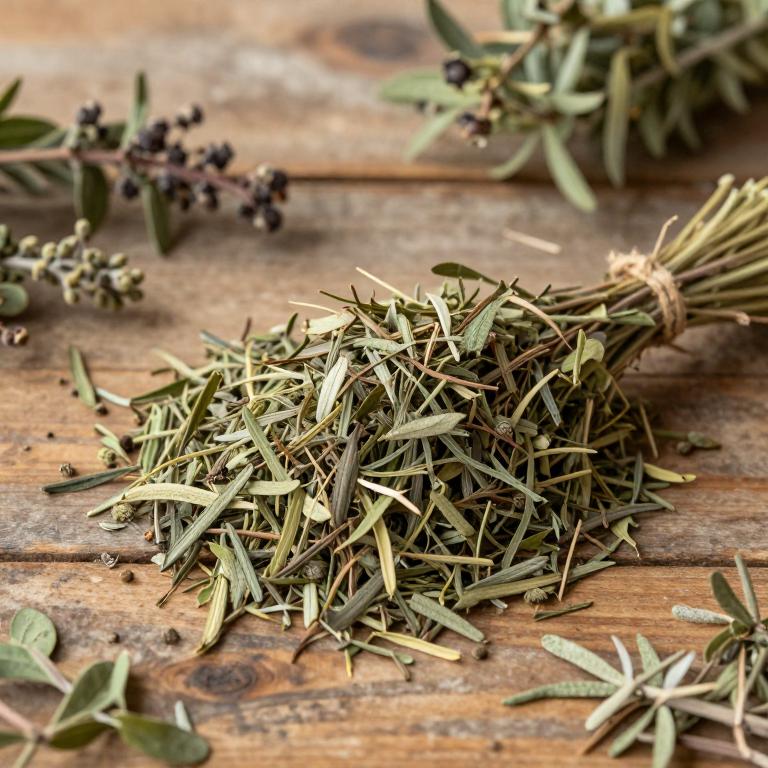
Cayenne snakeweed, scientifically known as Stachytarpheta cayennensis, is a resilient medicinal herb native to tropical regions. Traditionally utilized in folk medicine, this plant is valued for its bioactive compounds. Researchers study its potential pharmacological properties, focusing on its ability to combat inflammation and support various healing processes naturally.
Names and Synonyms
Common Names
- Cayenne snakeweed
- blue snakeweed
- bluetop
- dark-blue snakeweed
- nettle-leaf porterweed
- rattail
- rough-leaf false vervain
- snakeweed
Scientific Names
Accepted name
Stachytarpheta cayennensisSynonyms
- Zappania cayennensis
- Abena cayennensis
- Valerianoides dichotoma
- Zappania dichotoma
- Stachytarpheta gibberosa
- Stachytarpheta laevis
- Stachytarpheta polyura
- Verbena dichotoma
- Ubochea dichotoma
- Lippia cylindrica
- Valerianoides cayennensis
- Stachytarpheta canescens var. bahiensis
- Stachytarpheta australis
- Stachytarpheta australis f. albiflora
- Verbena cayennensis
- Stachytarpheta australis var. neocaledonica
- Stachytarpheta cayennensis f. albiflora
- Stachytarpheta cayennensis var. candicans
- Stachytarpheta cayennensis f. purpurea
- Stachytarpheta cayennensis var. virescens
- Stachytarpheta canescens var. morii
- Stachytarpheta hirta
- Stachytarpheta lactea
- Stachytarpheta dichotoma
- Stachytarpheta dichotoma f. albiflora
- Stachytarpheta dichotoma var. neocaledonica
- Stachytarpheta maximiliani
- Stachytarpheta fallax
- Stachytarpheta guatemalensis
- Stachytarpheta guatemalensis f. albiflora
- Stachytarpheta umbrosa
- Stachytarpheta veronicifolia
- Stachytarpheta tabascana
- Stachytarpheta theezans
- Stachytarpheta subulata
- Stachytarpheta restingensis var. hispidula
- Stachytarpheta scaberrima var. pilosa
- Stachytarpheta maximiliani var. ciliaris
- Stachytarpheta maximiliani var. glabrata
- Stachytarpheta polyura f. albiflora
- Stachytarpheta patens
Sources: Wikidata, Catalogue of Life
Taxonomical Classification
This plant belongs to the kingdom Plantae and is classified under the phylum Streptophyta. Within the class Equisetopsida and subclass Magnoliidae, it falls under the order Lamiales and the family Verbenaceae. Finally, it is categorized under the genus Stachytarpheta.
| Rank | Classification |
|---|---|
| Kingdom | Plantae |
| Phylum | Streptophyta |
| Class | Equisetopsida |
| Subclass | Magnoliidae |
| Order | Lamiales |
| Family | Verbenaceae |
| Genus | Stachytarpheta |
Sources: The World Checklist of Vascular Plants (WCVP)
Distribution
This plant exhibits a specific distribution pattern across several regions of the African continent. In West Tropical Africa, its presence is documented in Benin, Ivory Coast, Liberia, and Togo. Furthermore, its range extends into the West-Central Tropical Africa region. Specifically, it can be found growing within the Central African Republic. Together, these locations define the known geographical footprint of Stachytarpheta cayennensis.
| Region | Area |
|---|---|
| West Tropical Africa | Benin |
| West Tropical Africa | Ivory Coast |
| West Tropical Africa | Liberia |
| West Tropical Africa | Togo |
| West-Central Tropical Africa | Central African Republic |
| West-Central Tropical Africa | Cameroon |
| West-Central Tropical Africa | Congo |
| West-Central Tropical Africa | Gabon |
| West-Central Tropical Africa | Gulf of Guinea Is. |
| West-Central Tropical Africa | DR Congo |
Sources: The World Checklist of Vascular Plants (WCVP)
Botanical Identification
Ecology
The ecology of Stachytarpheta cayennensis is characterized by a highly versatile distribution across diverse Brazilian biomes and varied topographical settings. This species demonstrates significant adaptability, occupying a wide range of habitats including Áreas Antrópicas, Caatinga (stricto sensu), Campo de Altitude, Campo Rupestre, Carrasco, Cerrado (latu sensu), Floresta Ciliar ou Galeria, Floresta de Terra Firmre, Floresta Estacional Semidecidual, Floresta Ombrófila (Floresta Pluvial), and Restinga. Such breadth in habitat preference allows it to thrive in environments ranging from coastal restingas and riparian forests to the more arid conditions of the Caatinga and the specialized ecosystems of high-altitude fields. This ecological plasticity is further reflected in its broad altitudinal tolerance, as the plant can be found at sea level (0 m AMSL) and extends its range up to an elevation of 1800 m AMSL.
- Elevational range max:
- 1800 m AMSL
- Elevational range min:
- 0 m AMSL
- Habitat :
- Área Antrópica, Caatinga (stricto sensu), Campo de Altitude, Campo Rupestre, Carrasco, Cerrado (lato sensu), Floresta Ciliar ou Galeria, Floresta de Terra Firme, Floresta Estacional Semidecidual, Floresta Ombrófila (= Floresta Pluvial), Restinga
Life history
The life history of Stachytarpheta cayennensis is characterized by a perennial lifecycle, allowing the plant to persist through multiple growing seasons rather than completing its cycle in a single year. In terms of its growth habit and ecological strategy, the species exhibits diverse life form classifications, functioning as a therophyte which completes its seasonal development through a specialized dormant stage. Additionally, it can be categorized as a chamaephyte, indicating a growth form where the permanent buds are located close to the soil surface, providing a specific structural adaptation to its environmental niche.
- Life form :
- chamaephyte
- Life form :
- therophyte
- Lifecycle :
- perennial
Morphology
The morphology of Stachytarpheta cayennensis is characterized by a growth form that transitions between a herb and a shrub, exhibiting a non-woody structure. This terrestrial plant grows in a self-supporting manner without the need for climbing or liana-like behavior, maintaining an erect shoot orientation. In terms of stature, it typically reaches an average height of 1 m, though individual specimens can vary significantly, ranging from a minimum height of 0.5 m to a maximum of 2.5 m. As an independent organism, it does not function as a parasite or an epiphyte, maintaining a strictly terrestrial existence.
- Aquatic :
- terrestrial
- Climber :
- self-supporting
- Epiphyte :
- terrestrial
- Growth form :
- herb
- Growth form :
- shrub
- Parasite :
- independent
- Plant height max:
- 2.5 m
- Plant height mean:
- 1 m
- Plant height min:
- 0.5 m
- Shoot orientation :
- erect
- Woodiness :
- non-woody
Physiology
The physiology of Stachytarpheta cayennensis is characterized by a C3 photosynthetic pathway, which dictates its metabolic processes and carbon fixation efficiency. The foliage exhibits significant morphological variability, with leaf lengths ranging from a minimum of 2 cm to a maximum of 8 cm, while leaf widths fluctuate between 1 cm and 4.5 cm. Furthermore, this species does not function as a nitrogen fixer, meaning it relies on external soil nutrient availability rather than symbiotic nitrogen-fixing bacteria to fulfill its nitrogen requirements.
- Leaf length max:
- 8 cm
- Leaf length min:
- 2 cm
- Leaf width max:
- 4.5 cm
- Leaf width min:
- 1 cm
- Nitrogen fixer :
- no
- Photosynthetic pathway :
- C3
Reproduction
The reproduction of Stachytarpheta cayennensis is characterized by a specific flowering phenology and the production of distinct floral and fruit structures. The plant enters its flowering stage in November, though the timing can be variable throughout the year. The inflorescence is relatively compact, measuring between 0.14 m and 0.4 m in length, and features flowers that are green in colour. Following pollination, the plant develops small fruits that range in length from 0.5 cm to a maximum of 0.6 cm, with a width varying between 0.15 cm and 0.17 cm. The reproductive cycle concludes with the production of seeds, which are characterized by a length of 3 mm to 3.5 mm and a width ranging from 1 mm to 1.2 mm.
- Flower colour :
- green
- Flowering time :
- Nov
- Fruit length max:
- 0.6 cm
- Fruit length min:
- 0.5 cm
- Fruit width max:
- 0.17 cm
- Fruit width min:
- 0.15 cm
- Inflorescence length max:
- 0.4 m
- Inflorescence length min:
- 0.14 m
- Seed length max:
- 3.5 mm
- Seed length min:
- 3 mm
- Seed width max:
- 1.2 mm
- Seed width min:
- 1 mm
Sources: Global Inventory of Floras and Traits (GIFT)
Chemicals
Stachytarpheta cayennensis has 10 reported phytochemicals identified across 0 scientific publications and several other databases. The most consistently reported chemicals include Acteoside, Amines, Citral, EO, Flavonoids.
| Chemical | Supporting sources | Consensus |
|---|---|---|
| Acteoside | 1 supporting sources | ★☆☆☆☆ |
| Amines | 1 supporting sources | ★☆☆☆☆ |
| Citral | 1 supporting sources | ★☆☆☆☆ |
| EO | 1 supporting sources | ★☆☆☆☆ |
| Flavonoids | 1 supporting sources | ★☆☆☆☆ |
| GERANIOL | 1 supporting sources | ★☆☆☆☆ |
| Ipolamiide | 1 supporting sources | ★☆☆☆☆ |
| Verbascoside | 1 supporting sources | ★☆☆☆☆ |
| isoverbascoside | 1 supporting sources | ★☆☆☆☆ |
| salicylic acid | 1 supporting sources | ★☆☆☆☆ |
Acteoside
- Journal of ethnopharmacology
Amines
- Planta medica
Citral
- Dr. Duke
EO
- Dr. Duke
Flavonoids
- Planta medica
GERANIOL
- Dr. Duke
Ipolamiide
- Journal of ethnopharmacology
Verbascoside
- Journal of ethnopharmacology
isoverbascoside
- Journal of ethnopharmacology
salicylic acid
- Dr. Duke
Activities
Stachytarpheta cayennensis has 92 reported activities identified across 0 scientific publications and several other databases. The most consistently reported activities include Antiinflammatory, Aldose-Reductase-Inhibitor, Allergenic, Analgesic, Anthelmintic.
| Activity | Supporting sources | Consensus |
|---|---|---|
| Antiinflammatory | 2 supporting sources | ★☆☆☆☆ |
| Aldose-Reductase-Inhibitor | 1 supporting sources | ★☆☆☆☆ |
| Allergenic | 1 supporting sources | ★☆☆☆☆ |
| Analgesic | 1 supporting sources | ★☆☆☆☆ |
| Anthelmintic | 1 supporting sources | ★☆☆☆☆ |
| Antiallergenic | 1 supporting sources | ★☆☆☆☆ |
| Antiallergic | 1 supporting sources | ★☆☆☆☆ |
| Antianaphylactic | 1 supporting sources | ★☆☆☆☆ |
| Antiarthritic | 1 supporting sources | ★☆☆☆☆ |
| Antibacterial | 1 supporting sources | ★☆☆☆☆ |
Antiinflammatory
- Dr. Duke
- Journal of ethnopharmacology
Aldose-Reductase-Inhibitor
- Dr. Duke
Allergenic
- Dr. Duke
Analgesic
- Dr. Duke
Anthelmintic
- Dr. Duke
Antiallergenic
- Dr. Duke
Antiallergic
- Dr. Duke
Antianaphylactic
- Dr. Duke
Antiarthritic
- Dr. Duke
Antibacterial
- Dr. Duke
Conditions
Stachytarpheta cayennensis has 2 reported investigations on conditions identified across 0 scientific publications and several other databases. The most consistently reported conditions include helminthiasis, ulcers.
| Condition | Supporting sources | Consensus |
|---|---|---|
| Helminthiasis | 1 supporting sources | ★☆☆☆☆ |
| Ulcers | 1 supporting sources | ★☆☆☆☆ |
Helminthiasis
- Experimental parasitology
Ulcers
- Planta medica
Preparations
Stachytarpheta cayennensis has 5 reported preparations identified across 0 scientific publications and several other databases. The most consistently reported preparations include Aqueous extracts, aqueous extract, dried leaves, freeze-dried aqueous extract, semipurified fractions.
| Preparation | Supporting sources | Consensus |
|---|---|---|
| Aqueous extracts | 1 supporting sources | ★☆☆☆☆ |
| Aqueous extract | 1 supporting sources | ★☆☆☆☆ |
| Dried leaves | 1 supporting sources | ★☆☆☆☆ |
| Freeze-dried aqueous extract | 1 supporting sources | ★☆☆☆☆ |
| Semipurified fractions | 1 supporting sources | ★☆☆☆☆ |
Aqueous extracts
- Journal of ethnopharmacology
Aqueous extract
- Planta medica
Dried leaves
- Journal of ethnopharmacology
Freeze-dried aqueous extract
- Planta medica
Semipurified fractions
- Planta medica