Stachys iva
Stachys iva · Accepted scientific name
Scientific literature: Very Sparse (4 studies) · ★☆☆☆☆
, scientifically known as Stachys iva, is a perennial herb native to various regions, often valued for its unique medicinal properties. Frequently used in traditional folk medicine, this plant is recognized for its potential therapeutic benefits, particularly in treating respiratory issues and supporting overall wellness through its bioactive compounds.
- Family
- Lamiaceae
- Native range
- Europe
- Parts used
- Not available
- Common names
- Not available
- Scientific synonyms
- Stachys Iva Var. Macedonica · Stachys Horvaticii Var. Macedonica · 2 more
Names and Synonyms
Scientific Names
Accepted name
Stachys ivaSynonyms
- Stachys iva var. macedonica
- Stachys horvaticii var. macedonica
- Stachys iva var. ochroleuca
- Stachys horvaticii
Sources: Wikidata
Taxonomical Classification
This plant belongs to the kingdom Plantae and is classified under the phylum Streptophyta and the class Equisetopsida. Within the subclass Magnoliidae, it is organized under the order Lamiales and the family Lamiaceae. Finally, it is identified by the genus Stachys.
| Rank | Classification |
|---|---|
| Kingdom | Plantae |
| Phylum | Streptophyta |
| Class | Equisetopsida |
| Subclass | Magnoliidae |
| Order | Lamiales |
| Family | Lamiaceae |
| Genus | Stachys |
Sources: The World Checklist of Vascular Plants (WCVP)
Distribution
This plant exhibits a specific distribution pattern within the Mediterranean and Balkan regions. Its presence is documented across Southeastern Europe, where it thrives in suitable habitats. Specifically, the species can be found growing in the country of Greece. Additionally, its range extends into the Northwestern Balkan Peninsula. These locations represent the primary geographical areas where this medicinal plant occurs naturally.
| Region | Area |
|---|---|
| Southeastern Europe | Greece |
| Southeastern Europe | NW. Balkan Pen. |
Sources: The World Checklist of Vascular Plants (WCVP)
Botanical Identification
Life history
The life history of Stachys iva is characterized by its classification as a chamaephyte, a growth form where the majority of the plant's photosynthetic organs are located close to or just above the soil surface. Specifically, it functions as a chamaephyte, meaning its buds are situated near the ground level, allowing it to persist through varying environmental conditions by keeping its vital structures protected. This life strategy enables the plant to navigate its ecological niche by maintaining a low profile, which can be an adaptation to grazing, wind, or seasonal temperature fluctuations. As a chamaephyte, its developmental cycle relies on these low-growing meristems to regenerate and expand during favorable growing seasons, ensuring its survival and reproductive success within its typical habitat.
- Life form :
- chamaephyte
Morphology
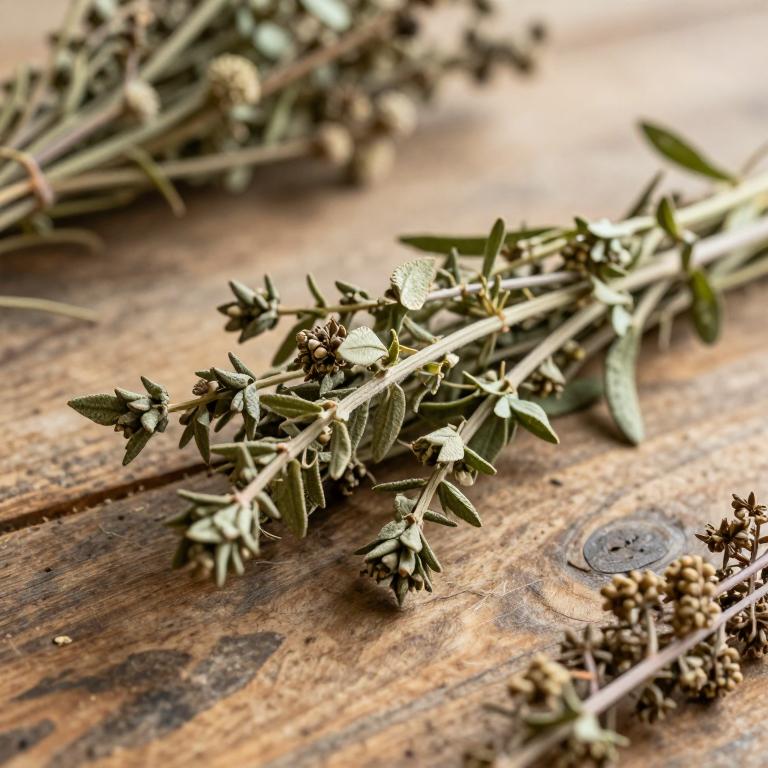
The morphology of Stachys iva is characterized by its versatile growth habit, which allows it to thrive in diverse environments ranging from aquatic and semiaquatic to terrestrial habitats. The plant typically presents as a perennial herb with upright, square-shaped stems that are often hairy or pubescent, a characteristic common to the Lamiaceae family. The leaves are arranged in opposite pairs along the stem, possessing an oblong to lanceolate shape with serrated or entire margins and a distinctively textured surface. The inflorescence is composed of dense, verticillate spikes or clusters of flowers that emerge from the leaf axils, featuring tubular corollas that are often pale purple, pink, or white. The root system is robust enough to anchor the plant in moist soil or submerged substrates, facilitating its ability to transition between various moisture levels in its ecological niche.
- Aquatic :
- terrestrial
Sources: Global Inventory of Floras and Traits (GIFT)
Chemicals
Stachys iva has 4 reported phytochemicals identified across 0 scientific publications and several other databases. The most consistently reported chemicals include Cirsimaritin, Flavonoids, Stachysetin, apigenin.
| Chemical | Supporting sources | Consensus |
|---|---|---|
| Cirsimaritin | 1 supporting sources | ★☆☆☆☆ |
| Flavonoids | 1 supporting sources | ★☆☆☆☆ |
| Stachysetin | 1 supporting sources | ★☆☆☆☆ |
| apigenin | 1 supporting sources | ★☆☆☆☆ |
Cirsimaritin
- Chemistry & biodiversity
Flavonoids
- Chemistry & biodiversity
Stachysetin
- Journal of biomolecular structure & dynamics
apigenin
- Chemistry & biodiversity