Stachys inflata
Stachys inflata · Accepted scientific name
Scientific literature: Very Sparse (4 studies) · ★☆☆☆☆
Stachys inflata, scientifically known as Stachys inflata, is a versatile medicinal herb valued in traditional practices. Often found in diverse habitats, this plant possesses unique bioactive properties. It is frequently utilized for its therapeutic potential in treating various ailments, offering a natural approach to wellness through its botanical potency.
- Family
- Lamiaceae
- Native range
- Asia-Temperate
- Parts used
- Not available
- Common names
- Not available
- Scientific synonyms
- Not available
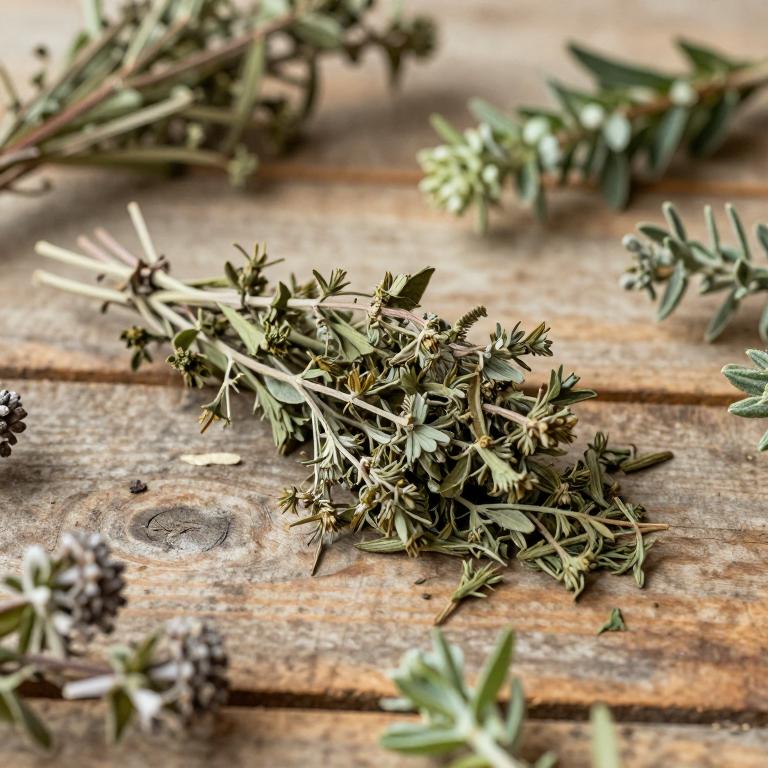
Names and Synonyms
Scientific Names
Accepted name
Stachys inflataSources: Wikidata, Catalogue of Life
Taxonomical Classification
This plant belongs to the kingdom Plantae and is classified within the phylum Streptophyta and class Equisetopsida. Following its subclass Magnoliidae, it is organized under the order Lamiales and the family Lamiaceae. Finally, it is identified by the genus Stachys.
| Rank | Classification |
|---|---|
| Kingdom | Plantae |
| Phylum | Streptophyta |
| Class | Equisetopsida |
| Subclass | Magnoliidae |
| Order | Lamiales |
| Family | Lamiaceae |
| Genus | Stachys |
Sources: The World Checklist of Vascular Plants (WCVP)
Distribution
This plant exhibits a specific geographical distribution concentrated within the western regions of Eurasia. It can be found growing naturally throughout the Transcaucasus area within the Caucasus mountain range. Furthermore, its habitat extends into Western Asia, where it is documented in several different countries. Specifically, the species is present in the territories of Iran and Iraq. Its range also encompasses the diverse landscapes found across Türkiye.
| Region | Area |
|---|---|
| Caucasus | Transcaucasus |
| Western Asia | Iran |
| Western Asia | Iraq |
| Western Asia | Türkiye |
Sources: The World Checklist of Vascular Plants (WCVP)
Botanical Identification
Ecology
The ecology of Stachys inflata is fundamentally defined by its preference for high-altitude environments, specifically thriving within mountainous regions. This species is specialized to colonize rugged and challenging terrains, showing a distinct affinity for stony places where drainage is rapid and soil layers are often thin or fragmented. By establishing itself in these rocky substrates, the plant occupies a niche characterized by high exposure to solar radiation and fluctuating thermal conditions typical of montane ecosystems. The lithic nature of its primary habitat suggests an adaptation to well-drained, mineral-rich microhabitats where competition from denser vegetation may be limited by the harsh, stony topography.
- Habitat :
- mountains, stony places
Life history
The life history of Stachys inflata is characterized by a perennial lifecycle, allowing the plant to persist across multiple growing seasons. Structurally, it is classified under the life form of a chamaephyte, indicating that its perennating buds are located close to the soil surface, typically just above the ground level. This specific growth habit ensures its survival and ability to regenerate within its ecological niche through successive years.
- Life form :
- chamaephyte
- Lifecycle :
- perennial
Morphology
The morphology of Stachys inflata is characterized by its growth form as a woody subshrub that functions as a self-supporting herb. This plant is primarily terrestrial in its habitat, occupying environments that range from aquatic to semiaquatic and terrestrial conditions. As an independent species, it does not function as a parasite or an epiphyte, maintaining a strictly terrestrial existence. In terms of physical dimensions, the plant is relatively low-growing, with a plant height ranging from a minimum of 0.25 m to a maximum of 0.5 m. Its structure is characterized by being self-supporting rather than acting as a liana or vine, contributing to its overall stature as a compact, woody subshrub.
- Aquatic :
- terrestrial
- Climber :
- self-supporting
- Epiphyte :
- terrestrial
- Growth form :
- herb
- Growth form :
- subshrub
- Parasite :
- independent
- Plant height max:
- 0.5 m
- Plant height min:
- 0.25 m
- Woodiness :
- woody
Reproduction
The reproduction of Stachys inflata is characterized by a specific seasonal flowering window and a highly consistent seed production profile. The flowering period typically commences in May and concludes in June, representing a concentrated reproductive phase within the late spring to early summer months. Following pollination, the plant produces seeds with a remarkably uniform mass; the seed mass remains constant across all measured parameters, with a mean, maximum, and minimum value all recorded at 0.00137 g. This uniformity in seed size suggests a highly stabilized reproductive strategy regarding the energy allocation for individual offspring.
- Flowering time :
- May
- Flowering time :
- Jun
- Seed mass mean:
- 0.00137 g
Sources: Global Inventory of Floras and Traits (GIFT)
Activities
Stachys inflata has 1 reported activities identified across 0 scientific publications and several other databases. The most consistently reported activities include Antioxidant.
| Activity | Supporting sources | Consensus |
|---|---|---|
| Antioxidant | 1 supporting sources | ★☆☆☆☆ |
Antioxidant
- Scientific reports
Conditions
Stachys inflata has 3 reported investigations on conditions identified across 0 scientific publications and several other databases. The most consistently reported conditions include Asthma, Infection, Rheumatism.
| Condition | Supporting sources | Consensus |
|---|---|---|
| Asthma | 1 supporting sources | ★☆☆☆☆ |
| Infection | 1 supporting sources | ★☆☆☆☆ |
| Rheumatism | 1 supporting sources | ★☆☆☆☆ |
Asthma
- Scientific reports
Infection
- Scientific reports
Rheumatism
- Scientific reports