Stachys grandidentata
Stachys grandidentata · Accepted scientific name
Scientific literature: Very Sparse (6 studies) · ★☆☆☆☆
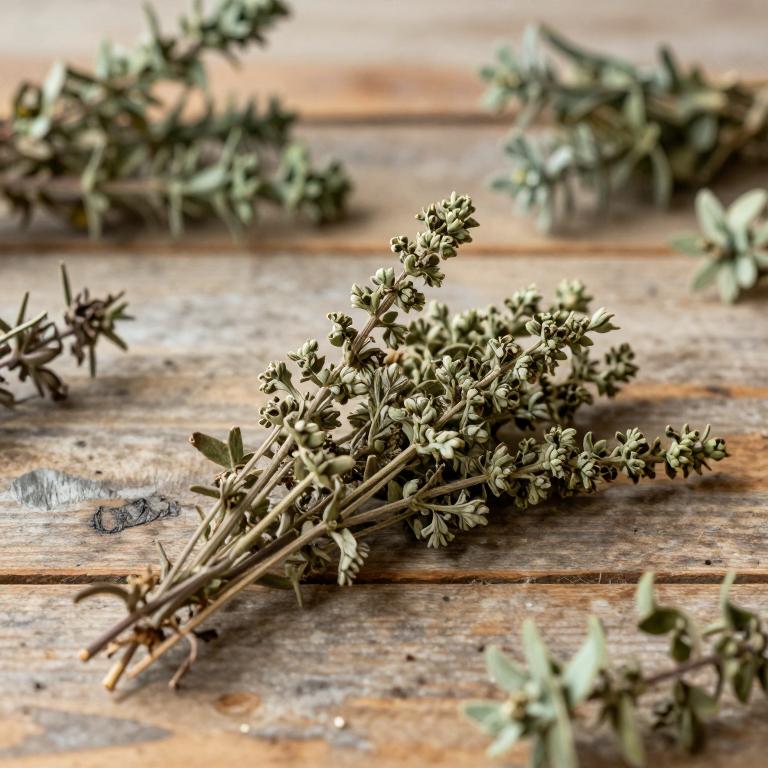
Stachys grandidentata, scientifically known as Stachys grandidentata, is a remarkable medicinal herb valued in traditional healing practices. Often recognized by its distinct foliage, this plant possesses potent therapeutic properties. It is frequently utilized for its anti-inflammatory and antimicrobial benefits, serving as a vital natural resource for holistic wellness.
- Family
- Lamiaceae
- Native range
- Southern America
- Parts used
- Not available
- Common names
- Not available
- Scientific synonyms
- Stachys Closii · Stachys Toronjilcillo · 1 more
Names and Synonyms
Scientific Names
Accepted name
Stachys grandidentataSynonyms
- Stachys closii
- Stachys toronjilcillo
- Stachys serrata
Regional and Traditional Names
Spanish:
- Toronjilcillo
Sources: Wikidata, Catalogue of Life
Taxonomical Classification
This plant belongs to the kingdom Plantae and the phylum Streptophyta, falling under the class Equisetopsida and subclass Magnoliidae. It is further classified within the order Lamiales and the family Lamiaceae. Finally, the medicinal species is identified by the genus Stachys.
| Rank | Classification |
|---|---|
| Kingdom | Plantae |
| Phylum | Streptophyta |
| Class | Equisetopsida |
| Subclass | Magnoliidae |
| Order | Lamiales |
| Family | Lamiaceae |
| Genus | Stachys |
Sources: The World Checklist of Vascular Plants (WCVP)
Distribution
This plant is found within specific regions of Southern South America. Its natural habitat spans across the territory of Chile. Specifically, the species is located in Chile North. It also extends its range down into Chile Central. Therefore, the distribution of Stachys grandi dentata is concentrated in these central and northern Chilean areas.
| Region | Area |
|---|---|
| Southern South America | Chile Central |
| Southern South America | Chile North |
Sources: The World Checklist of Vascular Plants (WCVP)
Botanical Identification
Ecology
The ecology of Stachys grandidentata is characterized by its broad adaptive capacity across a diverse range of altitudinal gradients. This species exhibits a significant vertical distribution, inhabiting environments spanning from sea level up to an elevation of 2,900 m AMSL. This expansive elevational range suggests that the plant is capable of thriving in both lowland tropical or subtropical habitats and much cooler, high-altitude montane ecosystems. Such ecological plasticity allows it to colonize various microclimates, potentially ranging from humid, low-lying basins to more temperate, high-elevation slopes, provided that other localized soil and moisture requirements are met within this 0 to 2,900 m AMSL window.
- Elevational range max:
- 2900 m AMSL
- Elevational range min:
- 0 m AMSL
Life history
The life history of Stachys grandidentata is characterized by a perennial lifecycle, allowing the plant to persist through multiple growing seasons. It functions as a hemicryptophyte, a growth form where the perennating buds are located at or just below the soil surface, typically protected by leaf litter or surface debris. This hemicryptophytic strategy enables the plant to survive unfavorable environmental conditions while maintaining the capacity to regenerate and expand its presence within its ecosystem over time.
- Life form :
- hemicryptophyte
- Lifecycle :
- perennial
Morphology
The morphology of Stachys grandidentata is characterized by its growth form as a non-woody herb, specifically categorized as a forb. It functions as an independent organism, neither acting as a parasite nor an epiphyte, maintaining a terrestrial habitat rather than an aquatic or semiaquatic existence. As a self-supporting plant, it does not exhibit climbing tendencies, instead establishing a stable, upright structure consistent with its herbaceous nature.
- Aquatic :
- terrestrial
- Climber :
- self-supporting
- Epiphyte :
- terrestrial
- Growth form :
- herb
- Parasite :
- independent
- Woodiness :
- non-woody
Sources: Global Inventory of Floras and Traits (GIFT)
Chemicals
Stachys grandidentata has 5 reported phytochemicals identified across 0 scientific publications and several other databases. The most consistently reported chemicals include Ajugol, Catalpol, Harpagide, Melittoside, Monomelittoside.
| Chemical | Supporting sources | Consensus |
|---|---|---|
| Ajugol | 1 supporting sources | ★☆☆☆☆ |
| Catalpol | 1 supporting sources | ★☆☆☆☆ |
| Harpagide | 1 supporting sources | ★☆☆☆☆ |
| Melittoside | 1 supporting sources | ★☆☆☆☆ |
| Monomelittoside | 1 supporting sources | ★☆☆☆☆ |
Ajugol
- Zeitschrift fur Naturforschung. C, Journal of biosciences
Catalpol
- Zeitschrift fur Naturforschung. C, Journal of biosciences
Harpagide
- Zeitschrift fur Naturforschung. C, Journal of biosciences
Melittoside
- Zeitschrift fur Naturforschung. C, Journal of biosciences
Monomelittoside
- Zeitschrift fur Naturforschung. C, Journal of biosciences