Stachys germanica
Stachys germanica · Accepted scientific name
Scientific literature: Moderate (145 studies) · ★★★☆☆
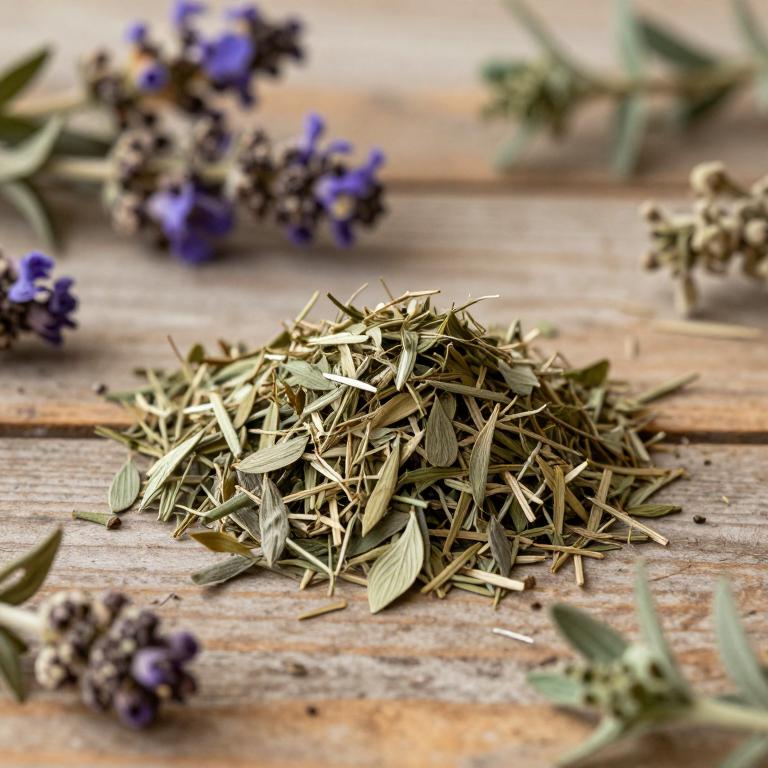
, scientifically known as Stachys germanica, is a perennial herb native to Europe, often recognized by its textured, hairy foliage. Historically utilized in traditional medicine, this plant is valued for its potential therapeutic properties, particularly in supporting digestive health and addressing minor inflammatory conditions through its unique phytochemical composition.
- Family
- Not available
- Native range
- Europe
- Parts used
- Not available
- Common names
- Not available
- Scientific synonyms
- Not available
Names and Synonyms
Scientific Names
Accepted name
Stachys germanicaDistribution
This plant exhibits a specific geographical distribution primarily concentrated across various regions of the European continent. In Northern Europe, its presence can be documented within the borders of Great Britain. Moving into Middle Europe, the species is found inhabiting the landscapes of Austria and Belgium. The distribution further extends through the central territories of Czechia-Slovakia. Finally, the plant is also well-established within the borders of Germany.
| Region | Area |
|---|---|
| Northern Europe | Great Britain |
| Middle Europe | Austria |
| Middle Europe | Belgium |
| Middle Europe | Czechia-Slovakia |
| Middle Europe | Germany |
| Middle Europe | Hungary |
| Middle Europe | Poland |
| Middle Europe | Switzerland |
| Southwestern Europe | Baleares |
| Southwestern Europe | Corse |
Sources: The World Checklist of Vascular Plants (WCVP)
Botanical Identification
Ecology
The ecology of Stachys germanica is characterized by its preference for transitional environments, specifically thriving within the diverse microclimates found at forest edges. These ecotones provide the plant with a strategic balance of filtered sunlight and increased moisture levels compared to the dense interior of a forest. By occupying these margins, the species benefits from the structural complexity of the vegetation interface, which offers protection from extreme wind exposure while allowing for sufficient light penetration necessary for its growth cycles. This positioning within the forest edge community allows it to integrate into the localized nutrient cycles and soil compositions typical of woodland boundaries.
- Habitat :
- forest edges
Life history
The life history of Stachys germanica is characterized by its classification as a perennial plant, allowing it to persist across multiple growing seasons. As a hemicryptophyte, its perennating buds are located at the soil surface, protected by leaf litter or organic matter during unfavorable periods. This species exhibits a deciduous nature, shedding its foliage as part of its seasonal cycle, which plays a critical role in its survival strategy and resource management within its habitat.
- Deciduousness :
- deciduous
- Life form :
- hemicryptophyte
- Lifecycle :
- perennial
Morphology
The morphology of Stachys germanica is characterized by its growth form as a non-woody herb and forb. This terrestrial plant grows in an ascending shoot orientation and is categorized as a self-supporting, non-climbing species. It functions as an independent organism, neither acting as a parasite nor as an epiphyte, maintaining a strictly terrestrial existence. In terms of stature, the plant exhibits significant variability in height, ranging from a minimum of 0.3 m to a maximum of 1.2 m, with an average plant height of approximately 0.492 m.
- Aquatic :
- terrestrial
- Climber :
- self-supporting
- Epiphyte :
- terrestrial
- Growth form :
- herb
- Growth form :
- forb
- Parasite :
- independent
- Plant height max:
- 1.2 m
- Plant height mean:
- 0.492 m
- Plant height min:
- 0.3 m
- Shoot orientation :
- ascending
- Woodiness :
- non-woody
Physiology
The physiology of Stachys germanica is characterized by a C3 photosynthetic pathway, which governs its carbon fixation processes and metabolic efficiency. The plant exhibits specific leaf morphology, with leaf lengths ranging from a minimum of 1 cm to a maximum of 3 cm, while the leaf width varies between 0.4 cm and 0.6 cm. These morphological dimensions contribute to a mean Specific Leaf Area (SLA) of 221 cm²/g, reflecting the structural investment of the leaf tissue relative to its dry mass and influencing the plant's capacity for light interception and gas exchange.
- Leaf length max:
- 3 cm
- Leaf length min:
- 1 cm
- Leaf width max:
- 0.6 cm
- Leaf width min:
- 0.4 cm
- Photosynthetic pathway :
- C3
- Specific Leaf Area (SLA) mean:
- 221 cm²/g
Reproduction
The reproduction of Stachys germanica is characterized by a biotic pollination syndrome, specifically relying on insects to facilitate the transfer of pollen. The plant is capable of self-fertilization, ensuring reproductive success even in varying environmental conditions. Its flowering period is concentrated in July, though the timing can be variable. Following successful fertilization, the plant produces seeds with a highly specialized mass profile; the mean seed mass is approximately 0.001466 g, with individual seeds ranging from a minimum of 0.00087 g to a maximum of 0.00184 g. Once mature, the dispersal of these seeds follows an anemochorous syndrome, meaning they are primarily dispersed by the wind.
- Dispersal syndrome :
- anemochorous
- Flowering time :
- Jul
- Pollination syndrome :
- insect
- Pollination syndrome :
- biotic
- Seed mass max:
- 0.00184 g
- Seed mass mean:
- 0.001466 g
- Seed mass min:
- 0.00087 g
- Self fertilization :
- present
Sources: Global Inventory of Floras and Traits (GIFT)
Chemicals
Stachys germanica has 11 reported phytochemicals identified across 0 scientific publications and several other databases. The most consistently reported chemicals include 1,8-Cineole, ALPHA-PINENE, EO, Germacrene D, LIMONENE.
| Chemical | Supporting sources | Consensus |
|---|---|---|
| 1,8-Cineole | 1 supporting sources | ★☆☆☆☆ |
| ALPHA-PINENE | 1 supporting sources | ★☆☆☆☆ |
| EO | 1 supporting sources | ★☆☆☆☆ |
| Germacrene D | 1 supporting sources | ★☆☆☆☆ |
| LIMONENE | 1 supporting sources | ★☆☆☆☆ |
| MYRCENE | 1 supporting sources | ★☆☆☆☆ |
| P-CYMENE | 1 supporting sources | ★☆☆☆☆ |
| SABINENE | 1 supporting sources | ★☆☆☆☆ |
| alpha-TERPINEOL | 1 supporting sources | ★☆☆☆☆ |
| cis-Ocimene | 1 supporting sources | ★☆☆☆☆ |
1,8-Cineole
- Dr. Duke
ALPHA-PINENE
- Dr. Duke
EO
- Dr. Duke
Germacrene D
- Dr. Duke
LIMONENE
- Dr. Duke
MYRCENE
- Dr. Duke
P-CYMENE
- Dr. Duke
SABINENE
- Dr. Duke
alpha-TERPINEOL
- Dr. Duke
cis-Ocimene
- Dr. Duke
Activities
Stachys germanica has 134 reported activities identified across 0 scientific publications and several other databases. The most consistently reported activities include (-)-Chronotropic, (-)-Inotropic, ACE-Inhibitor, AChE-Inhibitor, Acaricide.
| Activity | Supporting sources | Consensus |
|---|---|---|
| (-)-Chronotropic | 1 supporting sources | ★☆☆☆☆ |
| (-)-Inotropic | 1 supporting sources | ★☆☆☆☆ |
| ACE-Inhibitor | 1 supporting sources | ★☆☆☆☆ |
| AChE-Inhibitor | 1 supporting sources | ★☆☆☆☆ |
| Acaricide | 1 supporting sources | ★☆☆☆☆ |
| Aldose-Reductase-Inhibitor | 1 supporting sources | ★☆☆☆☆ |
| Allelochemic | 1 supporting sources | ★☆☆☆☆ |
| Allelopathic | 1 supporting sources | ★☆☆☆☆ |
| Allergenic | 1 supporting sources | ★☆☆☆☆ |
| Analgesic | 1 supporting sources | ★☆☆☆☆ |
(-)-Chronotropic
- Dr. Duke
(-)-Inotropic
- Dr. Duke
ACE-Inhibitor
- Dr. Duke
AChE-Inhibitor
- Dr. Duke
Acaricide
- Dr. Duke
Aldose-Reductase-Inhibitor
- Dr. Duke
Allelochemic
- Dr. Duke
Allelopathic
- Dr. Duke
Allergenic
- Dr. Duke
Analgesic
- Dr. Duke