Alpine Woundwort
Stachys alpina · Accepted scientific name
Scientific literature: Very Sparse (14 studies) · ★☆☆☆☆
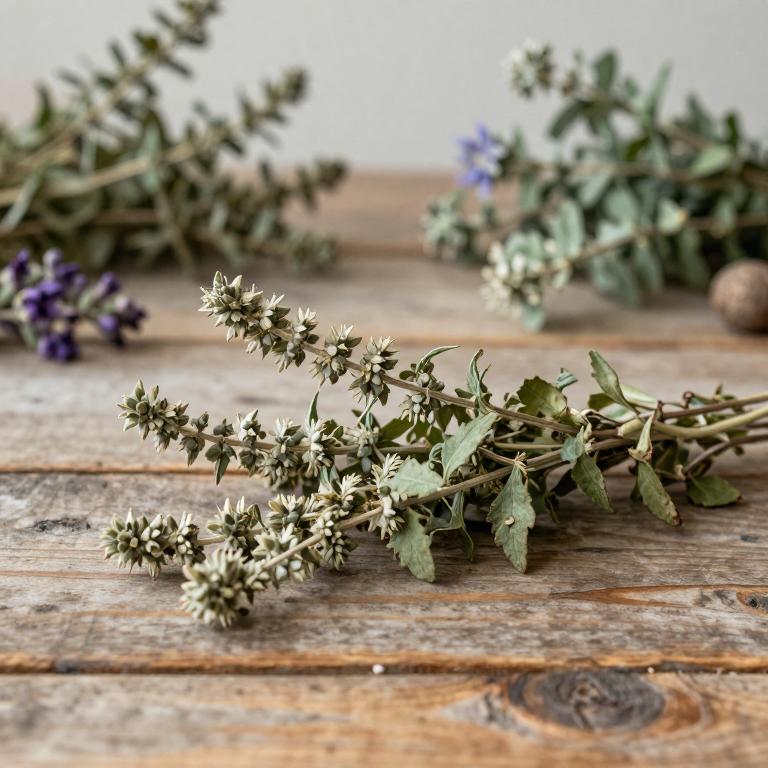
Alpine Woundwort, scientifically known as Stachys alpina, is a resilient perennial herb native to high-altitude European meadows. Distinguished by its velvety, dark leaves and spiked violet flowers, this plant has historically been valued in traditional herbalism for its astringent properties and its ability to assist in healing minor wounds.
- Family
- Lamiaceae
- Native range
- Europe
- Parts used
- Flower · Leaf
- Common names
- Alpine Woundwort · Limestone Woundwort · 1 more
- Scientific synonyms
- Not available
Names and Synonyms
Common Names
- Alpine Woundwort
- Limestone Woundwort
- alpine woundwort / limestone woundwort
Scientific Names
Accepted name
Stachys alpinaRegional and Traditional Names
Spanish:
- Eriostomum alpinum
German:
- Alpen-Ziest
- Alpen-Ziest
French:
- Épiaire des Alpes
- Epiaire des Alpes
- Épiaire des Alpes
Sources: Wikidata, Catalogue of Life
Taxonomical Classification
This plant belongs to the kingdom Plantae and is classified within the phylum Streptophyta and class Equisetopsida. It is further categorized under the subclass Magnoliidae and the order Lamiales, falling into the family Lamiaceae. Ultimately, its taxonomic identity is defined by the genus Stachys.
| Rank | Classification |
|---|---|
| Kingdom | Plantae |
| Phylum | Streptophyta |
| Class | Equisetopsida |
| Subclass | Magnoliidae |
| Order | Lamiales |
| Family | Lamiaceae |
| Genus | Stachys |
Sources: The World Checklist of Vascular Plants (WCVP)
Distribution
This plant exhibits a specific geographical distribution primarily concentrated within the European continent. In Northern Europe, its presence can be identified within the borders of Great Britain. Moving into Middle Europe, it is found growing in the landscapes of Austria and Belgium. The species also inhabits the central regions of Germany. Finally, its range extends through the territories of Czechia and Slovakia.
| Region | Area |
|---|---|
| Northern Europe | Great Britain |
| Middle Europe | Austria |
| Middle Europe | Belgium |
| Middle Europe | Czechia-Slovakia |
| Middle Europe | Germany |
| Middle Europe | Hungary |
| Middle Europe | Poland |
| Southwestern Europe | France |
| Southwestern Europe | Spain |
| Southeastern Europe | Albania |
Sources: The World Checklist of Vascular Plants (WCVP)
Botanical Identification
Ecology
The ecology of Stachys alpina is characterized by its preference for specific montane and subalpine environments, where it typically thrives within the sheltered microclimates of forests and open meadows. In forested areas, the plant often occupies the dappled light of the understory or the transitional edges where woodland meets clearing, benefiting from the nutrient-rich, moist organic matter provided by decaying leaf litter. Within meadow ecosystems, it colonizes grassy openings that offer sufficient sunlight and consistent soil moisture, often appearing in areas that are not overly competitive with dense, dominant vegetation. This distribution pattern suggests an ecological niche that requires a balance of moderate light availability and stable, temperate moisture levels typical of high-altitude terrain.
- Habitat :
- forest, meadows
Life history
The life history of Stachys alpina is characterized by its existence as a perennial plant, allowing it to persist through multiple growing seasons. It functions as a hemicryptophyte, a life form where the perennating buds are located at the soil surface, protected by leaf litter or organic matter during unfavorable conditions. Throughout its developmental stages, the plant exhibits a deciduous nature, shedding its foliage as it transitions through seasonal changes.
- Deciduousness :
- deciduous
- Life form :
- hemicryptophyte
- Lifecycle :
- perennial
Morphology
The morphology of Stachys alpina is characterized by its growth form as a non-woody herb, specifically categorized as a herb and a forb. As a self-supporting plant, it lacks climbing tendencies and functions as an independent organism, showing no parasitic or epiphytic behavior, as it is strictly terrestrial in its habitat. The plant's stature varies, with a minimum height of 0.4 m and a maximum height reaching up to 1.2 m, resulting in an average plant height of approximately 0.567 m.
- Aquatic :
- terrestrial
- Climber :
- self-supporting
- Epiphyte :
- terrestrial
- Growth form :
- herb
- Parasite :
- independent
- Plant height max:
- 1.2 m
- Plant height mean:
- 0.567 m
- Plant height min:
- 0.4 m
- Woodiness :
- non-woody
Physiology
The physiology of Stachys alpina is characterized by a metabolic framework governed by a C3 photosynthetic pathway, which is typical for many temperate perennial herbs inhabiting alpine or montane environments. Under this C3 mechanism, carbon fixation occurs directly through the enzyme Rubisco within the mesophyll cells during the Calvin cycle, without the specialized separation of CO2 fixation and sugar synthesis seen in C4 or CAM species. This pathway allows the plant to optimize biomass production under the cooler, moist conditions often found in its natural high-altitude habitats, although it remains subject to photorespiration when temperatures rise or water availability decreases. The plant's physiological efficiency is closely tied to its ability to manage gas exchange and transpiration rates through regulated stomatal conductance, ensuring that the rate of carbon assimilation is balanced against the potential for moisture loss in its specific ecological niche.
- Photosynthetic pathway :
- C3
Reproduction
The reproduction of Stachys alpina is characterized by a specific seasonal flowering period that occurs during the month of July, with both the flowering start and end concentrated within this timeframe. The plant utilizes a biotic pollination syndrome, specifically relying on insects to facilitate the transfer of pollen. In terms of genetic strategy, self-fertilization is present, allowing for reproductive success under various conditions. The resulting seeds are quite small, with a mean mass of 0.004712 g, a minimum mass of 0.0036 g, and a maximum mass of 0.00571 g. Once produced, the seeds are distributed via a zoochorous dispersal syndrome, meaning they rely on animals for movement to new locations.
- Dispersal syndrome :
- zoochorous
- Flowering time :
- Jul
- Pollination syndrome :
- insect
- Pollination syndrome :
- biotic
- Seed mass max:
- 0.00571 g
- Seed mass mean:
- 0.004712 g
- Seed mass min:
- 0.0036 g
- Self fertilization :
- present
Sources: Global Inventory of Floras and Traits (GIFT)
Plant Parts
Stachys alpina has 4 reported plant parts identified across 4 scientific publications and several other databases that are studied for medicinal purposes. The most consistently reported plant part include flower, leaf, root, stem.
| Plant part | Supporting sources | Consensus |
|---|---|---|
| Flower | 1 supporting sources | ★☆☆☆☆ |
| Leaf | 1 supporting sources | ★☆☆☆☆ |
| Root | 1 supporting sources | ★☆☆☆☆ |
| Stem | 1 supporting sources | ★☆☆☆☆ |
Flower
- Pharmaceuticals (Basel, Switzerland)
Leaf
- Pharmaceuticals (Basel, Switzerland)
Root
- Pharmaceuticals (Basel, Switzerland)
Stem
- Pharmaceuticals (Basel, Switzerland)
Chemicals
Stachys alpina has 7 reported phytochemicals identified across 4 scientific publications and several other databases. The most consistently reported chemicals include Anthocyanins, CALCIUM, CHLOROGENIC ACID, MAGNESIUM, MANGANESE.
| Chemical | Supporting sources | Consensus |
|---|---|---|
| Anthocyanins | 1 supporting sources | ★☆☆☆☆ |
| CALCIUM | 1 supporting sources | ★☆☆☆☆ |
| CHLOROGENIC ACID | 1 supporting sources | ★☆☆☆☆ |
| MAGNESIUM | 1 supporting sources | ★☆☆☆☆ |
| MANGANESE | 1 supporting sources | ★☆☆☆☆ |
| Verbascoside | 1 supporting sources | ★☆☆☆☆ |
| ZINC | 1 supporting sources | ★☆☆☆☆ |
Anthocyanins
- Pharmaceuticals (Basel, Switzerland)
CALCIUM
- Pharmaceuticals (Basel, Switzerland)
CHLOROGENIC ACID
- Pharmaceuticals (Basel, Switzerland)
MAGNESIUM
- Pharmaceuticals (Basel, Switzerland)
MANGANESE
- Pharmaceuticals (Basel, Switzerland)
Verbascoside
- Pharmaceuticals (Basel, Switzerland)
ZINC
- Pharmaceuticals (Basel, Switzerland)
Activities
Stachys alpina has 1 reported activities identified across 4 scientific publications and several other databases. The most consistently reported activities include Antioxidant.
| Activity | Supporting sources | Consensus |
|---|---|---|
| Antioxidant | 1 supporting sources | ★☆☆☆☆ |
Antioxidant
- Pharmaceuticals (Basel, Switzerland)