Stachys affinis
Stachys aegyptiaca · Accepted scientific name
Scientific literature: Very Sparse (2 studies) · ★☆☆☆☆
Stachys affinis, scientifically known as Stachys aegyptiaca, is a versatile medicinal herb valued for its therapeutic properties. Traditionally used in various folk medicine practices, this plant offers significant bioactive compounds. It is primarily recognized for its potential anti-inflammatory and antioxidant effects, making it a subject of botanical interest.
- Family
- Lamiaceae
- Native range
- Africa
- Parts used
- Not available
- Common names
- Stachys Affinis · Chinese-Artichoke · 2 more
- Scientific synonyms
- Stachys Pauciflora · Stachys Boveana
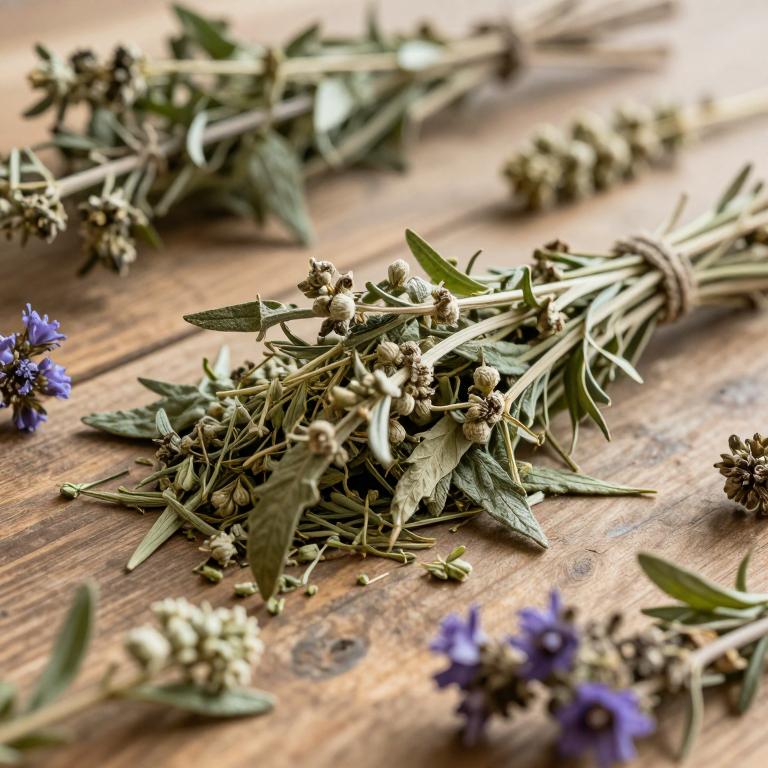
Names and Synonyms
Common Names
- Stachys affinis
- Chinese-artichoke
- Japanese-artichoke
- knotroot
Scientific Names
Accepted name
Stachys aegyptiacaSynonyms
- Stachys pauciflora
- Stachys boveana
Regional and Traditional Names
Spanish:
- Stachys affinis
- Stachys sieboldii var. alba
- Stachys geobombycis var. alba
- Stachys pauciflora
- Alcachofa betónica
- Alcachofa china
- Stachys tubifera
- Alcachofa betonica
- Betónica del Japón
- Betonica del Japon
- Stachys sieboldii var. glabrescens
- Stachys tuberifera
- Stachys sieboldii
- Stachys sieboldii var alba
- Stachys sieboldii var glabrescens
- Stachys geobombycis var alba
- Betonica del Japón
German:
- Knollen-Ziest
- Knollenziest
- Stachys sieboldi
- Stachys tuberifera
- Stachys sieboldii
- Japanische Kartoffel
- Stachys affinis
- Chinesische Artischocke
- Knollenziest
- chinesische Artischocke
- japanische Kartoffel
French:
- crosne du Japon
- Épiaire à chapelets
- Stachys affinis
- crosne
- crosne du Japon
Sources: Wikidata, Catalogue of Life
Taxonomical Classification
This plant belongs to the kingdom Plantae and is classified under the phylum Streptophyta and class Equisetopsida. Within the subclass Magnoliidae, it falls under the order Lamiales and the family Lamiaceae. It is specifically identified by the genus Stachys, with its species name being aegypthiaca.
| Rank | Classification |
|---|---|
| Kingdom | Plantae |
| Phylum | Streptophyta |
| Class | Equisetopsida |
| Subclass | Magnoliidae |
| Order | Lamiales |
| Family | Lamiaceae |
| Genus | Stachys |
Sources: The World Checklist of Vascular Plants (WCVP)
Distribution
This plant exhibits a specific geographical distribution concentrated across several key regions of the Middle East and North Africa. In Northern Africa, its presence is documented within the borders of Egypt. Moving into Western Asia, the species can be found in Palestine and throughout the Sinai region. Additionally, its range extends into the Arabian Peninsula, specifically within Saudi Arabia. Together, these locations define the natural habitat where this medicinal species thrives.
| Region | Area |
|---|---|
| Northern Africa | Egypt |
| Western Asia | Palestine |
| Western Asia | Sinai |
| Arabian Peninsula | Saudi Arabia |
Sources: The World Checklist of Vascular Plants (WCVP)
Botanical Identification
Life history
The life history of Stachys aegypytiaca is characterized by a perennial lifecycle, allowing the plant to persist through multiple growing seasons. Its morphological structure and survival strategy are defined by its classification as a chamaephyte, a life form where the terminal buds are located close to the soil surface, often protected by a layer of leaf litter or debris. Additionally, the plant exhibits characteristics of a cryptophyte, indicating that its perennial nature is supported by underground or near-surface buds that remain dormant during unfavorable conditions. This combination of traits, including its identification as a geophyte, ensures that it can endure environmental stressors by maintaining vital regenerative structures at or just below the ground level.
- Life form :
- geophyte
- Life form :
- cryptophyte
- Life form :
- chamaephyte
- Lifecycle :
- perennial
Morphology
The morphology of Stachys aegypthiaca is characterized by a diverse range of structural forms, primarily functioning as a self-supporting organism that does not rely on climbing mechanisms. As an independent species, it does not exhibit parasitic behavior and exists as a terrestrial plant rather than an aquatic, semiaquatic, or epiphytic one. The growth form of the species is highly variable, manifesting as a herb or a forb, though it can also present as a subshrub or a shrub. In terms of structural density and tissue composition, its woodiness ranges from non-woody to distinctly woody, allowing it to maintain its self-supporting stature across different environmental contexts.
- Aquatic :
- terrestrial
- Climber :
- self-supporting
- Epiphyte :
- terrestrial
- Growth form :
- herb
- Growth form :
- forb
- Growth form :
- shrub
- Growth form :
- subshrub
- Parasite :
- independent
- Woodiness :
- non-woody
- Woodiness :
- woody
Sources: Global Inventory of Floras and Traits (GIFT)
Activities
Stachys aegyptiaca has 1 reported activities identified across 0 scientific publications and several other databases. The most consistently reported activities include Antioxidant.
| Activity | Supporting sources | Consensus |
|---|---|---|
| Antioxidant | 1 supporting sources | ★☆☆☆☆ |
Antioxidant
- Scientific reports
Preparations
Stachys aegyptiaca has 3 reported preparations identified across 0 scientific publications and several other databases. The most consistently reported preparations include SAE, SAE extract, Stachys affinis extract (SAE).
| Preparation | Supporting sources | Consensus |
|---|---|---|
| Sae | 1 supporting sources | ★☆☆☆☆ |
| Sae extract | 1 supporting sources | ★☆☆☆☆ |
| Stachys affinis extract (sae) | 1 supporting sources | ★☆☆☆☆ |
Sae
- Scientific reports
Sae extract
- Scientific reports
Stachys affinis extract (sae)
- Scientific reports