Spirodela punctata
Spirodela punctata · Accepted scientific name
Scientific literature: Very Sparse (3 studies) · ★☆☆☆☆
Spirodela punctata, scientifically known as Spirodela punctata, is a versatile aquatic plant valued in traditional herbal medicine. Renowned for its unique bioactive compounds, it possesses significant antimicrobial and antioxidant properties. This submerged macrophyte plays a crucial role in aquatic ecosystems while offering promising therapeutic potential for modern pharmacological research.
- Family
- Araceae
- Native range
- Asia-Tropical
- Parts used
- Not available
- Common names
- Not available
- Scientific synonyms
- Landoltia Punctata · Spirodela Biperforata · 2 more
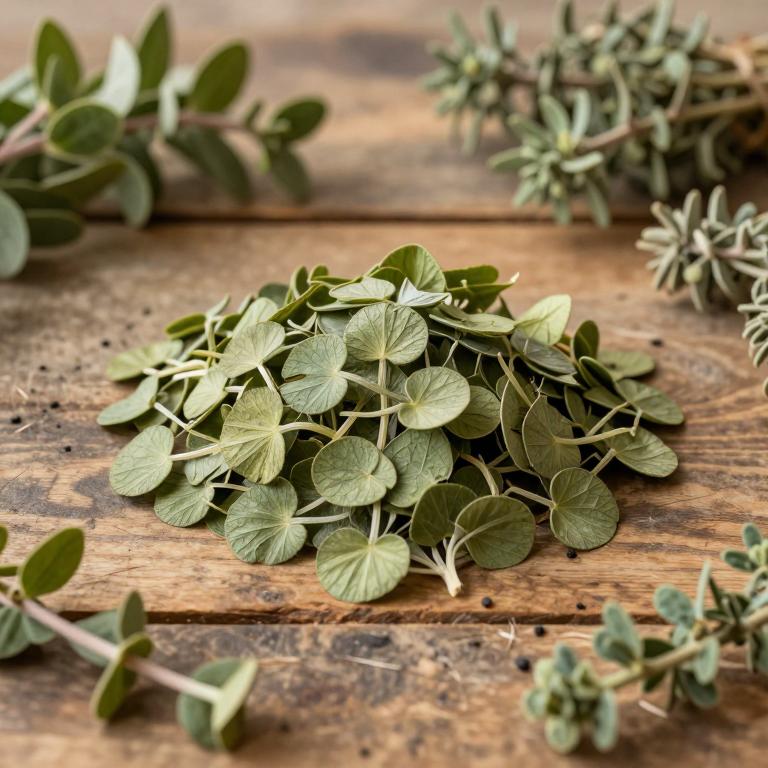
Names and Synonyms
Scientific Names
Accepted name
Spirodela punctataSynonyms
- Landoltia punctata
- Spirodela biperforata
- Lemna punctata
- Spirodela intermedia
Regional and Traditional Names
Spanish:
- Landoltia
- Lemna oligorrhiza
- Spirodela oligorrhiza var javanica
- Lemna pusilla
- Lemna javanica
- Landoltia punctata
- Lemna punctata
- Spirodela oligorrhiza
- Spirodela oligorrhiza var. javanica
- Spirodela oligorrhiza var. pusilla
- Lemna melanorrhiza
- Spirodela oligorrhiza var. melanorrhiza
- Spirodela oligorrhiza var. pleiorrhiza
- Spirodela oligorrhiza var pusilla
- Spirodela oligorrhiza var pleiorrhiza
- Spirodela oligorrhiza var melanorrhiza
- Lemna pleiorrhiza
Sources: Wikidata, Catalogue of Life
Taxonomical Classification
This plant, Spirodela punctata, belongs to the kingdom Plantae and is classified under the phylum Streptophyta within the class Equisetopsida. It is further categorized under the subclass Magnoliidae and the order Alismatales, falling into the family Araceae. Finally, it is identified by its specific genus, Spirodela.
| Rank | Classification |
|---|---|
| Kingdom | Plantae |
| Phylum | Streptophyta |
| Class | Equisetopsida |
| Subclass | Magnoliidae |
| Order | Alismatales |
| Family | Araceae |
| Genus | Spirodela |
Sources: The World Checklist of Vascular Plants (WCVP)
Distribution
This plant exhibits a broad geographical distribution across several key regions in Asia. Within the Indian Subcontinent, it can be found throughout India and specifically in the state of Assam. Its presence extends into Indo-China, where it is documented in both Thailand and Vietnam. Furthermore, the species reaches into the Malesia region, specifically within the Philippines. This wide range highlights the diverse ecological environments the plant is able to inhabit.
| Region | Area |
|---|---|
| Indian Subcontinent | Assam |
| Indian Subcontinent | India |
| Indo-China | Thailand |
| Indo-China | Vietnam |
| Malesia | Philippines |
| Central America | Costa Rica |
| Central America | El Salvador |
| Central America | Panamá |
| Caribbean | Cuba |
| Caribbean | Leeward Is. |
Sources: The World Checklist of Vascular Plants (WCVP)
Botanical Identification
Ecology
The ecology of Spirodela punctata is characterized by its distribution across a vast altitudinal gradient, ranging from sea level up to a maximum elevation of 3020 m AMSL. It is primarily found in lowland habitats, where it thrives in aquatic environments that provide the necessary nutrient availability and stable water conditions for its growth.
- Elevational range max:
- 3020 m AMSL
- Elevational range min:
- 0 m AMSL
- Habitat :
- Lowland
Life history
The life history of Spirodela punctata is characterized by its existence as a perennial organism that maintains a consistent presence within its aquatic habitat. As a hydrophyte, it is specialized for life in water, utilizing its floating structure to thrive in lentic environments. Its physiological strategy is defined by an evergreen nature, allowing it to retain its functional structures throughout its active growth periods. Furthermore, its survival strategy aligns with the cryptophyte life form, relying on specialized structures to endure varying environmental conditions within its niche.
- Deciduousness :
- evergreen
- Life form :
- hydrophyte
- Life form :
- cryptophyte
- Lifecycle :
- perennial
Morphology
The morphology of Spirodela punctata is characterized by its specialized aquatic lifestyle, functioning as a fully aquatic organism. As a small-statured herb, it specifically exhibits a forb growth form, lacking any climbing tendencies and remaining entirely self-supporting within its watery environment. The plant is non-woody in structure, reflecting its delicate, herbaceous nature, and it does not function as an epiphyte, remaining terrestrial in its biological classification rather than growing on other plants. Furthermore, it is an independent organism, existing without any parasitic relationship to its surroundings. Due to its minute size, it maintains a very low plant height, reaching a maximum of only 0.01 m.
- Aquatic :
- aquatic
- Climber :
- self-supporting
- Epiphyte :
- terrestrial
- Growth form :
- herb
- Growth form :
- forb
- Parasite :
- independent
- Plant height max:
- 0.01 m
- Woodiness :
- non-woody
Physiology
The physiology of Spirodela punctata is characterized by specialized morphological adaptations in its leaf-like structures, known as fronds, which serve as the primary sites for metabolic activity. These fronds exhibit significant variability in dimensions, with a minimum leaf length of 0.2 cm and a maximum leaf length reaching 0.5 cm. Correspondingly, the width of these structures fluctuates between a minimum of 0.12 cm and a maximum of 0.25 cm, facilitating efficient surface area management for buoyancy and nutrient absorption. From a nutritional standpoint, the plant does not function as a nitrogen fixer, meaning it relies on the uptake of dissolved inorganic nitrogen from its aquatic environment rather than converting atmospheric nitrogen into usable forms.
- Leaf length max:
- 0.5 cm
- Leaf length min:
- 0.2 cm
- Leaf width max:
- 0.25 cm
- Leaf width min:
- 0.12 cm
- Nitrogen fixer :
- no
Reproduction
The reproduction of Spirodela punctata is characterized by a versatile strategy involving both sexual and asexual processes. Asexual reproduction is present, providing a reliable means for rapid population expansion. When engaging in sexual reproduction, the plant is bisexual, though it lacks the capacity for self-fertilization. Its pollination strategy involves both abiotic and insect-driven syndromes to facilitate genetic exchange. Regarding seed characteristics, the plant produces no measurable seed mass, and the number of seeds per fruit is recorded as zero, indicating that its reproductive success is heavily reliant on other methods. Dispersal is achieved through a combination of hydrochorous mechanisms, utilizing water for movement, and epizoochorous methods, where propagules are transported via attachment to animals.
- Dispersal syndrome :
- hydrochorous
- Dispersal syndrome :
- epizoochorous
- Pollination syndrome :
- insect
- Pollination syndrome :
- abiotic
- Reproduction asexual :
- present
- Reproduction sexual :
- bisexual
- Seed mass mean:
- 0 g
- Seeds_per_fruit :
- 0
- Self fertilization :
- absent
Sources: Global Inventory of Floras and Traits (GIFT)
Chemicals
Spirodela punctata has 2 reported phytochemicals identified across 0 scientific publications and several other databases. The most consistently reported chemicals include STARCH, sucrose.
| Chemical | Supporting sources | Consensus |
|---|---|---|
| STARCH | 1 supporting sources | ★☆☆☆☆ |
| sucrose | 1 supporting sources | ★☆☆☆☆ |
STARCH
- Frontiers in plant science
sucrose
- Frontiers in plant science