Spergularia flaccida
Spergularia flaccida · Accepted scientific name
Scientific literature: Very Sparse (10 studies) · ★☆☆☆☆
Scientifically known as Spergularia flaccida, is a delicate herbaceous plant belonging to the Caryophyllaceae family. Often found in moist or disturbed habitats, this species is recognized by its slender stems and small, subtle blooms. It holds significant interest in ethnobotany for its potential therapeutic properties and ecological importance.
- Family
- Caryophyllaceae
- Native range
- Europe
- Parts used
- Not available
- Common names
- Not available
- Scientific synonyms
- Spergula Fallax · Spergula Flaccida · 8 more
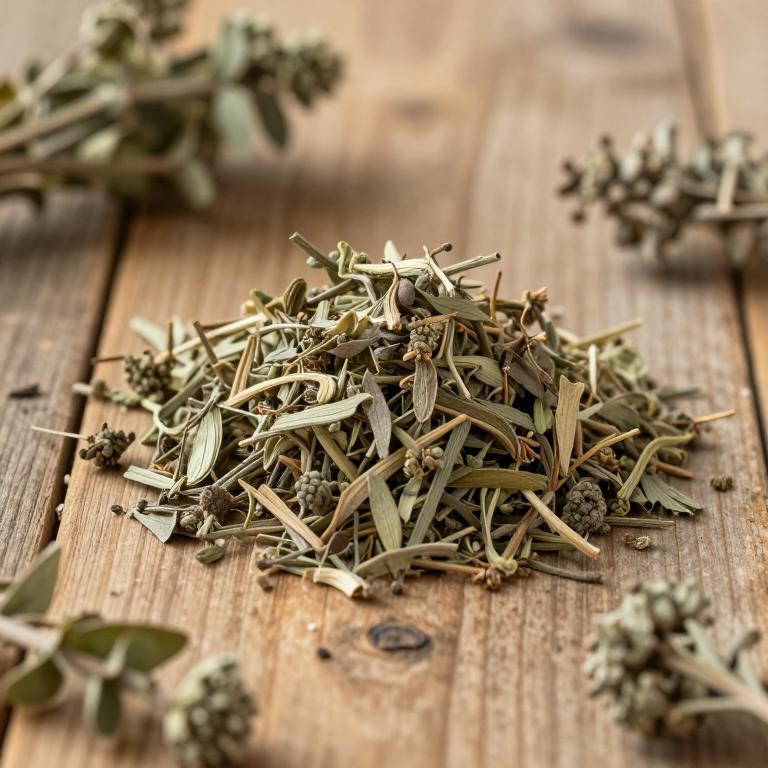
Names and Synonyms
Scientific Names
Accepted name
Spergularia flaccidaSynonyms
- Spergula fallax
- Spergula flaccida
- Lepigonum fallax
- Spergula pentandra subsp. flaccida
- Stipularia flaccida
- Spergula pentandra var. intermedia
- Spergula flaccida f. purpurascens
- Lepigonum eximium
- Spergularia fallax
- Stipularia fallax
Regional and Traditional Names
German:
- Trügerischer Spörgel
Sources: Wikidata, Catalogue of Life
Taxonomical Classification
This plant belongs to the kingdom Plantae and is classified under the phylum Streptophyta and class Equisetopsida. Within the subclass Magnoliidae, it is ordered under Caryophyllales and placed in the family Caryophyllaceae. Finally, it is identified by its genus name, Spergularia.
| Rank | Classification |
|---|---|
| Kingdom | Plantae |
| Phylum | Streptophyta |
| Class | Equisetopsida |
| Subclass | Magnoliidae |
| Order | Caryophyllales |
| Family | Caryophyllaceae |
| Genus | Spergularia |
Sources: The World Checklist of Vascular Plants (WCVP)
Distribution
This plant exhibits a widespread geographical distribution across the Mediterranean region. In Southeastern Europe, its presence is specifically noted in Sicilia. Its range extends significantly into Northern Africa, where it can be found in Algeria. Furthermore, the species is documented throughout Libya and Egypt. Finally, the plant's distribution reaches as far west as Morocco.
| Region | Area |
|---|---|
| Southeastern Europe | Sicilia |
| Northern Africa | Algeria |
| Northern Africa | Egypt |
| Northern Africa | Libya |
| Northern Africa | Morocco |
| Northern Africa | Tunisia |
| Northern Africa | Western Sahara |
| Macaronesia | Canary Is. |
| Macaronesia | Madeira |
| Macaronesia | Selvagens |
Sources: The World Checklist of Vascular Plants (WCVP)
Botanical Identification
Ecology
The ecology of Spergularia flaccida is characterized by its distribution within low-lying topographical zones, specifically occupying an elevational range that extends from 0 m to a maximum of 100 m AMSL. This narrow altitudinal bracket suggests that the species is adapted to lowland environments, typically favoring coastal plains, alluvial basins, or riparian corridors where sea level or near-sea-level conditions prevail. Such an ecological niche implies a tolerance for the specific humidity, temperature profiles, and soil compositions associated with low-elevation habitats, often involving alluvial or sandy substrates found in these maritime or riverine proximity zones.
- Elevational range max:
- 100 m AMSL
- Elevational range min:
- 0 m AMSL
Life history
The life history of Spergularia flaccida is characterized by an annual lifecycle, meaning the plant completes its entire biological development—from germination to seed production—within a single growing season. In terms of its structural growth strategy, it is classified as a therophyte, a life form defined by its reliance on ephemeral structures to survive unfavorable periods. As a therophyte, it avoids seasonal stress by avoiding the development of persistent above-ground organs, instead surviving through resistant seeds that remain dormant until favorable environmental conditions trigger the next generation.
- Life form :
- therophyte
- Lifecycle :
- annual
Morphology
The morphology of Spergularia flaccida is characterized by its growth form as a non-woody herb, specifically classified as a forb. This plant exhibits a flexible habitat preference, ranging from terrestrial to semiaquatic and aquatic environments. It is a self-supporting species that does not function as a climber or a parasite, operating as an independent organism. The physical structure of the plant is relatively diminutive, with a height that typically ranges from a minimum of 0.05 m to a maximum of 0.4 m. In terms of its structural development, the shoots display an ascending orientation, contributing to its overall herbaceous stature.
- Aquatic :
- terrestrial
- Climber :
- self-supporting
- Growth form :
- herb
- Parasite :
- independent
- Plant height max:
- 0.4 m
- Plant height min:
- 0.05 m
- Shoot orientation :
- ascending
- Woodiness :
- non-woody
Physiology
The physiology of Spergularia flaccida is characterized by a C3 photosynthetic pathway, which dictates its carbon fixation processes and metabolic efficiency. The plant exhibits distinct morphological adaptations for water storage, as evidenced by its succulent nature. Its foliage is arranged in a whorled pattern, with individual leaves varying in length from a minimum of 1 cm to a maximum of 3.5 cm. Furthermore, the leaves possess a relatively consistent thickness, reaching a maximum of 1 mm, which supports its physiological capacity for moisture retention within its tissues.
- Leaf arrangement :
- whorled
- Leaf length max:
- 3.5 cm
- Leaf length min:
- 1 cm
- Leaf thickness max:
- 1 mm
- Photosynthetic pathway :
- C3
- Succulence :
- yes
Reproduction
The reproduction of Spergularia flaccida is characterized by a specific flowering phenology and distinct morphological traits of its reproductive organs. The flowering period typically commences in February and concludes in April, though the timing can be variable. During this stage, the plant produces small, white flowers that measure between 0.3 cm and 0.5 cm in length. Following pollination, the plant develops a capsule-type fruit, which ranges in length from a minimum of 0.4 cm to a maximum of 0.6 cm. These fruits are dehiscence-type, meaning they split open to release the seeds. The seeds themselves are quite small, with lengths varying between 0.9 mm and 1.6 mm. In terms of mass, the seeds exhibit a mean weight of 0.00027 g, with individual seed masses ranging from a minimum of 0.00009 g to a maximum of 0.00055 g.
- Dehiscence :
- dehiscent
- Flower colour :
- white
- Flower length max:
- 0.5 cm
- Flower length min:
- 0.3 cm
- Flowering time :
- Feb
- Flowering time :
- Apr
- Fruit length max:
- 0.6 cm
- Fruit length min:
- 0.4 cm
- Fruit type :
- capsule
- Seed length max:
- 1.6 mm
- Seed length min:
- 0.9 mm
- Seed mass max:
- 0.00055 g
- Seed mass mean:
- 0.00027 g
- Seed mass min:
- 9e-05 g
Sources: Global Inventory of Floras and Traits (GIFT)
Chemicals
Spergularia flaccida has 5 reported phytochemicals identified across 0 scientific publications and several other databases. The most consistently reported chemicals include Flavonoids, apigenin, kaempferol, luteolin, quercetin.
| Chemical | Supporting sources | Consensus |
|---|---|---|
| Flavonoids | 1 supporting sources | ★☆☆☆☆ |
| apigenin | 1 supporting sources | ★☆☆☆☆ |
| kaempferol | 1 supporting sources | ★☆☆☆☆ |
| luteolin | 1 supporting sources | ★☆☆☆☆ |
| quercetin | 1 supporting sources | ★☆☆☆☆ |
Flavonoids
- Current pharmaceutical biotechnology
apigenin
- Current pharmaceutical biotechnology
kaempferol
- Current pharmaceutical biotechnology
luteolin
- Current pharmaceutical biotechnology
quercetin
- Current pharmaceutical biotechnology
Activities
Spergularia flaccida has 5 reported activities identified across 0 scientific publications and several other databases. The most consistently reported activities include Antibacterial, Antimicrobial, Antioxidant, Antiviral, Cytotoxic.
| Activity | Supporting sources | Consensus |
|---|---|---|
| Antibacterial | 1 supporting sources | ★☆☆☆☆ |
| Antimicrobial | 1 supporting sources | ★☆☆☆☆ |
| Antioxidant | 1 supporting sources | ★☆☆☆☆ |
| Antiviral | 1 supporting sources | ★☆☆☆☆ |
| Cytotoxic | 1 supporting sources | ★☆☆☆☆ |
Antibacterial
- Current pharmaceutical biotechnology
Antimicrobial
- Current pharmaceutical biotechnology
Antioxidant
- Current pharmaceutical biotechnology
Antiviral
- Current pharmaceutical biotechnology
Cytotoxic
- Current pharmaceutical biotechnology