Souroubea sympetala
Souroubea sympetala · Accepted scientific name
Scientific literature: Very Sparse (11 studies) · ★☆☆☆☆
Souroubea sympetala, scientifically known as Souroubhea sympetala, is a versatile medicinal plant native to tropical regions. Renowned for its diverse therapeutic properties, various parts of this species are traditionally utilized to treat ailments ranging from skin infections to inflammation, offering significant potential for pharmacological research and holistic healing.
- Family
- Marcgraviaceae
- Native range
- Southern America
- Parts used
- Leaf
- Common names
- Not available
- Scientific synonyms
- Souroubea Guianensis Var. Dilatata · Souroubea Guianensis Var. Spectabilis · 1 more
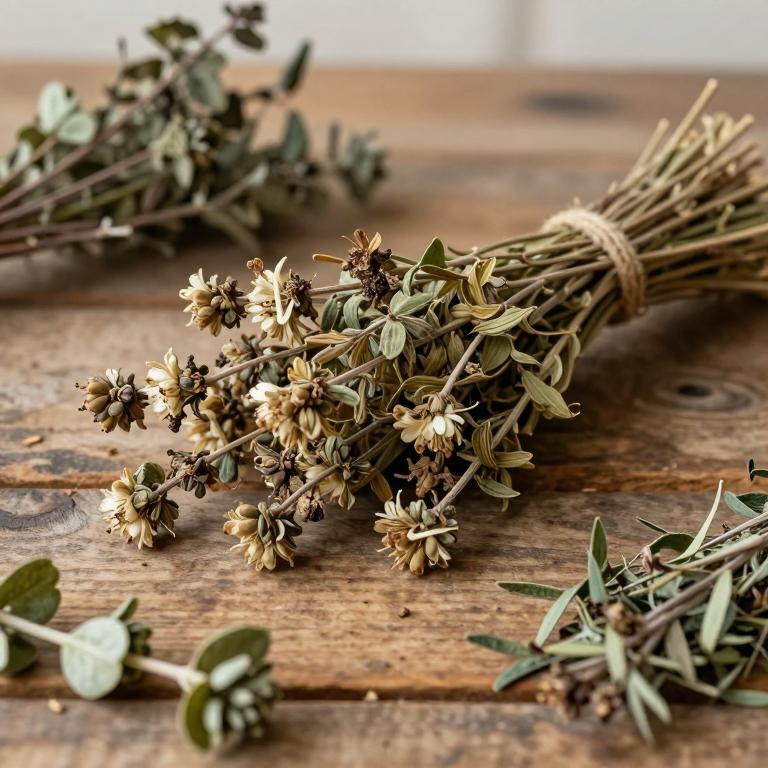
Names and Synonyms
Scientific Names
Accepted name
Souroubea sympetalaSynonyms
- Souroubea guianensis var. dilatata
- Souroubea guianensis var. spectabilis
- Ruyschia amazonica var. dilatata
Regional and Traditional Names
Spanish:
- Sinsusto
Sources: Wikidata, Catalogue of Life
Taxonomical Classification
This plant, Souroubea sympetala, belongs to the kingdom Plantae and the phylum Streptophyta. Within the class Equisetopsida and subclass Magnoliidae, it is classified under the order Ericales. Finally, it is a member of the family Marcgraviaceae and the genus Souroubea.
| Rank | Classification |
|---|---|
| Kingdom | Plantae |
| Phylum | Streptophyta |
| Class | Equisetopsida |
| Subclass | Magnoliidae |
| Order | Ericales |
| Family | Marcgraviaceae |
| Genus | Souroubea |
Sources: The World Checklist of Vascular Plants (WCVP)
Distribution
This plant, known as Souroubhea sympetala, exhibits a specific distribution pattern throughout the Central American region. Its range begins in the northern reaches of the area within the country of Belize. Moving southward, the species can also be found growing in Guatemala and Honduras. The distribution continues through Nicaragua, extending its presence further into the tropics. Finally, the geographical reach of this medicinal plant concludes in Costa Rica.
| Region | Area |
|---|---|
| Central America | Belize |
| Central America | Costa Rica |
| Central America | Guatemala |
| Central America | Honduras |
| Central America | Nicaragua |
| Central America | Panamá |
| Northern South America | Venezuela |
| Western South America | Colombia |
| Western South America | Ecuador |
| Western South America | Peru |
Sources: The World Checklist of Vascular Plants (WCVP)
Botanical Identification
Ecology
The ecology of Souroubhea sympetala is characterized by its adaptation to a diverse range of tropical lowland and montane environments. This species thrives across a broad altitudinal gradient, spanning from sea level up to a maximum elevation of 1000 m AMSL. Occupying this vertical range, the plant is typically found within moist tropical forest ecosystems where it integrates into the complex structure of the canopy or sub-canopy layers. Its ability to colonize habitats from 0 m to 1000 m AMSL suggests a high degree of ecological plasticity, allowing it to persist in various microclimates and soil types found within these humid, low-to-mid-elevation tropical zones.
- Elevational range max:
- 1000 m AMSL
- Elevational range min:
- 0 m AMSL
Morphology
The morphology of Souroubea sympetala is characterized by a woody structure that manifests primarily as a shrub, though it possesses the biological complexity to function as a hemiepiphyte during certain stages of its development. While its fundamental growth form is that of a terrestrial shrub, it exhibits an obligatory epiphytic habit in specific ecological contexts, utilizing other structures for support. Despite its ability to exist in elevated positions, it remains an independent organism rather than a parasite, maintaining its own nutritional autonomy. Its growth habit is not characterized by climbing mechanisms such as lianas or vines, as it lacks the obligatory climbing traits found in other forest species, instead focusing its energy on a sturdy, woody architecture suited for terrestrial environments.
- Aquatic :
- terrestrial
- Climber :
- liana
- Climber :
- obligatory
- Epiphyte :
- hemiepiphyte
- Epiphyte :
- obligatory
- Growth form :
- shrub
- Parasite :
- independent
- Woodiness :
- woody
Reproduction
The reproduction of Souroubea sympetala is characterized by the production of seeds that exhibit highly consistent physical dimensions. The seeds are remarkably uniform in size and weight, with a recorded seed mass mean of 0.003 g, a value that remains constant across its minimum and maximum measurements (0.003 g). Similarly, the seed volume shows no variance, maintaining a consistent volume of 4.2 mm³ for the minimum, maximum, and mean values. This lack of deviation in both mass and volume suggests a highly standardized seed development process within the species.
- Seed mass mean:
- 0.003 g
- Seed volume max:
- 4.2 mm³
Sources: Global Inventory of Floras and Traits (GIFT)
Plant Parts
Souroubea sympetala has 1 reported plant parts identified across 1 scientific publications and several other databases that are studied for medicinal purposes. The most consistently reported plant part include leaf.
| Plant part | Supporting sources | Consensus |
|---|---|---|
| Leaf | 1 supporting sources | ★☆☆☆☆ |
Leaf
- Canadian journal of physiology and pharmacology
Chemicals
Souroubea sympetala has 5 reported phytochemicals identified across 1 scientific publications and several other databases. The most consistently reported chemicals include betulinic acid, 2-hydroxyursolic Acid, METHYL BETULINATE, Methyl ursolate, naringenin.
| Chemical | Supporting sources | Consensus |
|---|---|---|
| betulinic acid | 2 supporting sources | ★☆☆☆☆ |
| 2-hydroxyursolic Acid | 1 supporting sources | ★☆☆☆☆ |
| METHYL BETULINATE | 1 supporting sources | ★☆☆☆☆ |
| Methyl ursolate | 1 supporting sources | ★☆☆☆☆ |
| naringenin | 1 supporting sources | ★☆☆☆☆ |
betulinic acid
- Canadian journal of physiology and pharmacology
- Phytochemistry
2-hydroxyursolic Acid
- Phytochemistry
METHYL BETULINATE
- Phytochemistry
Methyl ursolate
- Phytochemistry
naringenin
- Phytochemistry
Activities
Souroubea sympetala has 1 reported activities identified across 1 scientific publications and several other databases. The most consistently reported activities include Anxiolytic.
| Activity | Supporting sources | Consensus |
|---|---|---|
| Anxiolytic | 1 supporting sources | ★☆☆☆☆ |
Anxiolytic
- Canadian journal of veterinary research = Revue canadienne de recherche veterinaire
Conditions
Souroubea sympetala has 1 reported investigations on conditions identified across 1 scientific publications and several other databases. The most consistently reported conditions include anxiety.
| Condition | Supporting sources | Consensus |
|---|---|---|
| Anxiety | 3 supporting sources | ★★☆☆☆ |
Anxiety
- Canadian journal of physiology and pharmacology
- Phytochemistry
- Canadian journal of veterinary research = Revue canadienne de recherche veterinaire
Preparations
Souroubea sympetala has 3 reported preparations identified across 1 scientific publications and several other databases. The most consistently reported preparations include Extracts, Leaf extracts prepared by ethyl acetate extraction, supercritical extraction.
| Preparation | Supporting sources | Consensus |
|---|---|---|
| Extracts | 1 supporting sources | ★☆☆☆☆ |
| Leaf extracts prepared by ethyl acetate extraction | 1 supporting sources | ★☆☆☆☆ |
| Supercritical extraction | 1 supporting sources | ★☆☆☆☆ |
Extracts
- Phytochemistry
Leaf extracts prepared by ethyl acetate extraction
- Canadian journal of physiology and pharmacology
Supercritical extraction
- Canadian journal of physiology and pharmacology