Sorocea bonplandii
Sorocea bonplandii · Accepted scientific name
Scientific literature: Very Sparse (19 studies) · ★☆☆☆☆
, scientifically known as Sorocea bonplandii, is a remarkable medicinal plant native to tropical regions. Renowned for its diverse therapeutic properties, it is traditionally used to treat various ailments, including inflammation and skin conditions. Exploring its phytochemical potential offers exciting possibilities for developing new natural treatments in modern pharmacology.
- Family
- Not available
- Native range
- Southern America
- Parts used
- Not available
- Common names
- Not available
- Scientific synonyms
- Not available
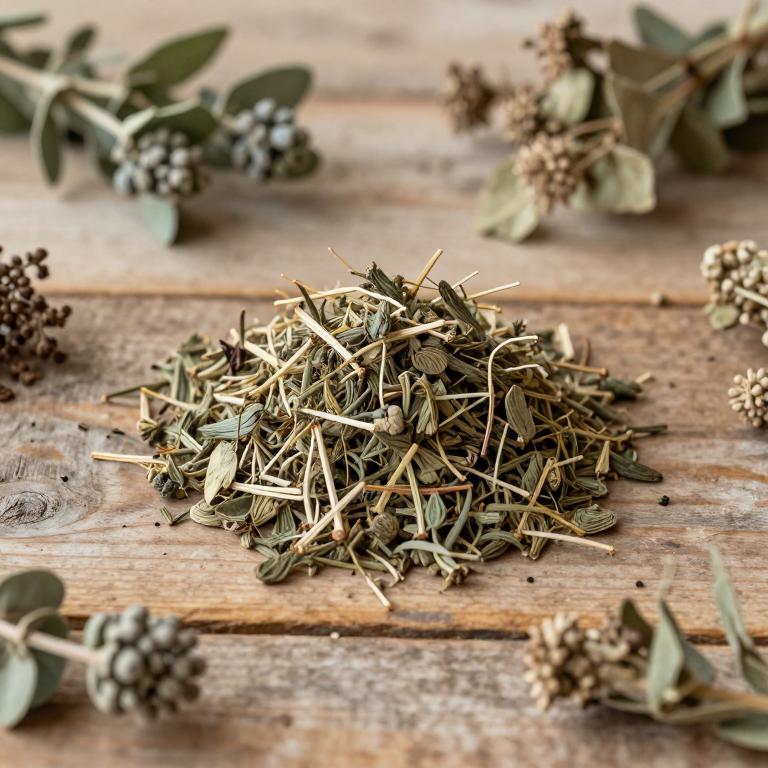
Names and Synonyms
Scientific Names
Accepted name
Sorocea bonplandiiDistribution
This plant exhibits a diverse geographical range across several key regions of South America. In Brazil, it can be found spanning across the West-Central, Northeast, Southeast, and South regions. Its presence extends beyond Brazilian borders into the northern reaches of the Southern South American continent. Specifically, it is documented within the Northeast region of Argentina. This wide distribution demonstrates the plant's ability to thrive in various environmental conditions throughout these specific territories.
| Region | Area |
|---|---|
| Brazil | Brazil West-Central |
| Brazil | Brazil Northeast |
| Brazil | Brazil Southeast |
| Brazil | Brazil South |
| Southern South America | Argentina Northeast |
| Southern South America | Paraguay |
Sources: The World Checklist of Vascular Plants (WCVP)
Botanical Identification
Ecology
The ecology of Sorocea bonplandii is characterized by its occurrence within the Bosque medio habitat, where it thrives in mid-altitude forest ecosystems. This species occupies a specific altitudinal gradient, ranging from sea level (0 m AMSL) up to a maximum elevation of 500 m AMSL. Within this lowland to sub-montane range, the plant is integrated into the structural complexity of the medium-altitude forest, adapting to the specific light, moisture, and soil conditions typical of these tropical or subtropical woodland environments.
- Elevational range max:
- 500 m AMSL
- Elevational range min:
- 0 m AMSL
- Habitat :
- Bosque medio
Life history
The life history of Sorocea bonplandii is characterized by a perennial lifecycle, allowing the plant to persist in its environment over many years. As a phanerophyte, its regenerative buds are located high above the ground on woody stems, a life form that is consistently identified through both its phanerophyte classification and its structural development. Furthermore, the plant exhibits an evergreen deciduousness, maintaining its foliage throughout the seasons rather than shedding it annually.
- Deciduousness :
- evergreen
- Life form :
- phanerophyte
- Lifecycle :
- perennial
Morphology
The morphology of Sorocea bonplandii is characterized by its woody structure and versatile growth forms, manifesting as both a tree and a shrub. This plant can reach a significant height, with a mean height of approximately 9 m and a maximum potential height of 10 m. It is classified as a terrestrial species, lacking aquatic or semi-aquatic adaptations, and it functions as a non-epiphytic, terrestrial organism. In terms of its climbing habit, it is a self-supporting species rather than a liana or obligate vine. Furthermore, Sorocea bonplandii is an independent organism, exhibiting no parasitic behavior toward other plants.
- Aquatic :
- terrestrial
- Climber :
- self-supporting
- Epiphyte :
- terrestrial
- Growth form :
- tree
- Growth form :
- shrub
- Parasite :
- independent
- Plant height max:
- 10 m
- Plant height mean:
- 9 m
- Woodiness :
- woody
Physiology
The physiology of Sorocea bonplandii is characterized by a C3 photosynthetic pathway, which dictates its carbon fixation process and metabolic efficiency under typical environmental conditions. In terms of nutrient acquisition and symbiotic relationships, the plant is not a nitrogen fixer, meaning it lacks the specialized biological mechanisms, such as root nodules containing nitrogen-fixing bacteria, required to convert atmospheric nitrogen into usable forms.
- Nitrogen fixer :
- no
- Photosynthetic pathway :
- C3
Reproduction
The reproduction of Sorocea bonplandii is characterized by the development of fleshy fruits that house its specialized seeds. The seeds produced by this species exhibit highly consistent morphological dimensions, maintaining a uniform seed length of 11 mm. In terms of physical capacity, the seed volume is constant at 470 mm³, a value that represents both the minimum and maximum recorded volume as well as the mean. This consistency extends to the seed mass, which remains stable at 0.6 g, serving as both the minimum and maximum mass along with the calculated mean. These specific reproductive traits ensure a standardized dispersal unit through the plant's fleshy fruit structure.
- Fruit dryness :
- fleshy
- Seed length mean:
- 11 mm
- Seed mass mean:
- 0.6 g
- Seed volume max:
- 470 mm³
Sources: Global Inventory of Floras and Traits (GIFT)
Chemicals
Sorocea bonplandii has 1 reported phytochemicals identified across 0 scientific publications and several other databases. The most consistently reported chemicals include betulinic acid.
| Chemical | Supporting sources | Consensus |
|---|---|---|
| betulinic acid | 1 supporting sources | ★☆☆☆☆ |
betulinic acid
- Dr. Duke
Activities
Sorocea bonplandii has 18 reported activities identified across 0 scientific publications and several other databases. The most consistently reported activities include Anthelmintic, AntiHIV, Antibacterial, Anticancer, Anticarcinomic.
| Activity | Supporting sources | Consensus |
|---|---|---|
| Anthelmintic | 1 supporting sources | ★☆☆☆☆ |
| AntiHIV | 1 supporting sources | ★☆☆☆☆ |
| Antibacterial | 1 supporting sources | ★☆☆☆☆ |
| Anticancer | 1 supporting sources | ★☆☆☆☆ |
| Anticarcinomic | 1 supporting sources | ★☆☆☆☆ |
| Antiedemic | 1 supporting sources | ★☆☆☆☆ |
| Antiinflammatory | 1 supporting sources | ★☆☆☆☆ |
| Antileukemic | 1 supporting sources | ★☆☆☆☆ |
| Antimalarial | 1 supporting sources | ★☆☆☆☆ |
| Antimelanomic | 1 supporting sources | ★☆☆☆☆ |
Anthelmintic
- Dr. Duke
AntiHIV
- Dr. Duke
Antibacterial
- Dr. Duke
Anticancer
- Dr. Duke
Anticarcinomic
- Dr. Duke
Antiedemic
- Dr. Duke
Antiinflammatory
- Dr. Duke
Antileukemic
- Dr. Duke
Antimalarial
- Dr. Duke
Antimelanomic
- Dr. Duke