northern mountain ash
Sorbus decora · Accepted scientific name
Scientific literature: Very Sparse (34 studies) · ★☆☆☆☆
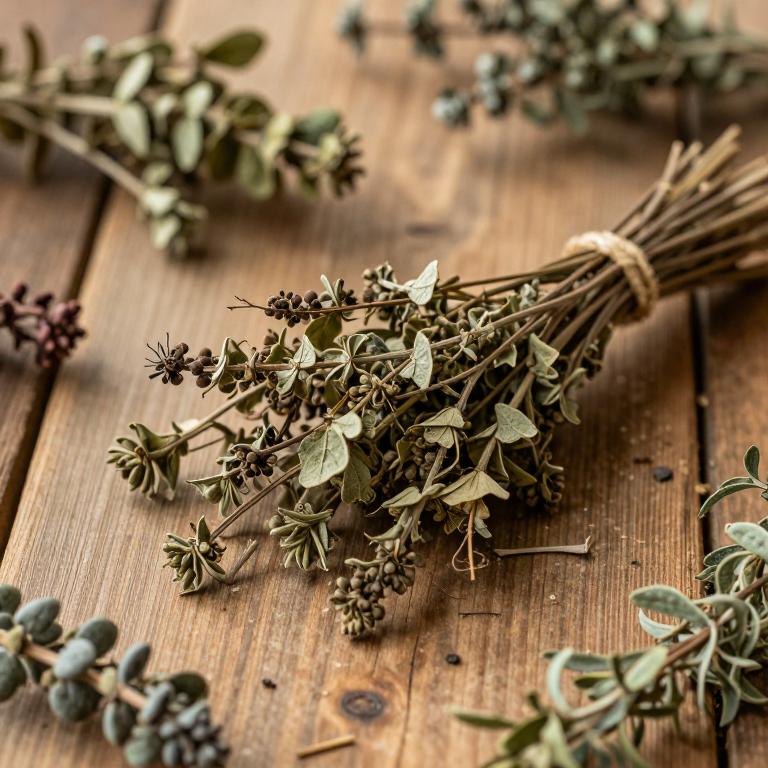
Northern mountain ash, scientifically known as Sorbus decora, is a resilient deciduous shrub native to the rugged terrains of North America. Renowned for its striking autumnal foliage and vibrant berries, it serves as a vital ecological component, providing nourishment for wildlife while offering significant ornamental and medicinal potential.
Names and Synonyms
Common Names
- dogberry
- northern mountain-ash
- showy mountain-ash
- Greenland Mountain-ash
- Showy Rowan
Scientific Names
Accepted name
Sorbus decoraSynonyms
- Pyrus decora
- Sorbus americana var. decora
- Sorbus groenlandica
- Sorbus americana var. groenlandica
- Sorbus subvestita
- Aucuparia subvestita
- Sorbus decora var. groenlandica
- Pyrus subvestita
- Pyrus americana var. decora
- Pyrus groenlandica
- Pyrus decora var. groenlandica
Regional and Traditional Names
French:
- sorbier de montagne
- sorbier décoratif
- sorbier plaisant
Sources: Wikidata, Catalogue of Life
Taxonomical Classification
This plant belongs to the kingdom Plantae and is classified under the phylum Streptophyta and the class Equisetopsida. Within the subclass Magnoliidae, it falls under the order Rosales and the family Rosaceae. Finally, its taxonomic identity is defined by the genus Sorbus.
| Rank | Classification |
|---|---|
| Kingdom | Plantae |
| Phylum | Streptophyta |
| Class | Equisetopsida |
| Subclass | Magnoliidae |
| Order | Rosales |
| Family | Rosaceae |
| Genus | Sorbus |
Sources: The World Checklist of Vascular Plants (WCVP)
Distribution
This plant exhibits a wide geographical distribution across several northern regions of North America. In the Subarctic American territories, it can be found throughout Greenland and Nunavut. Its presence extends into Western Canada, specifically within the provinces of Manitoba and Saskatchewan. Additionally, the species is documented in the Eastern Canadian region of Labrador. These diverse locations highlight the plant's ability to thrive in various subarctic environments.
| Region | Area |
|---|---|
| Subarctic America | Greenland |
| Subarctic America | Nunavut |
| Western Canada | Manitoba |
| Western Canada | Saskatchewan |
| Eastern Canada | Labrador |
| Eastern Canada | New Brunswick |
| Eastern Canada | Newfoundland |
| Eastern Canada | Nova Scotia |
| Eastern Canada | Ontario |
| Eastern Canada | Prince Edward I. |
Sources: The World Checklist of Vascular Plants (WCVP)
Botanical Identification
Life history
The life history of Sorbus decora is characterized by its nature as a perennial, meaning it lives for many years and undergoes multiple seasonal growth cycles to reach maturity. Its developmental trajectory begins with the germination of seeds, typically following a period of dormancy, leading to the establishment of a woody structure capable of sustained long-term survival. As a perennial species, it invests significant energy into developing a robust root system and permanent woody stems, allowing it to endure various environmental fluctuations and regrow each spring. Throughout its extended lifespan, the plant progresses through various reproductive stages, eventually producing flowers and fruits that facilitate the dispersal of seeds to ensure the continuation of subsequent generations.
- Lifecycle :
- perennial
Morphology
The morphology of Sorbus decora is characterized by its woody nature and diverse growth habits, manifesting as both a tree and a shrub. This species exhibits a significant stature, with a mean plant height of approximately 16.06 m. Regarding its structural support, the plant is categorized as self-supporting, rather than being an obligatory or facultative climber.
- Climber :
- self-supporting
- Growth form :
- tree
- Growth form :
- shrub
- Plant height mean:
- 16.06 m
- Woodiness :
- woody
Physiology
The physiology of Sorbus decora is characterized by a metabolic framework governed by the C3 photosynthetic pathway, a trait common among temperate woody perennials. In this process, carbon dioxide is initially fixed by the enzyme ribulose-1,5-bisphosphate carboxylase/oxygenase (RuBisCO) to form a three-carbon compound, 3-phosphoglycerate, during the Calvin cycle. This metabolic strategy allows the plant to efficiently utilize light energy and moisture in its specific ecological niche, though it makes the plant susceptible to photorespiration under conditions of high temperature or restricted stomatal conductance. The plant's physiological efficiency is closely tied to its ability to regulate gas exchange and transpiration, ensuring that the carbon assimilation required for growth and the production of secondary metabolites is balanced against water loss through the leaf epidermis.
- Photosynthetic pathway :
- C3
Reproduction
The reproduction of Sorbus decora is characterized by specific seed morphologies and specialized dispersal mechanisms. The plant produces seeds with a highly consistent mass, ranging from a minimum of 0.00357 g to a maximum of 0.0036 g, resulting in a calculated mean seed mass of approximately 0.0123516666666667 g. These seeds are primarily distributed via a zoochorous dispersal syndrome, relying on animals to facilitate their movement and spread within the environment.
- Dispersal syndrome :
- zoochorous
- Seed mass max:
- 0.0036 g
- Seed mass mean:
- 0.0123516666666667 g
- Seed mass min:
- 0.00357 g
Sources: Global Inventory of Floras and Traits (GIFT)
Plant Parts
Sorbus decora has 1 reported plant parts identified across 1 scientific publications and several other databases that are studied for medicinal purposes. The most consistently reported plant part include leaf.
| Plant part | Supporting sources | Consensus |
|---|---|---|
| Leaf | 1 supporting sources | ★☆☆☆☆ |
Leaf
- PeerJ
Chemicals
Sorbus decora has 5 reported phytochemicals identified across 1 scientific publications and several other databases. The most consistently reported chemicals include Betulin, 23-Hydroxybetulin, Uvaol, betulinic acid, glucose.
| Chemical | Supporting sources | Consensus |
|---|---|---|
| Betulin | 2 supporting sources | ★☆☆☆☆ |
| 23-Hydroxybetulin | 1 supporting sources | ★☆☆☆☆ |
| Uvaol | 1 supporting sources | ★☆☆☆☆ |
| betulinic acid | 1 supporting sources | ★☆☆☆☆ |
| glucose | 1 supporting sources | ★☆☆☆☆ |
Betulin
- Dr. Duke
- Planta medica
23-Hydroxybetulin
- Planta medica
Uvaol
- Planta medica
betulinic acid
- Planta medica
glucose
- Evidence-based complementary and alternative medicine : eCAM
Activities
Sorbus decora has 13 reported activities identified across 1 scientific publications and several other databases. The most consistently reported activities include Antidiabetic, AntiHIV, Anticarcinomic, Antifeedant, Antiflu.
| Activity | Supporting sources | Consensus |
|---|---|---|
| Antidiabetic | 2 supporting sources | ★☆☆☆☆ |
| AntiHIV | 1 supporting sources | ★☆☆☆☆ |
| Anticarcinomic | 1 supporting sources | ★☆☆☆☆ |
| Antifeedant | 1 supporting sources | ★☆☆☆☆ |
| Antiflu | 1 supporting sources | ★☆☆☆☆ |
| Antiinflammatory | 1 supporting sources | ★☆☆☆☆ |
| Antitumor | 1 supporting sources | ★☆☆☆☆ |
| Antiviral | 1 supporting sources | ★☆☆☆☆ |
| Aphidifuge | 1 supporting sources | ★☆☆☆☆ |
| Cytotoxic | 1 supporting sources | ★☆☆☆☆ |
Antidiabetic
- PeerJ
- Planta medica
AntiHIV
- Dr. Duke
Anticarcinomic
- Dr. Duke
Antifeedant
- Dr. Duke
Antiflu
- Dr. Duke
Antiinflammatory
- Dr. Duke
Antitumor
- Dr. Duke
Antiviral
- Dr. Duke
Aphidifuge
- Dr. Duke
Cytotoxic
- Dr. Duke
Conditions
Sorbus decora has 4 reported investigations on conditions identified across 1 scientific publications and several other databases. The most consistently reported conditions include antidiabetic, hyperglycemia, hyperinsulinemia, insulin resistance.
| Condition | Supporting sources | Consensus |
|---|---|---|
| Antidiabetic | 1 supporting sources | ★☆☆☆☆ |
| Hyperglycemia | 1 supporting sources | ★☆☆☆☆ |
| Hyperinsulinemia | 1 supporting sources | ★☆☆☆☆ |
| Insulin resistance | 1 supporting sources | ★☆☆☆☆ |
Antidiabetic
- PeerJ
Hyperglycemia
- Evidence-based complementary and alternative medicine : eCAM
Hyperinsulinemia
- Evidence-based complementary and alternative medicine : eCAM
Insulin resistance
- Evidence-based complementary and alternative medicine : eCAM
Preparations
Sorbus decora has 2 reported preparations identified across 1 scientific publications and several other databases. The most consistently reported preparations include ethanol extracts of the bark, ethanolic crude extract.
| Preparation | Supporting sources | Consensus |
|---|---|---|
| Ethanol extracts of the bark | 1 supporting sources | ★☆☆☆☆ |
| Ethanolic crude extract | 1 supporting sources | ★☆☆☆☆ |
Ethanol extracts of the bark
- Planta medica
Ethanolic crude extract
- Evidence-based complementary and alternative medicine : eCAM