Sophora alopecuroides var. alopecuroides
Sophora alopecuroides var. alopecuroides · Accepted scientific name
Scientific literature: Very Sparse (10 studies) · ★☆☆☆☆
, scientifically known as Sophora alopecuroides var. alopecuroides, is a significant medicinal plant within the Fabaceae family. Traditionally utilized in various herbal practices, this specific variety possesses unique bioactive properties. Research focuses on its potential therapeutic applications, particularly in addressing inflammatory conditions and supporting overall holistic wellness through nature.
- Family
- Fabaceae
- Native range
- Europe
- Parts used
- Seed
- Common names
- Not available
- Scientific synonyms
- Sophora Pallida · Sophora Orientalis · 1 more
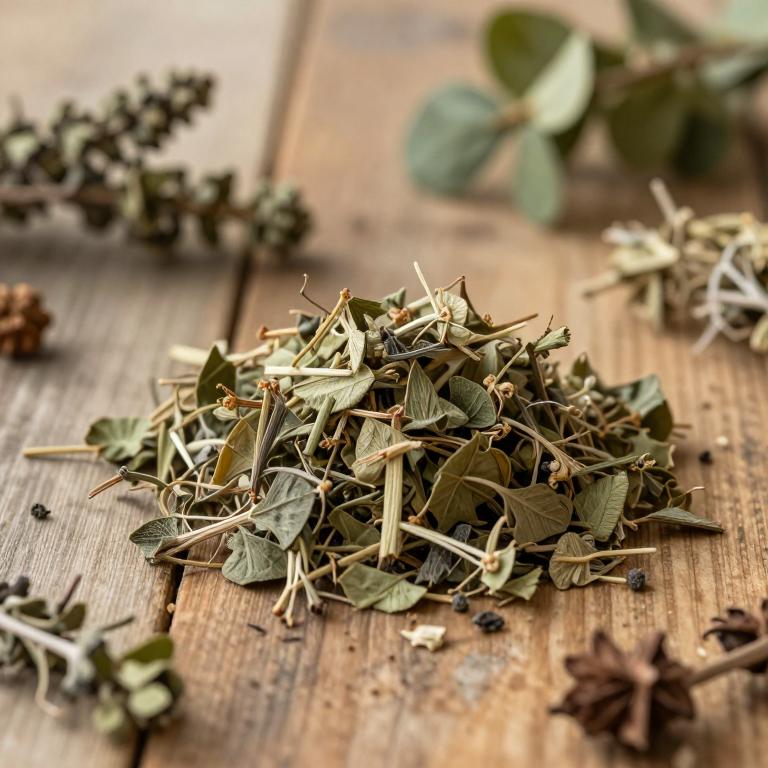
Names and Synonyms
Scientific Names
Accepted name
Sophora alopecuroides var. alopecuroidesSynonyms
- Sophora pallida
- Sophora orientalis
- Sophora albicans
Sources: Wikidata
Taxonomical Classification
This plant belongs to the kingdom Plantae within the phylum Streptophyta and is classified under the class Equisetopsida. As a member of the subclass Magnoliidae and the order Fabales, it is further categorized into the family Fabaceae. Specifically, it is identified by the genus Sophora and the variety alopecuroides.
| Rank | Classification |
|---|---|
| Kingdom | Plantae |
| Phylum | Streptophyta |
| Class | Equisetopsida |
| Subclass | Magnoliidae |
| Order | Fabales |
| Family | Fabaceae |
| Genus | Sophora |
Sources: The World Checklist of Vascular Plants (WCVP)
Distribution
This plant exhibits a diverse geographical distribution across several significant regions of Eurasia. In Eastern Europe, it can be found growing within the territories of Ukraine and the Crimean Peninsula. Its range also extends through the vast landscapes of both South European Russia and East European Russia. Furthermore, the species reaches into the Siberian region, specifically inhabiting the Altay area. Collectively, these locations define the natural habitat where this medicinal variety thrives.
| Region | Area |
|---|---|
| Eastern Europe | Krym |
| Eastern Europe | East European Russia |
| Eastern Europe | South European Russia |
| Eastern Europe | Ukraine |
| Siberia | Altay |
| Siberia | West Siberia |
| Central Asia | Kazakhstan |
| Central Asia | Kirgizstan |
| Central Asia | Turkmenistan |
| Central Asia | Tadzhikistan |
Sources: The World Checklist of Vascular Plants (WCVP)
Plant Parts
Sophora alopecuroides var. alopecuroides has 1 reported plant parts identified across 2 scientific publications and several other databases that are studied for medicinal purposes. The most consistently reported plant part include seed.
| Plant part | Supporting sources | Consensus |
|---|---|---|
| Seed | 2 supporting sources | ★☆☆☆☆ |
Seed
- Iranian journal of basic medical sciences
- Complementary therapies in clinical practice
Chemicals
Sophora alopecuroides var. alopecuroides has 7 reported phytochemicals identified across 2 scientific publications and several other databases. The most consistently reported chemicals include CYTISINE, Matrine, N-methyl-cytisine, Sophocarpine, Sophoramine.
| Chemical | Supporting sources | Consensus |
|---|---|---|
| CYTISINE | 1 supporting sources | ★☆☆☆☆ |
| Matrine | 1 supporting sources | ★☆☆☆☆ |
| N-methyl-cytisine | 1 supporting sources | ★☆☆☆☆ |
| Sophocarpine | 1 supporting sources | ★☆☆☆☆ |
| Sophoramine | 1 supporting sources | ★☆☆☆☆ |
| Sophoridine | 1 supporting sources | ★☆☆☆☆ |
| nicotine | 1 supporting sources | ★☆☆☆☆ |
CYTISINE
- Iranian journal of basic medical sciences
Matrine
- Iranian journal of basic medical sciences
N-methyl-cytisine
- Iranian journal of basic medical sciences
Sophocarpine
- Iranian journal of basic medical sciences
Sophoramine
- Iranian journal of basic medical sciences
Sophoridine
- Iranian journal of basic medical sciences
nicotine
- Iranian journal of basic medical sciences
Conditions
Sophora alopecuroides var. alopecuroides has 1 reported investigations on conditions identified across 2 scientific publications and several other databases. The most consistently reported conditions include diarrhea.
| Condition | Supporting sources | Consensus |
|---|---|---|
| Diarrhea | 1 supporting sources | ★☆☆☆☆ |
Diarrhea
- Iranian journal of basic medical sciences
Preparations
Sophora alopecuroides var. alopecuroides has 2 reported preparations identified across 2 scientific publications and several other databases. The most consistently reported preparations include extract capsules, standardized extract.
| Preparation | Supporting sources | Consensus |
|---|---|---|
| Extract capsules | 1 supporting sources | ★☆☆☆☆ |
| Standardized extract | 1 supporting sources | ★☆☆☆☆ |
Extract capsules
- Complementary therapies in clinical practice
Standardized extract
- Complementary therapies in clinical practice