Common Sow Thistle
Sonchus arvensis · Accepted scientific name
Scientific literature: Very Sparse (29 studies) · ★☆☆☆☆
Common Sow Thistle, scientifically known as Sonchus arvensis, is a versatile perennial herb belonging to the Asteraceae family. Often found in disturbed soils and meadows, this plant features distinctive milky sap and yellow composite flowers. Historically valued in traditional medicine, it possesses diuretic and anti-inflammatory properties used for digestive health.
- Family
- Asteraceae
- Native range
- Europe
- Parts used
- Leaf · Root
- Common names
- Corn Sow-Thistle · Field Sow-Thistle · 4 more
- Scientific synonyms
- Not available
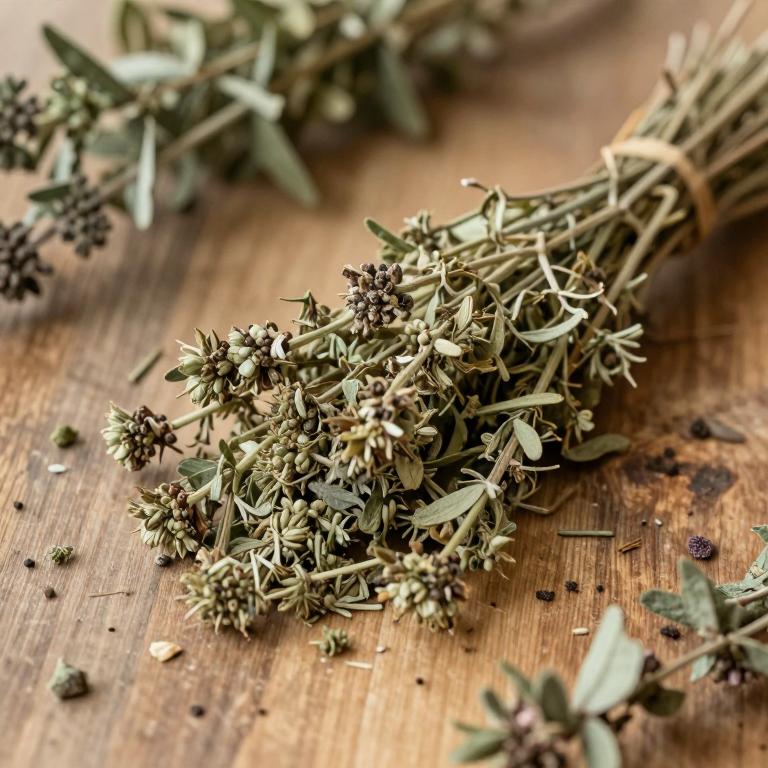
Names and Synonyms
Common Names
- corn sow-thistle
- field sow-thistle
- perennial sow-thistle
- corn sow thistle
- field sow thistle
- perennial sow thistle
Scientific Names
Accepted name
Sonchus arvensisRegional and Traditional Names
Spanish:
- Cardincha
German:
- Acker-Gänsedistel
- gewöhnliche Acker-Gänsedistel
- Acker-Gänsedistel
- Artengruppe Acker-Gänsedistel
- Acker-Gaensedistel
French:
- laiteron des champs
- laiteron des champs
Sources: Wikidata, Catalogue of Life
Taxonomical Classification
This plant belongs to the kingdom Plantae and is classified within the phylum Streptophyta and the class Equisetopsida. It is further organized under the subclass Magnoliidae and the order Asterales, falling into the family Asteraceae. Finally, it is identified by the genus Sonchus.
| Rank | Classification |
|---|---|
| Kingdom | Plantae |
| Phylum | Streptophyta |
| Class | Equisetopsida |
| Subclass | Magnoliidae |
| Order | Asterales |
| Family | Asteraceae |
| Genus | Sonchus |
Sources: The World Checklist of Vascular Plants (WCVP)
Distribution
This plant is widely distributed across several key regions of Northern Europe. In the Scandinavian area, its presence is documented in both Denmark and Finland. The species also extends its range to the remote Faroe Islands. Furthermore, it can be found throughout the territory of Great Britain. Finally, the plant is naturally established within the landscape of Ireland.
| Region | Area |
|---|---|
| Northern Europe | Denmark |
| Northern Europe | Finland |
| Northern Europe | Føroyar |
| Northern Europe | Great Britain |
| Northern Europe | Ireland |
| Northern Europe | Norway |
| Northern Europe | Sweden |
| Middle Europe | Austria |
| Middle Europe | Belgium |
| Middle Europe | Czechia-Slovakia |
Sources: The World Checklist of Vascular Plants (WCVP)
Botanical Identification
Ecology
The ecology of Sonchus arvensis is characterized by its broad adaptability to diverse topographical settings, ranging from sea level to significant altitudes. It is primarily categorized as a lowland species, though it demonstrates a remarkable vertical distribution capacity. The species can be found at elevations starting from 0 m AMSL, with a mean elevational range of approximately 1300 m AMSL, and it has been documented reaching a maximum elevation of up to 2300 m AMSL.
- Elevational range max:
- 2300 m AMSL
- Elevational range mean:
- 1300 m AMSL
- Elevational range min:
- 0 m AMSL
- Habitat :
- Lowland
Life history
The life history of Sonchus arvensis is characterized by a variable lifecycle that can manifest as an annual, biennial, or perennial organism, allowing it to adapt to diverse environmental conditions. As a hemicryptophyte, its perennating buds are located at or just below the soil surface, protected by leaf litter or soil during unfavorable periods. The plant exhibits a deciduous nature, shedding its foliage as part of its seasonal growth cycle. This combination of life forms and growth patterns enables the species to persist in various habitats through both seed production and vegetative survival.
- Deciduousness :
- deciduous
- Life form :
- hemicryptophyte
- Lifecycle :
- perennial
Morphology
The morphology of Sonchus arvensis is characterized by its growth form as a non-woody herb and forb. It is a self-supporting plant that does not exhibit climbing or parasitic behavior, functioning as an independent organism. The species is strictly terrestrial in its habitat, lacking aquatic or epiphytic tendencies. In terms of stature, the plant displays significant variability in height, with measurements ranging from a minimum of 0.06 m to a maximum of 1.5 m, maintaining an average plant height of approximately 0.8625 m.
- Aquatic :
- terrestrial
- Climber :
- self-supporting
- Epiphyte :
- terrestrial
- Growth form :
- herb
- Growth form :
- forb
- Parasite :
- independent
- Plant height max:
- 1.5 m
- Plant height mean:
- 0.8625 m
- Plant height min:
- 0.06 m
- Woodiness :
- non-woody
Physiology
The physiology of Sonchus arvensis is characterized by a C3 photosynthetic pathway, indicating a standard carbon fixation process typical of many temperate herbaceous species. As a non-carnivorous plant, it relies entirely on soil-based nutrient uptake rather than trapping prey. The foliage exhibits significant morphological variation, with leaf lengths reaching a maximum of 25 cm and a mean leaf width of 7 cm, which also represents both its minimum and maximum recorded width. These leaves maintain an average size of 121.92 cm², contributing to an average Specific Leaf Area (SLA) of 217 cm²/g, a metric that reflects the plant's leaf density and its strategy for optimizing light interception and gas exchange relative to its biomass.
- Carnivory :
- non-carnivorous
- Leaf length max:
- 25 cm
- Leaf size mean:
- 121.92 cm²
- Leaf width mean:
- 7 cm
- Photosynthetic pathway :
- C3
- Specific Leaf Area (SLA) mean:
- 217 cm²/g
Reproduction
The reproduction of Sonchus arvensis is characterized by a sexual process, as asexual reproduction is absent. The flowering period typically commences in June and extends through October. The plant utilizes biotic pollination syndromes, specifically relying on insects and bees to facilitate fertilization, although self-fertilization is also present. Following pollination, the plant produces dry, indehiscent fruits categorized as achenes. These fruits exhibit a mean length of 0.35 cm (ranging from 0.3 to 0.3 cm) and a mean width of 0.1 cm. The resulting seeds are quite small, with a mean mass of approximately 0.00067225 g (ranging from a minimum of 0.00035 g to a maximum of 0.00067 g) and a consistent seed volume of 0.43 mm³. Dispersal is achieved through an anemochorous syndrome, meaning the seeds are primarily dispersed by the wind.
- Dehiscence :
- indehiscent
- Dispersal syndrome :
- anemochorous
- Flowering time :
- Jun
- Flowering time :
- Oct
- Fruit dryness :
- dry
- Fruit length max:
- 0.3 cm
- Fruit length mean:
- 0.35 cm
- Fruit type :
- achene
- Fruit width mean:
- 0.1 cm
- Pollination syndrome :
- insect
- Pollination syndrome :
- bee
- Pollination syndrome :
- biotic
- Reproduction asexual :
- absent
- Seed mass max:
- 0.00067 g
- Seed mass mean:
- 0.00067225 g
- Seed mass min:
- 0.00035 g
- Seed volume max:
- 0.43 mm³
- Self fertilization :
- present
Sources: Global Inventory of Floras and Traits (GIFT)
Plant Parts
Sonchus arvensis has 3 reported plant parts identified across 4 scientific publications and several other databases that are studied for medicinal purposes. The most consistently reported plant part include leaf, root, stem.
| Plant part | Supporting sources | Consensus |
|---|---|---|
| Leaf | 2 supporting sources | ★☆☆☆☆ |
| Root | 1 supporting sources | ★☆☆☆☆ |
| Stem | 1 supporting sources | ★☆☆☆☆ |
Leaf
- Chemistry & biodiversity
- Heliyon
Root
- Chemistry & biodiversity
Stem
- Chemistry & biodiversity
Chemicals
Sonchus arvensis has 10 reported phytochemicals identified across 4 scientific publications and several other databases. The most consistently reported chemicals include 2,4-dichlorophenoxyacetic acid, Antioxidants, CHLOROGENIC ACID, Chicoric acid, Indole-3-butyric acid.
| Chemical | Supporting sources | Consensus |
|---|---|---|
| 2,4-dichlorophenoxyacetic acid | 1 supporting sources | ★☆☆☆☆ |
| Antioxidants | 1 supporting sources | ★☆☆☆☆ |
| CHLOROGENIC ACID | 1 supporting sources | ★☆☆☆☆ |
| Chicoric acid | 1 supporting sources | ★☆☆☆☆ |
| Indole-3-butyric acid | 1 supporting sources | ★☆☆☆☆ |
| apigenin | 1 supporting sources | ★☆☆☆☆ |
| benzyl amino purine | 1 supporting sources | ★☆☆☆☆ |
| caffeic acid | 1 supporting sources | ★☆☆☆☆ |
| naphthalene acetic acid | 1 supporting sources | ★☆☆☆☆ |
| sucrose | 1 supporting sources | ★☆☆☆☆ |
2,4-dichlorophenoxyacetic acid
- African journal of infectious diseases
Antioxidants
- Heliyon
CHLOROGENIC ACID
- Heliyon
Chicoric acid
- Heliyon
Indole-3-butyric acid
- African journal of infectious diseases
apigenin
- Heliyon
benzyl amino purine
- African journal of infectious diseases
caffeic acid
- Heliyon
naphthalene acetic acid
- African journal of infectious diseases
sucrose
- African journal of infectious diseases
Conditions
Sonchus arvensis has 5 reported investigations on conditions identified across 4 scientific publications and several other databases. The most consistently reported conditions include Malaria, Plasmodium falciparum, antimalarial, malaria, ulcerative colitis.
| Condition | Supporting sources | Consensus |
|---|---|---|
| Malaria | 1 supporting sources | ★☆☆☆☆ |
| Plasmodium falciparum | 1 supporting sources | ★☆☆☆☆ |
| Antimalarial | 1 supporting sources | ★☆☆☆☆ |
| Malaria | 1 supporting sources | ★☆☆☆☆ |
| Ulcerative colitis | 1 supporting sources | ★☆☆☆☆ |
Malaria
- African journal of infectious diseases
Plasmodium falciparum
- PloS one
Antimalarial
- African journal of infectious diseases
Malaria
- PloS one
Ulcerative colitis
- Heliyon