Anise Goldenrod
Solidago chilensis · Accepted scientific name
Scientific literature: Very Sparse (18 studies) · ★☆☆☆☆
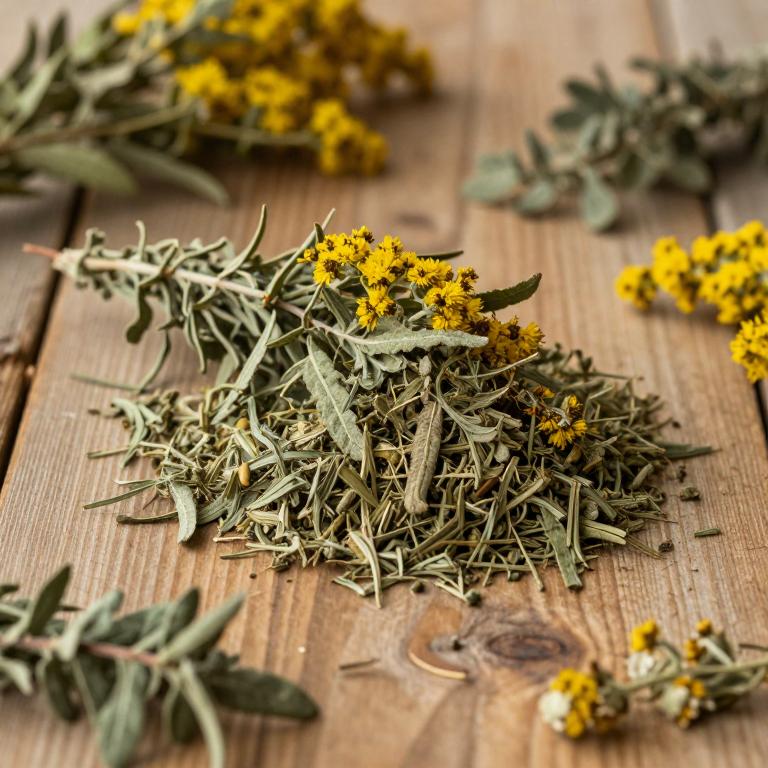
Anise Goldenrod, scientifically known as Solidago chilensis, is a versatile perennial native to South America. Renowned for its vibrant yellow blooms, this medicinal herb is traditionally utilized for its anti-inflammatory and diuretic properties. It serves as a valuable botanical resource in supporting renal health and soothing various systemic inflammations.
- Family
- Asteraceae
- Native range
- Europe
- Parts used
- Leaf · Rhizome
- Common names
- Anise Goldenrod
- Scientific synonyms
- Solidago Linearifolia Var. Brachypoda · Solidago Marginella Var. Sublanceolata · 10 more
Names and Synonyms
Common Names
- Anise Goldenrod
Scientific Names
Accepted name
Solidago chilensisSynonyms
- Solidago linearifolia var. brachypoda
- Solidago marginella var. sublanceolata
- Solidago linearifolia var. poeppigii
- Solidago microglossa var. ramosa
- Solidago repens
- Solidago bonariensis
- Solidago coquimbana
- Solidago linearifolia
- Solidago chilensis var. chilensis
- Solidago marginella
- Solidago microglossa var. linearifolia
- Solidago nitidula
Regional and Traditional Names
Spanish:
- Vara dorada
Sources: Wikidata, Catalogue of Life
Taxonomical Classification
This plant belongs to the kingdom Plantae and the phylum Streptophyta, falling under the class Equisetopsida and subclass Magnoliidae. Within the order Asterales, it is classified under the family Asteraceae. Specifically, it is identified by the genus Solidago, with its species name being chilensis.
| Rank | Classification |
|---|---|
| Kingdom | Plantae |
| Phylum | Streptophyta |
| Class | Equisetopsida |
| Subclass | Magnoliidae |
| Order | Asterales |
| Family | Asteraceae |
| Genus | Solidago |
Sources: The World Checklist of Vascular Plants (WCVP)
Distribution
This plant exhibits a widespread and diverse geographical distribution across several continents. In Europe, its presence is noted within the borders of Spain. It also inhabits the Macaronesian islands, specifically found in the Azores and Madeira. Moving toward the Americas, the species can be located in the Caribbean region of Puerto Rico. Finally, its range extends to Western South America, where it is found in Bolivia.
| Region | Area |
|---|---|
| Southwestern Europe | Spain |
| Macaronesia | Azores |
| Macaronesia | Madeira |
| Caribbean | Puerto Rico |
| Western South America | Bolivia |
| Western South America | Colombia |
| Western South America | Peru |
| Brazil | Brazil West-Central |
| Brazil | Brazil Northeast |
| Brazil | Brazil Southeast |
Sources: The World Checklist of Vascular Plants (WCVP)
Botanical Identification
Ecology
The ecology of Solidago chilensis is characterized by its remarkable adaptability to a diverse range of environmental conditions and varied landscapes. It inhabits a broad spectrum of ecosystems, including anthropic areas, high-altitude fields (Campo de Altitude), rocky fields (Campo Rupestre), and coastal Restinga environments. Furthermore, it is found within various forest types, such as riparian or gallery forests (Floresta Ciliar ou Galeria), semi-deciduous seasonal forests (Floresta Estacional Semidecidual), ombrophilous forests (Floresta Ombrófila, including both pluvial and mixed types), and diverse tropical forest structures. This species exhibits a wide vertical distribution, thriving at elevations ranging from sea level (0 m AMSL) up to a maximum altitude of 2500 m AMSL.
- Elevational range max:
- 2500 m AMSL
- Elevational range min:
- 0 m AMSL
- Habitat :
- Área Antrópica, Campo de Altitude, Campo Rupestre, Floresta Ciliar ou Galeria, Floresta Estacional Semidecidual, Floresta Ombrófila (= Floresta Pluvial), Floresta Ombrófila Mista, Restinga
Life history
The life history of Solidago chilensis is characterized by its classification as a perennial plant, allowing it to persist through multiple growing seasons rather than completing its cycle in a single year. Structurally, it functions as a cryptophyte, a life form where the regenerative buds are protected below the soil surface during unfavorable conditions. Within this category, it specifically exhibits the traits of a geophyte, relying on underground storage organs to survive environmental stressors and facilitate regrowth.
- Life form :
- geophyte
- Life form :
- cryptophyte
- Lifecycle :
- perennial
Morphology
The morphology of Solidago chilensis is characterized by a growth form as a non-woody herb, functioning as a self-supporting plant that does not exhibit climbing behavior. As a terrestrial species, it lacks aquatic or semiaquatic tendencies and does not function as an epiphyte, maintaining a strictly terrestrial existence. The plant is an independent organism, meaning it does not act as a parasite, and its physical structure is entirely non-woody, typical of many herbaceous forbs in its genus.
- Aquatic :
- terrestrial
- Climber :
- self-supporting
- Epiphyte :
- terrestrial
- Growth form :
- herb
- Parasite :
- independent
- Woodiness :
- non-woody
Physiology
The physiology of Solidago chilensis is fundamentally characterized by its utilization of the C3 photosynthetic pathway, a mechanism in which carbon dioxide is fixed directly into a three-carbon compound during the initial stages of the Calvin cycle. This metabolic process dictates the plant's resource management, particularly regarding its transpiration rates and water-use efficiency, as it relies on the opening of stomata to facilitate gas exchange, which simultaneously leads to water loss. The plant's energy production and carbon assimilation are tightly linked to its environmental adaptations, where the C3 pathway allows for efficient growth under moderate temperatures and sufficient moisture availability. Furthermore, its physiological processes are integrated with typical Asteraceae metabolic profiles, involving complex hormonal signaling and nutrient uptake mechanisms that support its structural development and secondary metabolite synthesis.
- Photosynthetic pathway :
- C3
Sources: Global Inventory of Floras and Traits (GIFT)
Plant Parts
Solidago chilensis has 3 reported plant parts identified across 4 scientific publications and several other databases that are studied for medicinal purposes. The most consistently reported plant part include leaf, rhizome, root.
| Plant part | Supporting sources | Consensus |
|---|---|---|
| Leaf | 2 supporting sources | ★☆☆☆☆ |
| Rhizome | 1 supporting sources | ★☆☆☆☆ |
| Root | 1 supporting sources | ★☆☆☆☆ |
Leaf
- Naunyn-Schmiedeberg's archives of pharmacology
- Journal of ethnopharmacology
Rhizome
- Oxidative medicine and cellular longevity
Root
- Journal of ethnopharmacology
Chemicals
Solidago chilensis has 4 reported phytochemicals identified across 4 scientific publications and several other databases. The most consistently reported chemicals include Afzelin, CHLOROGENIC ACID, Flavonoids, quercitrin.
| Chemical | Supporting sources | Consensus |
|---|---|---|
| Afzelin | 1 supporting sources | ★☆☆☆☆ |
| CHLOROGENIC ACID | 1 supporting sources | ★☆☆☆☆ |
| Flavonoids | 1 supporting sources | ★☆☆☆☆ |
| quercitrin | 1 supporting sources | ★☆☆☆☆ |
Afzelin
- Naunyn-Schmiedeberg's archives of pharmacology
CHLOROGENIC ACID
- Oxidative medicine and cellular longevity
Flavonoids
- Oxidative medicine and cellular longevity
quercitrin
- Naunyn-Schmiedeberg's archives of pharmacology
Activities
Solidago chilensis has 1 reported activities identified across 4 scientific publications and several other databases. The most consistently reported activities include Antinociceptive.
| Activity | Supporting sources | Consensus |
|---|---|---|
| Antinociceptive | 1 supporting sources | ★☆☆☆☆ |
Antinociceptive
- BMC complementary and alternative medicine
Conditions
Solidago chilensis has 6 reported investigations on conditions identified across 4 scientific publications and several other databases. The most consistently reported conditions include pain, cancer, edema, flexibility, nociception.
| Condition | Supporting sources | Consensus |
|---|---|---|
| Pain | 2 supporting sources | ★☆☆☆☆ |
| Cancer | 1 supporting sources | ★☆☆☆☆ |
| Edema | 1 supporting sources | ★☆☆☆☆ |
| Flexibility | 1 supporting sources | ★☆☆☆☆ |
| Nociception | 1 supporting sources | ★☆☆☆☆ |
| Pleurisy | 1 supporting sources | ★☆☆☆☆ |
Pain
- Spine
- BMC complementary and alternative medicine
Cancer
- Cancers
Edema
- Oxidative medicine and cellular longevity
Flexibility
- The Cochrane database of systematic reviews
Nociception
- BMC complementary and alternative medicine
Pleurisy
- Oxidative medicine and cellular longevity
Preparations
Solidago chilensis has 13 reported preparations identified across 4 scientific publications and several other databases. The most consistently reported preparations include Essential oils, acetal fraction, aqueous fraction, butanolic fraction, crude extract.
| Preparation | Supporting sources | Consensus |
|---|---|---|
| Essential oils | 1 supporting sources | ★☆☆☆☆ |
| Acetal fraction | 1 supporting sources | ★☆☆☆☆ |
| Aqueous fraction | 1 supporting sources | ★☆☆☆☆ |
| Butanolic fraction | 1 supporting sources | ★☆☆☆☆ |
| Crude extract | 1 supporting sources | ★☆☆☆☆ |
| Dichloromethane fraction | 1 supporting sources | ★☆☆☆☆ |
| Hexane fraction | 1 supporting sources | ★☆☆☆☆ |
| Hydroalcoholic extract | 1 supporting sources | ★☆☆☆☆ |
| Inflorescence crude extract | 1 supporting sources | ★☆☆☆☆ |
| Inflorescences | 1 supporting sources | ★☆☆☆☆ |
Essential oils
- Journal of ethnopharmacology
Acetal fraction
- Oxidative medicine and cellular longevity
Aqueous fraction
- Oxidative medicine and cellular longevity
Butanolic fraction
- Oxidative medicine and cellular longevity
Crude extract
- Oxidative medicine and cellular longevity
Dichloromethane fraction
- Oxidative medicine and cellular longevity
Hexane fraction
- Oxidative medicine and cellular longevity
Hydroalcoholic extract
- BMC complementary and alternative medicine
Inflorescence crude extract
- Oxidative medicine and cellular longevity
Inflorescences
- Oxidative medicine and cellular longevity