Solidago altissima
Solidago altissima · Accepted scientific name
Scientific literature: Very Sparse (1 studies) · ★☆☆☆☆
Solidago altissima, commonly known as goldenrod, is a versatile plant that has garnered significant scientific interest for its diverse biological properties. Recent research has highlighted its potent antifungal activities, which can be effectively harnessed through specific preparations such as essential oils. A key component driving these medicinal benefits is the chemical cis-Dehydromatricaria ester. This compound is being closely studied for its potential role in addressing complex health conditions, including the management of a tumor. Consequently, this plant represents a promising subject for ongoing pharmacological investigations.
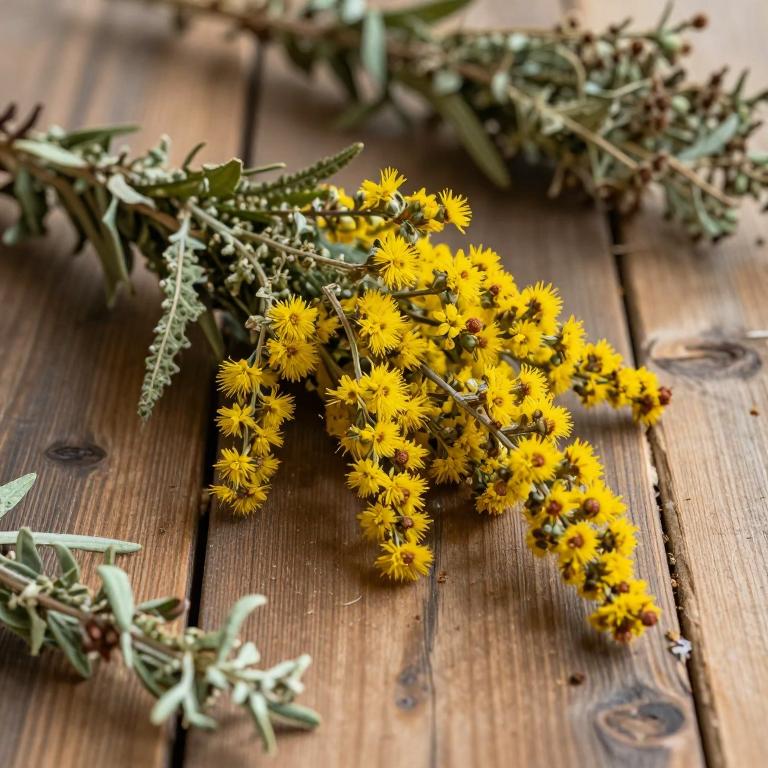
- Synonyms
- Solidago Canadensis Subsp. Altissima
- Common names
- Not available
- Family
- Asteraceae
- Distribution
- Not available
- Plant Parts
- Not available
Classification
Common Names
Solidago altissima is a versatile plant known by several distinct names across different languages and regions. In English-speaking areas, it is most commonly referred to as late goldenrod. German speakers recognize this species as Hohe Goldrute, highlighting its stature. It also carries the Swedish name jättegullris and the French designation solidage très haute. These varied common names reflect the widespread presence and cultural recognition of this golden wildflower.
Sources: Catalogue of Life (COL)
Synonyms
Solidago altissima is a widespread perennial herb commonly recognized as the tall goldenrod. In various botanical classifications, this species is also identified by the synonym Solidago canadensis subsp. altissima. This taxonomic relationship highlights the complex ways botanists categorize subspecies within the larger goldenrod family. Understanding these naming variations is essential for researchers tracking the plant's diverse distribution. Consequently, recognizing both names ensures accuracy when discussing the plant's ecological role and genetic identity.
Sources: The World Checklist of Vascular Plants (WCVP)
Taxonomy
Solidago altissima is a fascinating member of the kingdom Plantae that showcases the diverse complexity of the natural world. As a representative of the class Equisetopsida, this species follows a specific biological lineage that defines its structural characteristics. It belongs to the order Asterales, a group known for its distinct floral arrangements and evolutionary history. Within this order, it is further classified into the expansive family Asteraceae, which contains many of the world's most recognizable flowering plants. Ultimately, its identity is rooted in the genus Solidago, marking its unique place within the botanical landscape.
| Rank | Classification |
|---|---|
| Kingdom | Plantae |
| Phylum | Streptophyta |
| Class | Equisetopsida |
| Subclass | Magnoliidae |
| Order | Asterales |
| Family | Asteraceae |
| Genus | Solidago |
Sources: The World Checklist of Vascular Plants (WCVP)
Distribution
Geographic Regions
Solidago altissima exhibits a widespread distribution across the Asia-Temperate region, stretching through diverse ecological landscapes. Its presence is notably established in the Caucasus and Transcaucasus, marking its reach into western Asian territories. Moving eastward, the species is firmly rooted in China, particularly throughout the Southeast. The plant also flourishes across Eastern Asia, with significant populations documented in Japan, Korea, and Taiwan. This broad geographic range highlights the remarkable adaptability of the species across various Asian climates.
Sources: The World Checklist of Vascular Plants (WCVP)
Identification
Morphology
Solidago altissima is a self-supporting herb that grows with a sturdy and upright structure. This plant typically reaches a maximum height of 2 meters as it develops throughout its growing season. Its resilient growth form allows it to thrive effectively within its natural habitat.
Sources: Global Inventory of Floras and Traits (GIFT)
Biological Activities
Solidago altissima is among the various native Asteraceae species investigated for their traditional medicinal properties in North America. Researchers collected aerial parts of this plant from wild-growing populations in northern Alabama to study their chemical profiles. Through the process of hydrodistillation, the essential oils were extracted and analyzed using gas chromatography-mass spectrometry. These oils were specifically tested to evaluate their in-vitro antifungal activity against several common pathogens. The study confirms that Solidago altissima possesses notable antifungal potential, contributing to our understanding of Native American ethnobotanical legacies.
Compounds
Solidago altissima, a plant commonly known as a naturalized weed, has been identified as a source of the compound cis-dehydromatricaria ester. Researchers isolated this specific substance and confirmed its identity through infrared, proton, and carbon-13 nuclear magnetic resonance spectroscopy, as well as mass spectrometry. Once isolated, the ester demonstrated significant biological activity in laboratory settings. Specifically, the compound was found to exert an inhibitory effect on the growth of various mammalian cells. Interestingly, these findings indicate that cis-dehydromatricaria ester can suppress both tumor cells and normal healthy cells.
Conditions
Solidago altissima contains cis-dehydromatricaria ester, a compound that exerts an inhibitory effect on cellular growth. This specific substance has been shown to treat tumor cells by preventing their proliferation. Additionally, the extract demonstrates the ability to treat normal mammalian cells through similar inhibitory mechanisms. The research identifies this naturalized weed as a source for these potent biological activities. Consequently, the plant's components impact both cancerous and healthy cell lines.
Preparations
Solidago altissima was one of several Asteraceae species collected from wild-growing plants in north Alabama for scientific study. The aerial parts of this specific plant were subjected to a hydrodistillation process to extract its volatile components. Through this method, Solidago altissima is prepared as essential oils for further chemical analysis. Researchers utilized gas chromatography-mass spectrometry to determine the exact chemical compositions of these resulting oils. These extracted essential oils were then evaluated for their specific in-vitro antifungal activities against various pathogens.