Hairy nightshade
Solanum villosum · Accepted scientific name
Scientific literature: Very Sparse (10 studies) · ★☆☆☆☆
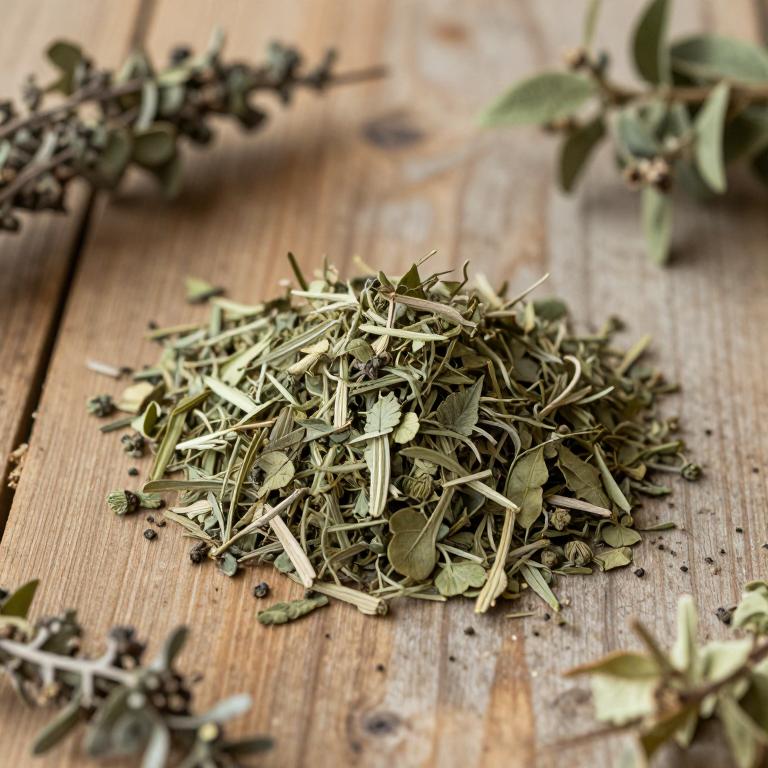
Hairy nightshade, scientifically known as Solanum villosum, is a versatile medicinal plant native to tropical regions. Belonging to the Solanaceae family, it is valued in traditional medicine for its bioactive compounds. Often used to treat inflammation and skin ailments, this resilient shrub offers significant potential for pharmacological research.
Names and Synonyms
Common Names
- Red Nightshade
- red-fruit nightshade
- woolly nightshade
Scientific Names
Accepted name
Solanum villosumSynonyms
- Witheringia rubra
- Solanum nigrum var. ochroleucum
- Solanum luteum subsp. alatum
- Solanum villosum var. alatum
- Solanum nigrum subsp. alatum
- Solanum villosum var. miniatum
- Solanum nigrum var. miniatum
- Solanum villosum subsp. miniatum
- Solanum villosum subvar. miniatum
- Solanum luteum subsp. villosum
- Solanum morella subsp. luteum
- Solanum miniatum var. glabriusculum
- Solanum nigrum aegyptiacum
- Solanum nigrum f. angulosum
- Solanum rubrum
- Solanum suffruticosum
- Solanum sinaicum
- Solanum purpureilineatum
- Solanum woronowii
- Solanum transcaucasicum
- Solanum nilagiricum
- Solanum nigrum var. suffruticosum
- Solanum carmanicum
- Solanum villosum subsp. ochroleucum
- Solanum luteum var. procerum
- Solanum luteum f. miniatibaccatum
- Solanum luteum var. miniatibaccatum
- Solanum nigrum proles alatum
- Solanum nigrum proles ochroleucum
- Solanum nigrum subsp. ochroleucum
- Solanum olgae
- Solanum villosum var. velutinum
- Solanum nigrum var. villosum
- Solanum villosum var. laevigatum
- Solanum miniatum
- Solanum morella var. flavum
- Solanum nigrum var. sancti-marini
- Solanum pseudovillosum
- Solanum aegyptiacum
- Solanum nigrum subsp. villosum
- Solanum flavum
- Solanum flavum humile
- Solanum minutiflorum
- Solanum kitaibelii
- Solanum nigrum subsp. luteovirescens
- Solanum nigrum subsp. luteum
- Solanum nigrum var. rubrum
- Solanum luteum
- Solanum luteovirescens
- Solanum villosum f. miniatum
- Solanum nigrum subvar. ochroleucum
- Solanum ochroleucum
- Solanum hildebrandtii
- Solanum patens
- Solanum nigrum subsp. miniatum
- Solanum plebeium
- Solanum nigrum subsp. humile
- Solanum nigrum f. humile
- Solanum incertum
- Solanum villosum subsp. alatum
- Solanum ochroleucum var. flavum
- Solanum zelenetzkii
- Solanum miniatum var. stenopetalum
- Solanum cerinum
- Solanum miniatum var. villosissimum
- Solanum miniatum var. subserratum
- Solanum plebeium var. brachysepalum
- Solanum plebeium var. subtile
- Solanum nigrum var. alatum
- Solanum nigrum var. aurantium
- Solanum villosum var. miniatibaccatum
- Solanum luteum var. calvum
Regional and Traditional Names
German:
- Gelbfrüchtiger Nachtschatten
- gelber Nachtschatten
- rotfrüchtiger Nachtschatten
- Gelbfrüchtiger Nachtschatten
French:
- Morelle jaune
Sources: Wikidata, Catalogue of Life
Taxonomical Classification
This plant belongs to the kingdom Plantae and is classified under the phylum Streptophyta and class Equisetopsida. Within the subclass Magnoliidae, it is organized under the order Solanales and the family Solanaceae. Finally, it is identified by its genus, Solanum, and its specific species name, Solanum villosum.
| Rank | Classification |
|---|---|
| Kingdom | Plantae |
| Phylum | Streptophyta |
| Class | Equisetopsida |
| Subclass | Magnoliidae |
| Order | Solanales |
| Family | Solanaceae |
| Genus | Solanum |
Sources: The World Checklist of Vascular Plants (WCVP)
Distribution
This plant exhibits a specific distribution across several regions of the European continent. In Northern Europe, its presence is documented in Denmark and Great Britain. It can also be found growing within the territories of Ireland and Sweden. Moving toward Middle Europe, the species is recognized in Austria. Together, these locations define the known geographical range of Solanum villosum.
| Region | Area |
|---|---|
| Northern Europe | Denmark |
| Northern Europe | Great Britain |
| Northern Europe | Ireland |
| Northern Europe | Sweden |
| Middle Europe | Austria |
| Middle Europe | Belgium |
| Middle Europe | Czechia-Slovakia |
| Middle Europe | Germany |
| Middle Europe | Hungary |
| Middle Europe | Netherlands |
Sources: The World Checklist of Vascular Plants (WCVP)
Botanical Identification
Ecology
The ecology of Solanum villosum is characterized by its remarkable adaptability to diverse environmental conditions and a wide vertical distribution. It thrives across a broad elevational gradient, ranging from sea level (0 m AMSL) up to a maximum altitude of 2440 m AMSL. This wide range allows the species to occupy various ecological niches, ranging from coastal environments to high-altitude terrains. Specifically, its primary habitats include roadsides, stony places, and coastal areas near the sea, where it can establish itself in disturbed or rocky substrates.
- Elevational range max:
- 2440 m AMSL
- Elevational range min:
- 0 m AMSL
- Habitat :
- roadsides, sea, stony places
Life history
The life history of Solanum villosum is characterized by an annual lifecycle, meaning the plant completes its entire biological progression from germination to seed production within a single growing season. As a therophyte, it follows a specific survival strategy where the plant dies down at the end of the season, leaving only seeds to persist through unfavorable conditions. This life form is consistent across its developmental stages, as it functions as a therophyte, relying on these dormant seeds to ensure the continuation of the species before the next seasonal cycle begins.
- Life form :
- therophyte
- Lifecycle :
- annual
Morphology
The morphology of Solanum villosum is characterized by its growth form as a non-woody herb and forb. It is a terrestrial plant that functions as an independent organism rather than a parasite or epiphyte. In terms of its physical structure, the plant is self-supporting rather than acting as a liana or vine. Its stature is relatively modest, with a plant height that ranges from a minimum of 0.1 m to a maximum of 1.2 m, maintaining an average height of approximately 0.275 m.
- Aquatic :
- terrestrial
- Climber :
- self-supporting
- Epiphyte :
- terrestrial
- Growth form :
- herb
- Growth form :
- forb
- Parasite :
- independent
- Plant height max:
- 1.2 m
- Plant height mean:
- 0.275 m
- Plant height min:
- 0.1 m
- Woodiness :
- non-woody
Physiology
The physiology of Solanum villosum is characterized by a C3 photosynthetic pathway, indicating its reliance on the standard Calvin cycle for carbon fixation. Its vegetative structure features an alternate leaf arrangement, with leaves exhibiting an ovate form. Morphologically, the leaves vary in dimensions, reaching a maximum length of 9 cm, while maintaining a mean width of 5 cm and a mean width maximum of 3 cm. The average surface area of the leaves is recorded at a mean of 4.475 cm². Furthermore, the plant possesses a mean Specific Leaf Area (SLA) of 175.4 cm²/g, which reflects its leaf mass per area dynamics. In terms of nutrient acquisition, Solanum villosum does not function as a nitrogen fixer.
- Leaf arrangement :
- alternate
- Leaf form :
- ovate
- Leaf length max:
- 9 cm
- Leaf size mean:
- 4.475 cm²
- Leaf width max:
- 3 cm
- Leaf width mean:
- 5 cm
- Nitrogen fixer :
- no
- Photosynthetic pathway :
- C3
- Specific Leaf Area (SLA) mean:
- 175.4 cm²/g
Reproduction
The reproduction of Solanum villosum is characterized by a flowering period that typically begins in January and concludes in October, though the timing can be variable. The plant produces white flowers that are subject to biotic pollination, specifically utilizing an insect pollination syndrome. Self-fertilization is present within the species, ensuring reproductive success. Following fertilization, the plant develops fleshy, indehiscent fruits categorized as berries. These orange-colored fruits typically measure approximately 0.8 cm in mean length and 0.8 cm in mean width, with dimensions ranging from a minimum width of 0.7 cm to a maximum width of 1 cm. The dispersal of the species follows a zoochorous pattern, specifically through endozoochory, where seeds are dispersed via the digestive tracts of animals. The seeds themselves are relatively small, with a mean mass of 0.000735 g (ranging from 0.00068 g to 0.00079 g), a consistent width of 2 mm, and a mean volume of 1.9 mm³.
- Dehiscence :
- indehiscent
- Dispersal syndrome :
- zoochorous
- Dispersal syndrome :
- endozoochorous
- Flower colour :
- white
- Flowering time :
- Jan
- Flowering time :
- Oct
- Fruit colour :
- orange
- Fruit dryness :
- fleshy
- Fruit length mean:
- 0.8 cm
- Fruit type :
- berry
- Fruit width max:
- 1 cm
- Fruit width mean:
- 0.8 cm
- Fruit width min:
- 0.7 cm
- Pollination syndrome :
- insect
- Pollination syndrome :
- biotic
- Seed mass max:
- 0.00079 g
- Seed mass mean:
- 0.000735 g
- Seed mass min:
- 0.00068 g
- Seed volume max:
- 1.9 mm³
- Seed width mean:
- 2 mm
- Self fertilization :
- present
Sources: Global Inventory of Floras and Traits (GIFT)
Plant Parts
Solanum villosum has 2 reported plant parts identified across 3 scientific publications and several other databases that are studied for medicinal purposes. The most consistently reported plant part include fruit, leaf.
| Plant part | Supporting sources | Consensus |
|---|---|---|
| Fruit | 2 supporting sources | ★☆☆☆☆ |
| Leaf | 1 supporting sources | ★☆☆☆☆ |
Fruit
- BMC complementary and alternative medicine
- Pakistan journal of biological sciences : PJBS
Leaf
- Journal of food and drug analysis
Chemicals
Solanum villosum has 5 reported phytochemicals identified across 3 scientific publications and several other databases. The most consistently reported chemicals include CHLOROGENIC ACID, Saponins, VITAMIN E, cis-hex-3-enyl acetate, solasodine.
| Chemical | Supporting sources | Consensus |
|---|---|---|
| CHLOROGENIC ACID | 1 supporting sources | ★☆☆☆☆ |
| Saponins | 1 supporting sources | ★☆☆☆☆ |
| VITAMIN E | 1 supporting sources | ★☆☆☆☆ |
| cis-hex-3-enyl acetate | 1 supporting sources | ★☆☆☆☆ |
| solasodine | 1 supporting sources | ★☆☆☆☆ |
CHLOROGENIC ACID
- Journal of food and drug analysis
Saponins
- Journal of food and drug analysis
VITAMIN E
- Journal of food and drug analysis
cis-hex-3-enyl acetate
- Archives of insect biochemistry and physiology
solasodine
- Protoplasma
Conditions
Solanum villosum has 1 reported investigations on conditions identified across 3 scientific publications and several other databases. The most consistently reported conditions include dengue fever.
| Condition | Supporting sources | Consensus |
|---|---|---|
| Dengue fever | 1 supporting sources | ★☆☆☆☆ |
Dengue fever
- BMC complementary and alternative medicine
Preparations
Solanum villosum has 1 reported preparations identified across 3 scientific publications and several other databases. The most consistently reported preparations include leafy vegetables.
| Preparation | Supporting sources | Consensus |
|---|---|---|
| Leafy vegetables | 1 supporting sources | ★☆☆☆☆ |
Leafy vegetables
- Journal of food and drug analysis