Kangaroo-Apple
Solanum laciniatum · Accepted scientific name
Scientific literature: Very Sparse (24 studies) · ★☆☆☆☆
Kangaroo-Apple, scientifically known as Solanum laciniatum, is a distinctive Australian shrub renowned for its glossy, dark green foliage and striking orange berries. While visually captivating, it contains potent alkaloids, requiring careful handling. Traditionally used in indigenous medicine, this resilient species remains a significant subject in botanical and pharmacological studies.
- Family
- Solanaceae
- Native range
- Europe
- Parts used
- Leaf
- Common names
- Kangaroo-Apple · Large-Flower Kangaroo-Apple
- Scientific synonyms
- Solanum Aviculare Var. Laciniatum · Solanum Laciniatum Var. Elegans · 7 more
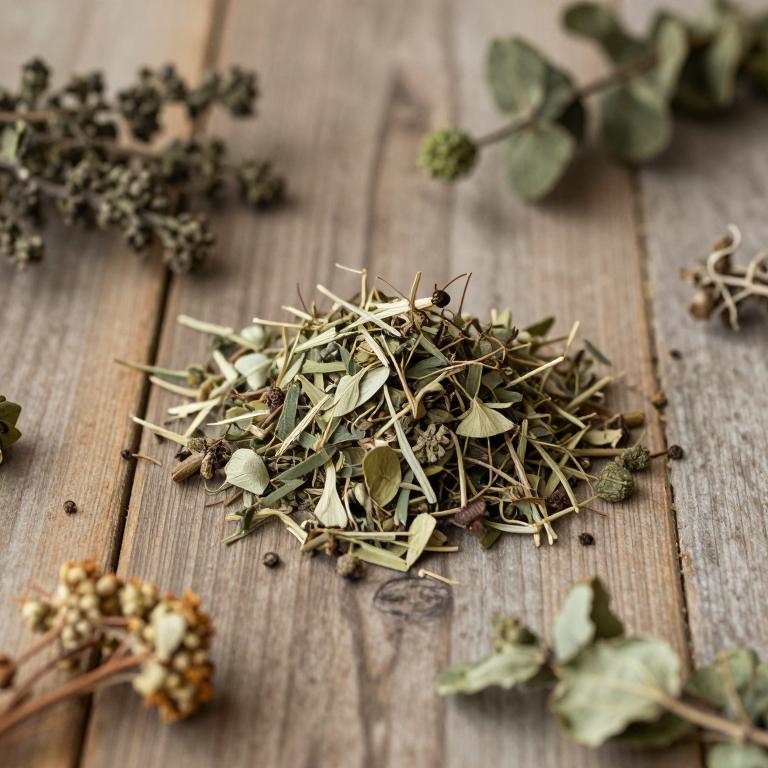
Names and Synonyms
Common Names
- Kangaroo-Apple
- large-flower kangaroo-apple
Scientific Names
Accepted name
Solanum laciniatumSynonyms
- Solanum aviculare var. laciniatum
- Solanum laciniatum var. elegans
- Solanum reclinatum
- Solanum laciniatum f. australiense
- Solanum laciniatum f. cultum
- Solanum laciniatum f. novozelandicum
- Solanum laciniatum f. laciniatum
- Solanum laciniatum f. tasmanicum
- Solanum laciniatum f. viridicaule
Regional and Traditional Names
German:
- großer Känguruapfel
- Schlitzblatt-Nachtschatten
Sources: Wikidata, Catalogue of Life
Taxonomical Classification
This plant belongs to the kingdom Plantae and is classified within the phylum Streptophyta and class Equisetopsida. It falls under the subclass Magnoliidae and the order Solanales, specifically within the family Solanaceae. Finally, it is identified by its genus, Solanum.
| Rank | Classification |
|---|---|
| Kingdom | Plantae |
| Phylum | Streptophyta |
| Class | Equisetopsida |
| Subclass | Magnoliidae |
| Order | Solanales |
| Family | Solanaceae |
| Genus | Solanum |
Sources: The World Checklist of Vascular Plants (WCVP)
Distribution
This plant exhibits a wide range of presence across various regions of the European continent. In Northern Europe, its distribution can be observed within the territories of Great Britain and Ireland. Moving toward the center of the continent, it is also found throughout Middle Europe, specifically in Germany. Its reach extends into Southwestern Europe, where it inhabits the landscapes of France. Finally, the species completes its recorded range by appearing in the southern reaches of Spain.
| Region | Area |
|---|---|
| Northern Europe | Great Britain |
| Northern Europe | Ireland |
| Middle Europe | Germany |
| Southwestern Europe | France |
| Southwestern Europe | Spain |
| Southeastern Europe | Italy |
| Northern Africa | Morocco |
| Northern Africa | Tunisia |
| Western Asia | Palestine |
| China | China South-Central |
Sources: The World Checklist of Vascular Plants (WCVP)
Botanical Identification
Ecology
The ecology of Solanum laciniatum is characterized by its specialized adaptation to coastal environments, where it thrives within saline-influenced maritime landscapes. This plant is strategically situated to withstand the unique stressors of coastal habitats, including high salt spray, sandy substrates, and wind exposure. Interestingly, its ecological interactions with soil fungi are distinct, as it does not form mycorrhizal associations, functioning instead through non-mycorrhizal nutrient acquisition strategies within its specific niche.
- Habitat :
- Coastal
- Mycorrhiza :
- no
Life history
The life history of Solanum laciniatum is characterized by a perennial lifecycle, allowing the plant to persist across multiple growing seasons. It exhibits a phanerophyte life form, specifically categorized as a phanerophyte, which indicates that its perennating buds are located on aerial parts of the stem well above the ground level. Furthermore, this species maintains an evergreen deciduousness, retaining its foliage throughout the year rather than shedding it seasonally.
- Deciduousness :
- evergreen
- Life form :
- phanerophyte
- Lifecycle :
- perennial
Morphology
The morphology of Solanum laciniatum is characterized by a woody growth form that manifests as a combination of a shrub and a subshrub. As a terrestrial plant, it functions as an independent organism rather than a parasite or an epiphyte. The plant exhibits a self-supporting climbing habit, rather than acting as an obligatory or facultative vine or liana. In terms of stature, it reaches varying heights, typically ranging from a minimum of 1 m to a maximum of 4 m, with a mean plant height of approximately 2.5 m.
- Aquatic :
- terrestrial
- Climber :
- self-supporting
- Epiphyte :
- terrestrial
- Growth form :
- shrub
- Growth form :
- subshrub
- Parasite :
- independent
- Plant height max:
- 4 m
- Plant height mean:
- 2.5 m
- Plant height min:
- 1 m
- Woodiness :
- woody
Physiology
The physiology of Solanum laciniaatum is characterized by a C3 photosynthetic pathway, a common metabolic strategy that facilitates carbon fixation through the Calvin cycle. Morphologically, the plant's foliage displays a consistent leaf width, maintaining a mean, minimum, and maximum value of 5 cm, while the leaf length reaches a maximum of 30 cm. Furthermore, this species does not function as a nitrogen fixer, relying instead on available soil nutrients rather than symbiotic nitrogen-fixing mechanisms to support its growth and metabolic processes.
- Leaf length max:
- 30 cm
- Leaf width mean:
- 5 cm
- Nitrogen fixer :
- no
- Photosynthetic pathway :
- C3
Reproduction
The reproduction of Solanum laciniatum is driven by biotic processes, specifically utilizing an insect-based pollination syndrome. The plant does not exhibit asexual reproduction, relying instead on sexual reproduction to produce fleshy fruits. These fruits typically measure an average of 2.5 cm in length and 2.2 cm in width. Within these fleshy structures, the plant produces seeds that are highly uniform in size, with a consistent seed length of 2 mm and a seed volume of 2 mm³. The seeds are quite lightweight, with a mean mass of 0.0016 g, ranging from a minimum of 0.001 g to a maximum of 0.00279 g. For the spread of its progeny, the species employs a zoochorous dispersal syndrome, specifically through endozoochory, where seeds are dispersed after being ingested by animals.
- Dispersal syndrome :
- zoochorous
- Dispersal syndrome :
- endozoochorous
- Fruit dryness :
- fleshy
- Fruit length mean:
- 2.5 cm
- Fruit width mean:
- 2.2 cm
- Pollination syndrome :
- insect
- Pollination syndrome :
- biotic
- Reproduction asexual :
- absent
- Seed length mean:
- 2 mm
- Seed mass max:
- 0.00279 g
- Seed mass mean:
- 0.0016 g
- Seed mass min:
- 0.001 g
- Seed volume max:
- 2 mm³
Sources: Global Inventory of Floras and Traits (GIFT)
Plant Parts
Solanum laciniatum has 1 reported plant parts identified across 1 scientific publications and several other databases that are studied for medicinal purposes. The most consistently reported plant part include leaf.
| Plant part | Supporting sources | Consensus |
|---|---|---|
| Leaf | 1 supporting sources | ★☆☆☆☆ |
Leaf
- Journal - Association of Official Analytical Chemists
Chemicals
Solanum laciniatum has 4 reported phytochemicals identified across 1 scientific publications and several other databases. The most consistently reported chemicals include solasodine, N-acetyl-m-aminobenzoic acid, betulinic acid, salicyl alcohol.
| Chemical | Supporting sources | Consensus |
|---|---|---|
| solasodine | 2 supporting sources | ★☆☆☆☆ |
| N-acetyl-m-aminobenzoic acid | 1 supporting sources | ★☆☆☆☆ |
| betulinic acid | 1 supporting sources | ★☆☆☆☆ |
| salicyl alcohol | 1 supporting sources | ★☆☆☆☆ |
solasodine
- Journal - Association of Official Analytical Chemists
- Journal of pharmaceutical sciences
N-acetyl-m-aminobenzoic acid
- Journal of Asian natural products research
betulinic acid
- Dr. Duke
salicyl alcohol
- Journal of Asian natural products research
Activities
Solanum laciniatum has 18 reported activities identified across 1 scientific publications and several other databases. The most consistently reported activities include Anthelmintic, AntiHIV, Antibacterial, Anticancer, Anticarcinomic.
| Activity | Supporting sources | Consensus |
|---|---|---|
| Anthelmintic | 1 supporting sources | ★☆☆☆☆ |
| AntiHIV | 1 supporting sources | ★☆☆☆☆ |
| Antibacterial | 1 supporting sources | ★☆☆☆☆ |
| Anticancer | 1 supporting sources | ★☆☆☆☆ |
| Anticarcinomic | 1 supporting sources | ★☆☆☆☆ |
| Antiedemic | 1 supporting sources | ★☆☆☆☆ |
| Antiinflammatory | 1 supporting sources | ★☆☆☆☆ |
| Antileukemic | 1 supporting sources | ★☆☆☆☆ |
| Antimalarial | 1 supporting sources | ★☆☆☆☆ |
| Antimelanomic | 1 supporting sources | ★☆☆☆☆ |
Anthelmintic
- Dr. Duke
AntiHIV
- Dr. Duke
Antibacterial
- Dr. Duke
Anticancer
- Dr. Duke
Anticarcinomic
- Dr. Duke
Antiedemic
- Dr. Duke
Antiinflammatory
- Dr. Duke
Antileukemic
- Dr. Duke
Antimalarial
- Dr. Duke
Antimelanomic
- Dr. Duke
Preparations
Solanum laciniatum has 2 reported preparations identified across 1 scientific publications and several other databases. The most consistently reported preparations include Solanum laciniatum leaves, cell suspension cultures.
| Preparation | Supporting sources | Consensus |
|---|---|---|
| Solanum laciniatum leaves | 1 supporting sources | ★☆☆☆☆ |
| Cell suspension cultures | 1 supporting sources | ★☆☆☆☆ |
Solanum laciniatum leaves
- Journal - Association of Official Analytical Chemists
Cell suspension cultures
- Journal of Asian natural products research