Solanum cernuum
Solanum cernuum · Accepted scientific name
Scientific literature: Very Sparse (12 studies) · ★☆☆☆☆
, scientifically known as Solanum cernuum, is a fascinating medicinal plant valued for its unique therapeutic properties. Found in specific ecological niches, this species belongs to the Solanaceae family. It is increasingly studied for its bioactive compounds, offering significant potential in traditional healing practices and modern pharmacological research applications.
- Family
- Solanaceae
- Native range
- Southern America
- Parts used
- Leaf
- Common names
- Not available
- Scientific synonyms
- Solanum Sisleyanum · Solanum Paleatum
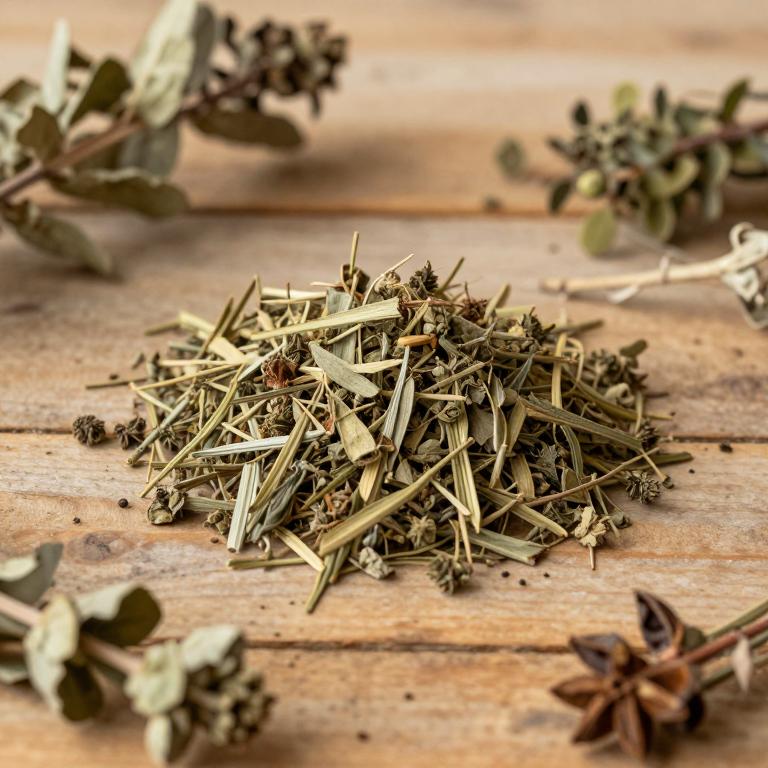
Names and Synonyms
Scientific Names
Accepted name
Solanum cernuumSynonyms
- Solanum sisleyanum
- Solanum paleatum
Sources: Wikidata, Catalogue of Life
Taxonomical Classification
This plant belongs to the kingdom Plantae and is classified under the phylum Streptophyta and class Equisetopsida. Within the subclass Magnoliidae, it is organized under the order Solanales and the family Solanaceae. Finally, it is identified by the genus Solanum, specifically as the species Solanum cernuum.
| Rank | Classification |
|---|---|
| Kingdom | Plantae |
| Phylum | Streptophyta |
| Class | Equisetopsida |
| Subclass | Magnoliidae |
| Order | Solanales |
| Family | Solanaceae |
| Genus | Solanum |
Sources: The World Checklist of Vascular Plants (WCVP)
Distribution
This plant exhibits a specific presence across several key regions within Brazil. Its natural range includes the West-Central territory of the country. Additionally, the species can be found growing throughout the Northeast region. It also extends its distribution into the Southeast portion of Brazil. Together, these areas define the primary geographical footprint of Solanum cernuum.
| Region | Area |
|---|---|
| Brazil | Brazil West-Central |
| Brazil | Brazil Northeast |
| Brazil | Brazil Southeast |
Sources: The World Checklist of Vascular Plants (WCVP)
Botanical Identification
Ecology
The ecology of Solanum cernuum is characterized by its presence across diverse and varied environmental settings, ranging from natural wilderness to human-altered landscapes. It is found within the complex ecosystems of the Seasonal Semi-deciduous Forest (Floresta Estacional Semidecidual), where it must adapt to distinct seasonal shifts in moisture and foliage density. Furthermore, its distribution extends into high-moisture environments, including the Ombrophilous Forest (Floresta Ombrófila), which encompasses both the true Rainforest (Floresta Pluvial) and the Mixed Ombrophilous Forest (Floresta Ombrófila Mista). In addition to these specialized forest biomes, the species demonstrates significant ecological plasticity by inhabiting Anthropic Areas (Área Antrópica), indicating an ability to persist in habitats modified by human activity and land use.
- Habitat :
- Área Antrópica, Floresta Estacional Semidecidual, Floresta Ombrófila (= Floresta Pluvial), Floresta Ombrófila Mista
Life history
The life history of Solanum cernuum is characterized by its specific growth habit and survival strategy, classified under the life form categories of both phanerophyte and phanerophyte. As a phanerophyte, the plant maintains its perennating buds well above the soil surface, protected by its aerial structures, which allows it to endure seasonal environmental shifts. This growth strategy ensures that its vital organs remain elevated, contributing to its establishment within its specific ecological niche.
- Life form :
- phanerophyte
Morphology
The morphology of Solanum cernuum is characterized by a woody growth form, manifesting structurally as a tree. It is a terrestrial species that does not exhibit aquatic or semiaquatic tendencies, nor does it function as an epiphyte, maintaining a strictly terrestrial existence. As an independent organism, it does not act as a parasite, relying on its own metabolic processes rather than a host. The plant is self-supporting in its structure, lacking the climbing habits of obligatory or facultative climbers. In terms of physical dimensions, it reaches a maximum plant height of approximately 5 meters.
- Aquatic :
- terrestrial
- Climber :
- self-supporting
- Epiphyte :
- terrestrial
- Growth form :
- tree
- Parasite :
- independent
- Plant height max:
- 5 m
- Woodiness :
- woody
Sources: Global Inventory of Floras and Traits (GIFT)
Plant Parts
Solanum cernuum has 1 reported plant parts identified across 1 scientific publications and several other databases that are studied for medicinal purposes. The most consistently reported plant part include leaf.
| Plant part | Supporting sources | Consensus |
|---|---|---|
| Leaf | 1 supporting sources | ★☆☆☆☆ |
Leaf
- Natural product research
Chemicals
Solanum cernuum has 7 reported phytochemicals identified across 1 scientific publications and several other databases. The most consistently reported chemicals include Afzelin, Astragalin, Cernumidine, Isoferulic acid, Trans-Tiliroside.
| Chemical | Supporting sources | Consensus |
|---|---|---|
| Afzelin | 2 supporting sources | ★☆☆☆☆ |
| Astragalin | 1 supporting sources | ★☆☆☆☆ |
| Cernumidine | 1 supporting sources | ★☆☆☆☆ |
| Isoferulic acid | 1 supporting sources | ★☆☆☆☆ |
| Trans-Tiliroside | 1 supporting sources | ★☆☆☆☆ |
| cis-Tiliroside | 1 supporting sources | ★☆☆☆☆ |
| quercitrin | 1 supporting sources | ★☆☆☆☆ |
Afzelin
- Journal of ethnopharmacology
- Natural product research
Astragalin
- Natural product research
Cernumidine
- Journal of ethnopharmacology
Isoferulic acid
- Journal of ethnopharmacology
Trans-Tiliroside
- Natural product research
cis-Tiliroside
- Natural product research
quercitrin
- Journal of ethnopharmacology
Conditions
Solanum cernuum has 3 reported investigations on conditions identified across 1 scientific publications and several other databases. The most consistently reported conditions include gastric ulcer, gastric ulcers, ulcers.
| Condition | Supporting sources | Consensus |
|---|---|---|
| Gastric ulcer | 1 supporting sources | ★☆☆☆☆ |
| Gastric ulcers | 1 supporting sources | ★☆☆☆☆ |
| Ulcers | 1 supporting sources | ★☆☆☆☆ |
Gastric ulcer
- Journal of ethnopharmacology
Gastric ulcers
- Journal of ethnopharmacology
Ulcers
- Journal of ethnopharmacology