bush tomato
Solanum centrale · Accepted scientific name
Scientific literature: Very Sparse (5 studies) · ★☆☆☆☆
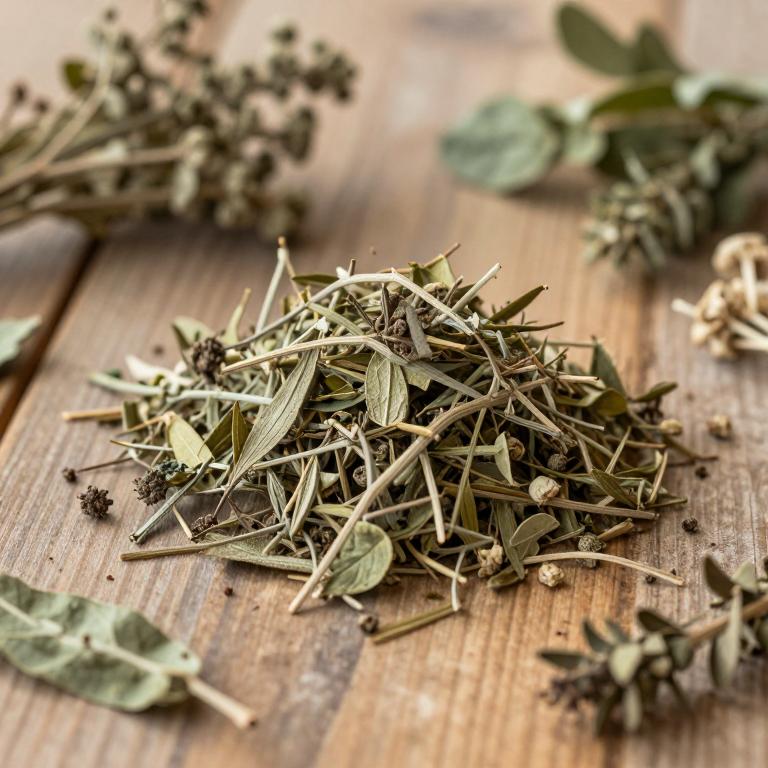
Bush tomato, scientifically known as Solanum centrale, is a resilient desert shrub native to Australia. Highly valued by Indigenous communities, this nutrient-dense fruit offers unique savory flavors and significant medicinal properties. Rich in vitamins and antioxidants, it serves as both a functional food and a traditional remedy for wellness.
- Family
- Solanaceae
- Native range
- Australasia
- Parts used
- Not available
- Common names
- Bush Tomato · Desert Raisin · 2 more
- Scientific synonyms
- Not available
Names and Synonyms
Common Names
- bush tomato
- desert raisin
- Kutjera
- bush raisin
Scientific Names
Accepted name
Solanum centraleRegional and Traditional Names
German:
- Bush tomato
Sources: Wikidata, Catalogue of Life
Taxonomical Classification
This plant belongs to the kingdom Plantae within the phylum Streptophyta and the class Equisetopsida. Following its classification through the subclass Magnoliidae and order Solanales, it is situated in the family Solanaceae. Finally, it is categorized under the genus Solanum.
| Rank | Classification |
|---|---|
| Kingdom | Plantae |
| Phylum | Streptophyta |
| Class | Equisetopsida |
| Subclass | Magnoliidae |
| Order | Solanales |
| Family | Solanaceae |
| Genus | Solanum |
Sources: The World Checklist of Vascular Plants (WCVP)
Distribution
This plant exhibits a widespread presence across several distinct regions of the Australian continent. Specifically, its range extends into the tropical landscapes of the Northern Territory. In addition to these northern areas, it can be found inhabiting parts of South Australia. The species is also documented within the diverse environments of Western Australia. Consequently, the geographical distribution of Solanum centrale spans a significant portion of the country.
| Region | Area |
|---|---|
| Australia | Northern Territory |
| Australia | South Australia |
| Australia | Western Australia |
Sources: The World Checklist of Vascular Plants (WCVP)
Botanical Identification
Life history
The life history of Solanum centrale is characterized by its nature as a perennial plant, allowing it to persist through multiple growing seasons. Throughout its lifecycle, the plant establishes a robust presence within its native habitats, often exhibiting a variable growth pattern depending on environmental conditions and resource availability. As a perennial, it undergoes cycles of vegetative growth and reproductive phases, typically producing distinctive yellow flowers that eventually develop into characteristic fruit. This long-term life strategy enables the species to occupy its ecological niche effectively, maintaining stability in its population over time through repeated seasonal cycles.
- Lifecycle :
- perennial
Morphology
The morphology of Solanum centrale is characterized by its growth form as a non-woody herb. It is a terrestrial species that functions as an independent organism, rather than a parasite. The plant is self-supporting and does not exhibit climbing habits. In terms of stature, it typically reaches an average height of 0.3 m, though individual specimens can range from a minimum of 0.1 m to a maximum height of 0.7 m.
- Aquatic :
- terrestrial
- Climber :
- self-supporting
- Growth form :
- herb
- Parasite :
- independent
- Plant height max:
- 0.7 m
- Plant height mean:
- 0.3 m
- Plant height min:
- 0.1 m
- Woodiness :
- non-woody
Physiology
The physiology of Solanum centrale is characterized by its specialized metabolic processes adapted to arid and semi-arid environments. As a member of the Solanaceae family, it engages in standard C3 photosynthesis to convert solar energy into chemical energy, utilizing carbon dioxide and water to produce glucose. Its physiological resilience is largely driven by its ability to manage water stress through efficient stomatal regulation and specialized succulent-like tissue structures that mitigate transpiration. Regarding its nutrient acquisition, the plant does not engage in symbiotic relationships with diazotrophic bacteria to convert atmospheric nitrogen into organic forms; therefore, it is not a nitrogen fixer. This lack of nitrogen-fixing capability means the plant relies entirely on the uptake of available nitrates and ammonium ions from the soil through its root system to support its growth and the synthesis of essential amino acids and proteins.
- Nitrogen fixer :
- no
Reproduction
The reproduction of Solanum centrale is centered around the production of specialized seeds that facilitate its dispersal and survival. Based on quantitative reproductive data, the species exhibits a highly consistent seed profile with no observed variance in mass across the sampled population. The seed mass is characterized by a uniform value, where the seed mass mean, maximum, and minimum are all recorded at exactly 0.00172 g. This uniformity in seed mass suggests a highly stabilized reproductive strategy, ensuring that each individual seed carries a precise amount of biological material for germination and subsequent seedling establishment.
- Seed mass mean:
- 0.00172 g
Sources: Global Inventory of Floras and Traits (GIFT)
Chemicals
Solanum centrale has 5 reported phytochemicals identified across 0 scientific publications and several other databases. The most consistently reported chemicals include CHLOROGENIC ACID, Sagerinic acid, caffeic acid, quinic acid, rosmarinic acid.
| Chemical | Supporting sources | Consensus |
|---|---|---|
| CHLOROGENIC ACID | 1 supporting sources | ★☆☆☆☆ |
| Sagerinic acid | 1 supporting sources | ★☆☆☆☆ |
| caffeic acid | 1 supporting sources | ★☆☆☆☆ |
| quinic acid | 1 supporting sources | ★☆☆☆☆ |
| rosmarinic acid | 1 supporting sources | ★☆☆☆☆ |
CHLOROGENIC ACID
- Plants (Basel, Switzerland)
Sagerinic acid
- Plants (Basel, Switzerland)
caffeic acid
- Plants (Basel, Switzerland)
quinic acid
- Plants (Basel, Switzerland)
rosmarinic acid
- Plants (Basel, Switzerland)