Smilax brasiliensis
Smilax brasiliensis · Accepted scientific name
Scientific literature: Very Sparse (6 studies) · ★☆☆☆☆
Smilax brasiliensis, scientifically known as Smilax brasiliensis, is a climbing woody vine native to South American tropical forests. Renowned in traditional medicine, this plant is frequently utilized for its anti-inflammatory and antioxidant properties. It serves as a vital botanical resource for treating various ailments through its bioactive compounds.
- Family
- Smilacaceae
- Native range
- Southern America
- Parts used
- Leaf
- Common names
- Not available
- Scientific synonyms
- Smilax Pruinosa · Smilax Brasiliensis Var. Tricapillaris · 1 more
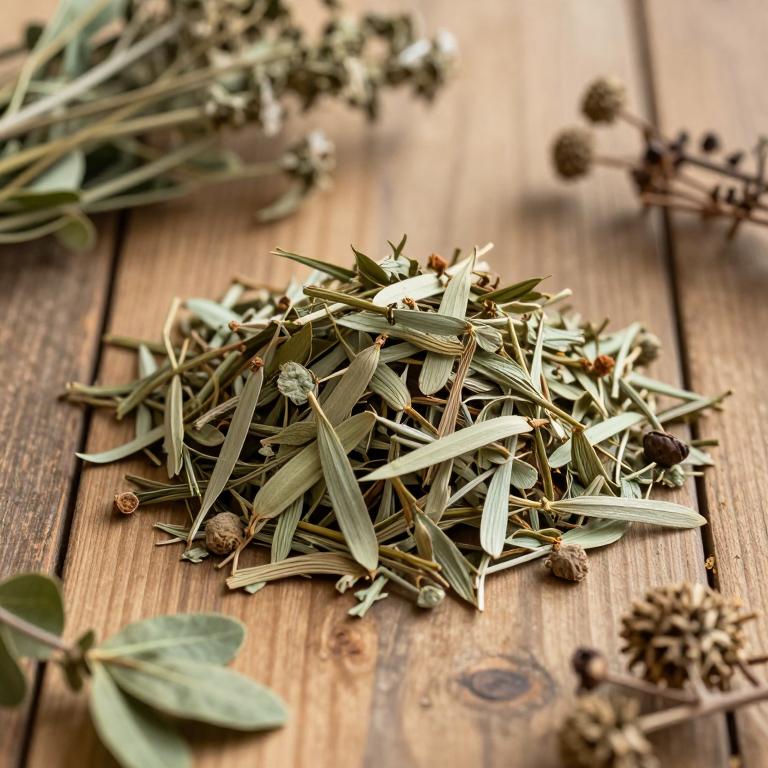
Names and Synonyms
Scientific Names
Accepted name
Smilax brasiliensisSynonyms
- Smilax pruinosa
- Smilax brasiliensis var. tricapillaris
- Smilax brasiliensis var. grisebachii
Sources: Wikidata
Taxonomical Classification
This plant belongs to the kingdom Plantae within the phylum Streptophyta and the class Equisetopsida. It is further classified under the subclass Magnoliidae in the order Liliales and is a member of the family Smilacaceae. Finally, it is identified under the genus Smilax.
| Rank | Classification |
|---|---|
| Kingdom | Plantae |
| Phylum | Streptophyta |
| Class | Equisetopsida |
| Subclass | Magnoliidae |
| Order | Liliales |
| Family | Smilacaceae |
| Genus | Smilax |
Sources: The World Checklist of Vascular Plants (WCVP)
Distribution
This plant exhibits a broad geographical distribution across various regions of Brazil. It is found extensively throughout the North of the country, occupying much of its tropical landscape. Additionally, the species is well-established within the West-Central region of Brazil. Its presence also extends significantly into the Southeast part of the nation. Together, these areas highlight the wide natural range of Smilax brasiliensis across the Brazilian territory.
| Region | Area |
|---|---|
| Brazil | Brazil West-Central |
| Brazil | Brazil Southeast |
| Brazil | Brazil North |
Sources: The World Checklist of Vascular Plants (WCVP)
Botanical Identification
Ecology
The ecology of Smilax brasiliensis is characterized by its ability to colonize a diverse range of environmental settings, demonstrating significant adaptability across various Brazilian landscapes. It is commonly found inhabiting anthropic areas, where it integrates into human-disturbed environments, as well as within the specialized ecosystems of the Campo Rupestre, where it must contend with rocky substrates and specific microclimatic conditions. Furthermore, the species thrives in the Cerrado (latu sensu), navigating the seasonal moisture variations and nutrient-poor soils typical of this tropical savanna, and is also a component of the Floresta Estacional Semi-decidual, where it adapts to the distinct dry and wet cycles of seasonal tropical forests.
- Habitat :
- Área Antrópica, Campo Rupestre, Cerrado (lato sensu), Floresta Estacional Semidecidual
Life history
The life history of Smilax brasiliensis is characterized by a perennial growth strategy where its survival and structural development are categorized through distinct botanical life forms. Primarily functioning as a phanerophyte, the plant maintains its stem organs well above the soil surface, allowing it to establish a robust climbing or sprawling presence within its ecological niche. Depending on the specific environmental pressures and the developmental stage of the individual specimen, its growth habit can also be described through the lens of a nanophanerophyte, where the visible stems remain relatively low to the ground. This life cycle is driven by a perennial vegetative structure that enables the plant to persist through multiple seasons, utilizing its climbing mechanisms to navigate through surrounding vegetation to reach optimal light conditions for photosynthesis and reproduction.
- Life form :
- nanophanerophyte
- Life form :
- phanerophyte
Morphology
The morphology of Smilax brasiliensis is characterized by its woody structure and its specialized growth habit as a liana. As a climbing plant, it exhibits a facultative climbing nature, utilizing external supports to ascend rather than being self-supporting. Although it can exist in various environments, its primary ecological classification is terrestrial, avoiding aquatic or semiaquatic habitats. The plant grows as a woody shrub-like vine, functioning as an independent organism that does not rely on a parasitic relationship for survival. Furthermore, it is strictly a terrestrial species, lacking any epiphytic qualities such as being a holoepiphyte or hemiepiphyte.
- Aquatic :
- terrestrial
- Climber :
- liana
- Climber :
- facultative
- Epiphyte :
- terrestrial
- Growth form :
- shrub
- Parasite :
- independent
- Woodiness :
- woody
Sources: Global Inventory of Floras and Traits (GIFT)
Plant Parts
Smilax brasiliensis has 1 reported plant parts identified across 1 scientific publications and several other databases that are studied for medicinal purposes. The most consistently reported plant part include leaf.
| Plant part | Supporting sources | Consensus |
|---|---|---|
| Leaf | 1 supporting sources | ★☆☆☆☆ |
Leaf
- Natural product research
Chemicals
Smilax brasiliensis has 1 reported phytochemicals identified across 1 scientific publications and several other databases. The most consistently reported chemicals include quercetin.
| Chemical | Supporting sources | Consensus |
|---|---|---|
| quercetin | 1 supporting sources | ★☆☆☆☆ |
quercetin
- Natural product research
Activities
Smilax brasiliensis has 4 reported activities identified across 1 scientific publications and several other databases. The most consistently reported activities include Antioxidant, Antirheumatic, Antisyphilitic, Tonic.
| Activity | Supporting sources | Consensus |
|---|---|---|
| Antioxidant | 1 supporting sources | ★☆☆☆☆ |
| Antirheumatic | 1 supporting sources | ★☆☆☆☆ |
| Antisyphilitic | 1 supporting sources | ★☆☆☆☆ |
| Tonic | 1 supporting sources | ★☆☆☆☆ |
Antioxidant
- Natural product research
Antirheumatic
- Applications in plant sciences
Antisyphilitic
- Applications in plant sciences
Tonic
- Applications in plant sciences
Preparations
Smilax brasiliensis has 4 reported preparations identified across 1 scientific publications and several other databases. The most consistently reported preparations include dichloromethane fraction, extract, fractions, methanol extract.
| Preparation | Supporting sources | Consensus |
|---|---|---|
| Dichloromethane fraction | 1 supporting sources | ★☆☆☆☆ |
| Extract | 1 supporting sources | ★☆☆☆☆ |
| Fractions | 1 supporting sources | ★☆☆☆☆ |
| Methanol extract | 1 supporting sources | ★☆☆☆☆ |
Dichloromethane fraction
- Natural product research
Extract
- Natural product research
Fractions
- Natural product research
Methanol extract
- Natural product research