Mexican sarsaparilla
Smilax aristolochiifolia · Accepted scientific name
Scientific literature: Very Sparse (7 studies) · ★☆☆☆☆
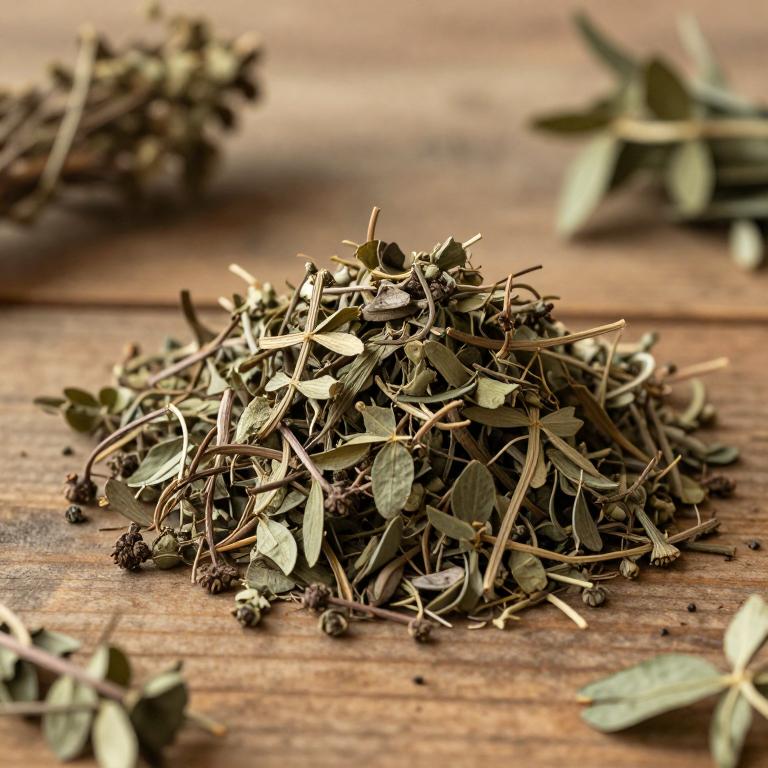
Mexican sarsparilla, scientifically known as Smilax aristolochiifolia, is a climbing woody vine native to tropical regions. Renowned in traditional herbalism, its roots are prized for their tonic properties. Often used to support blood purification and digestive health, this resilient plant remains a significant subject in ethnobotanical studies worldwide.
Names and Synonyms
Common Names
- Mexican sarsaparilla
- Veracruz sarsaparilla
- gray sarsaparilla
- sarsaparilla
Scientific Names
Accepted name
Smilax aristolochiifoliaSynonyms
- Smilax kerberi
- Smilax medica
- Smilax medica var. bracteata
Regional and Traditional Names
Spanish:
- zarzaparilla
- Bigotes de camalla o cosole
Sources: Wikidata, Catalogue of Life
Taxonomical Classification
This plant belongs to the kingdom Plantae and is classified under the phylum Streptophyta and class Equisetopsida. Within the subclass Magnoliidae and order Liliales, it is further organized into the family Smilacaceae. Finally, it is identified by the genus Smilax, specifically as the species Smilax aristolochiifolia.
| Rank | Classification |
|---|---|
| Kingdom | Plantae |
| Phylum | Streptophyta |
| Class | Equisetopsida |
| Subclass | Magnoliidae |
| Order | Liliales |
| Family | Smilacaceae |
| Genus | Smilax |
Sources: The World Checklist of Vascular Plants (WCVP)
Distribution
This plant exhibits a widespread presence throughout various regions of Mexico. Its distribution extends across the central part of the country, covering the area known as Mexico Central. Additionally, it can be found spanning the northeastern territories of Mexico Northeast. The species is also established within the coastal and inland areas of Mexico Gulf. Finally, its range reaches into the diverse landscapes of both Mexico Southwest and Mexico Southeast.
| Region | Area |
|---|---|
| Mexico | Mexico Central |
| Mexico | Mexico Northeast |
| Mexico | Mexico Gulf |
| Mexico | Mexico Southwest |
| Mexico | Mexico Southeast |
| Central America | Belize |
| Central America | El Salvador |
| Central America | Guatemala |
| Central America | Honduras |
Sources: The World Checklist of Vascular Plants (WCVP)
Botanical Identification
Life history
The life history of Smilax aristolochiifolia is characterized by its status as a perennial species, allowing it to persist in its environment through multiple growing seasons. As a long-lived plant, it establishes a robust presence within its habitat, often utilizing climbing mechanisms to navigate its surroundings over several years. This perennial nature ensures a sustained biological cycle, where the plant can undergo repeated phases of vegetative growth and reproductive development, contributing to its long-term stability and ecological integration.
- Lifecycle :
- perennial
Morphology
The morphology of Smilax aristolochiifolia is characterized by its growth habit as a woody liana, utilizing a vine-like structure to ascend through its environment. It functions as an obligatory climber, relying on external support to reach light, rather than being self-supporting. The plant is fundamentally terrestrial in its ecological niche, functioning as an independent organism rather than acting as a parasite or an epiphyte. Its structural integrity is defined by its woody nature, which provides the necessary strength for its climbing life cycle.
- Aquatic :
- terrestrial
- Climber :
- vine
- Climber :
- obligatory
- Epiphyte :
- terrestrial
- Parasite :
- independent
- Woodiness :
- woody
Physiology
The physiology of Smilax aristolochiifolia is characterized by a C3 photosynthetic pathway, utilizing the standard Calvin cycle to fix atmospheric carbon dioxide during the light-independent reactions. This metabolic strategy implies that the plant undergoes photorespiration under stressful conditions, as it lacks the specialized carbon-concentrating mechanisms found in C4 or CAM species. Additionally, the plant does not function as a nitrogen fixer, meaning it lacks the symbiotic relationship with diazotrophic bacteria required to convert atmospheric nitrogen into bioavailable forms, and instead relies on the uptake of nitrates and ammonium from the soil through its root system.
- Nitrogen fixer :
- no
- Photosynthetic pathway :
- C3
Sources: Global Inventory of Floras and Traits (GIFT)
Plant Parts
Smilax aristolochiifolia has 2 reported plant parts identified across 2 scientific publications and several other databases that are studied for medicinal purposes. The most consistently reported plant part include root, stem.
| Plant part | Supporting sources | Consensus |
|---|---|---|
| Root | 1 supporting sources | ★☆☆☆☆ |
| Stem | 1 supporting sources | ★☆☆☆☆ |
Root
- Journal of natural products
Stem
- Journal of ethnobiology and ethnomedicine
Chemicals
Smilax aristolochiifolia has 1 reported phytochemicals identified across 2 scientific publications and several other databases. The most consistently reported chemicals include DISPOROSIDE A.
| Chemical | Supporting sources | Consensus |
|---|---|---|
| DISPOROSIDE A | 1 supporting sources | ★☆☆☆☆ |
DISPOROSIDE A
- Journal of natural products
Conditions
Smilax aristolochiifolia has 4 reported investigations on conditions identified across 2 scientific publications and several other databases. The most consistently reported conditions include baldness, dysentery, hair loss, menstrual pain.
| Condition | Supporting sources | Consensus |
|---|---|---|
| Baldness | 1 supporting sources | ★☆☆☆☆ |
| Dysentery | 1 supporting sources | ★☆☆☆☆ |
| Hair loss | 1 supporting sources | ★☆☆☆☆ |
| Menstrual pain | 1 supporting sources | ★☆☆☆☆ |
Baldness
- Journal of ethnobiology and ethnomedicine
Dysentery
- Journal of ethnobiology and ethnomedicine
Hair loss
- Journal of ethnobiology and ethnomedicine
Menstrual pain
- Journal of ethnobiology and ethnomedicine
Preparations
Smilax aristolochiifolia has 2 reported preparations identified across 2 scientific publications and several other databases. The most consistently reported preparations include roots, tender stems.
| Preparation | Supporting sources | Consensus |
|---|---|---|
| Roots | 1 supporting sources | ★☆☆☆☆ |
| Tender stems | 1 supporting sources | ★☆☆☆☆ |
Roots
- Journal of natural products
Tender stems
- Journal of ethnobiology and ethnomedicine